
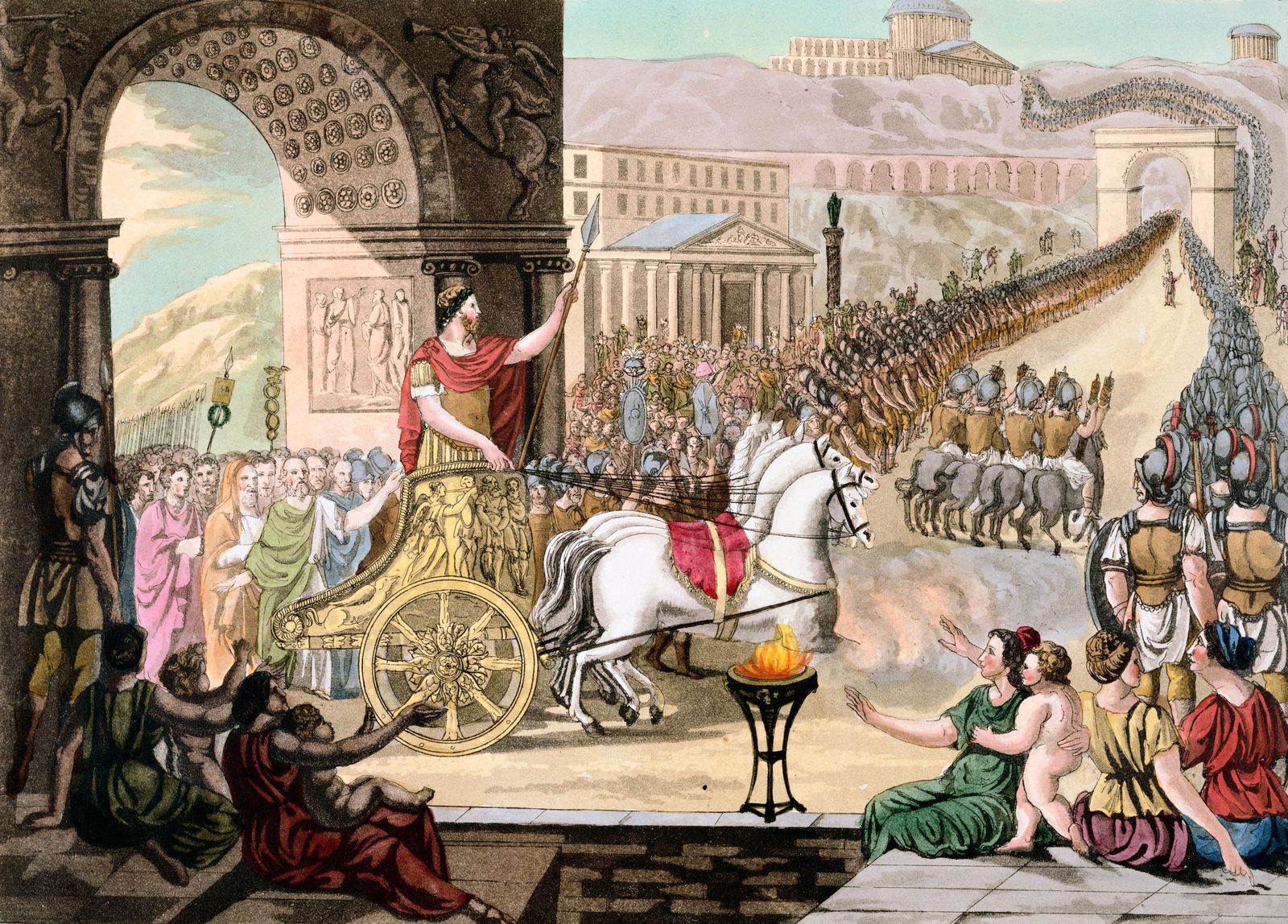

Ever wonder what was life like in Ancient Rome? Well, your search for answers has come to an end. In the below text we have briefly outlined the daily life of the citizens of the Roman Empire when it was at its pinnacle.
Let us take a look at What was life like in Ancient Rome?
1) Housing in Ancient Rome
The majority of Roman citizens lived in high-rise rectangular tenements or insulae. These buildings were so overcrowded and crammed together that people lived in constant fear of fire and collapse. Additionally, there were even some areas that were susceptible to flooding by the Tiber River. As early as 150 BCE, Rome had around 46,000 insulae.
These buildings had numerous other problems as well. The number one being lack of sanitation. Poorer folks shared a room with several others and due to lack of proper insulation, the rooms often stunk. Moreover, unlike today, the better quality rooms were on the lower floors while the poorer quality ones were on the top floors. This was because in case of fire it was easier for the lower floors to evacuate quickly.
Insulae were usually 70-100 feet tall and thus were deemed unsafe. To overcome this problem, laws were passed under Roman Emperors Augustus and Trajan to keep them from becoming too tall. However, these laws were rarely implemented.
2) The streets were a dangerous place in Ancient Rome
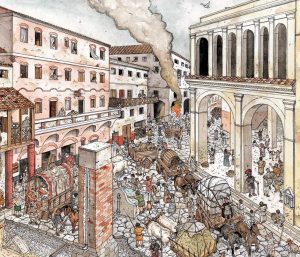
The streets were essentially a dangerous place in Ancient Rome, not because they were full of thugs but because they were too narrow. Additionally, not only did you have to watch where you walking but also watch the sky simultaneously. According to one instance, a citizen got killed due to a falling roof tile. Moreover, people even emptied their chamber pots into the streets. Hence the streets were filthy and filled with rubbish. Furthermore, there are even reports of people being crushed to death by stampedes.
Subsequently, it would take the great fire under Emperor Nero, to solve this problem when streets were widened and balconies built to provide safety as well as access in time of an emergency.
3) Housing for the upper classes and wealthy
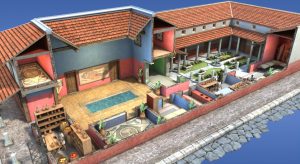
The life of the upper classes and wealthy was quite a contrast from that of the poor. They essentially lived in a Domus (a Roman house). These homes were located on the Palatine Hill and were close to the imperial palace.
An Ancient Roman house had many attributes such as atrium (reception area), cubiculum (bedrooms), triclinium (dining room) and hortus (an open courtyard). Additionally, the wealthy had slaves and servants that catered to their every need. Thus one could say that in Ancient Rome, the living conditions were generally more favourable to the wealthy.
4) What was family life like in Ancient Rome?
The Ancient Roman society was largely patriarchal with most importance given to the father or paterfamilias. The Roman families were large and essentially included everyone who was “familiar” with each other. This included the parents and children, as well as the sons’ wives and their families. It could even include slaves. In fact, if a Roman man did not have sons, it was common practice to adopt male slaves into the family to ensure an heir.
Additionally, the father had complete authority over the family and even controlled their life and death. The father could reject babies if they were disabled and even sell his own children into slavery if he felt inclined to do so. Moreover, he could even punish the family members with banishment and death.
However, the paterfamilias could not pass judgement without question. And before he could sentence his child to death, he would have to submit his decision in front of a family council. However, over time this control would diminish.
5) What was life like for a woman in Ancient Rome?
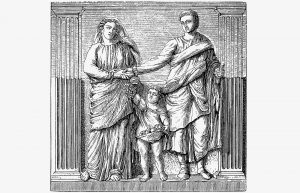
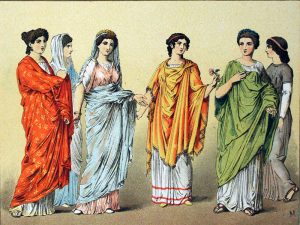
Compared to today, life was very different for a woman in Ancient Rome. Although freeborn women were Roman citizens, they held no political power. Additionally, women could not give speeches, could not express their opinions in public and could not hold a public office. Moreover, they could not even join the military as they were considered weak. Compared to the men, the role of women was lesser in Ancient Rome. However, fierce women like Lucretia and Fulvia played a significant role in the empire.
6) Married women in Ancient Rome
Once married, Roman women were expected to produce children quickly as their most important responsibility was birthing them. In fact, the ones who were unable to get pregnant were likely to be divorced by their husbands.
Additionally, the home was the domain of the wife a.k.a the materfamilias. It was her responsibility to take care of the children as well as run the household. Although women from wealthy families had servants to help them, in the end, it was their duty to ensure that all the tasks had been completed.
Roman wives had to follow strict rules as well, however, these were relaxed by the end of the Republic. Subsequently, women were seen working as hairdressers, pharmacists and shopkeepers. Some select women even became doctors and priestesses. Gradually, women’s rights improved as well, for example, divorce proceedings could be initiated by either the husband or the wife.
7) What was life like for a slave in Ancient Rome?
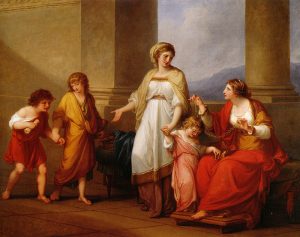
Slavery was a common practice in Ancient Rome. Most slaves were foreigners and included prisoners of war, slaves captured by pirates and paterfamilias who sold their children into slavery. Slaves and their families were essentially the property of the owners. They were treated poorly and their lives were harsh. Slaves were employed everywhere- from private households to government buildings. Consequently, they merged in quite easily with the rest of the population. In fact, slaves looked so similar to Roman citizens that the Senate once even considered making them wear a special outfit to distinguish them. However, the idea was rejected because the Senate feared that if the slaves saw how many of them worked in Rome, they might get tempted to rebel.
8) Education in Ancient Rome
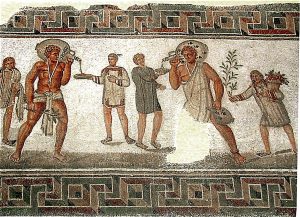
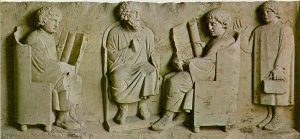
In Ancient Rome, very few children actually went to school. Most of their education was conducted at home and was in the hands of the family members. A mother taught her daughter how to manage and run the household. While the father taught the son the practical necessities such as reading, writing and the Roman laws. It was also the father’s duty to teach his sons the 3 important qualities of virtus (virtue), dignitas (dignity), and gravitas (seriousness). The boys were also taught to respect Roman laws and customs and to conduct themselves properly in public.
9) Daily Roman life: Work and Leisure
For the upper classes and the wealthy, a day was divided between business and leisure. The morning was devoted to business while the afternoon was for leisure. Romans typically worked for six hours, with the day beginning at dawn and ending in the afternoon.
After conducting business, Roman citizens would be found attending games, the theatre or the baths. Additionally, Roman Emperors made sure to give the poor “bread and games”–food and entertainment to keep them busy and content.
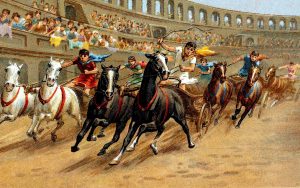
One of their favourite haunts was the Circus Maximus, a massive chariot racing stadium with a room for 200,000 spectators. The affluent sat on plush cushions that were close to the tracks while the poor sat on wooden benches. At the Colosseum, men and women sat separately, but at the Circus Maximus, they could sit together. According to a Roman poet, it was a place where you could meet a potential life partner as you never know who might sit next to you.
10) The importance of bathing in Ancient Rome
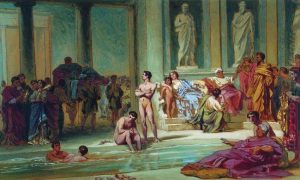
Bathing was important to all Romans. And for them, bathhouses were crucial for relaxing and sometimes even conducting business. In fact, in 33 BCE Rome had around 70 bathhouses which grew to 800 by 400 CE. Additionally, an emperor could always gain popularity by building one. The largest ones were owned by Roman Emperors Trajan, Diocletian and Caracalla. A common bathhouse included a gym, health centre and a swimming pool. Most were very cheap and some were even free to use during public holidays. After a nice relaxing afternoon at the bath, a Roman citizen would return home for their evening meal.
11) Communal toilets in Ancient Rome
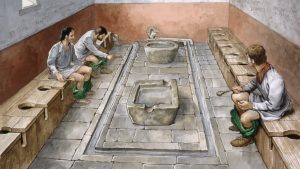
Although Romans might have had a chamber pot in their room, they found it much easier to use a communal toilet as it had running water. A fun fact is that after doing their business they wiped themselves with a communal sponge on a stick, aptly dubbed as the disease spreader.
12) What was country life like in Ancient Rome?
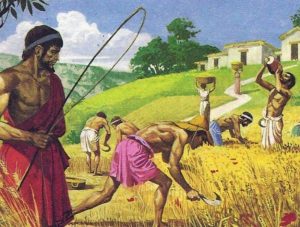
Rome was only one of the many cities of the Roman Empire. Most of the Roman Empire’s populace stayed in the country. Life for the Roman citizens in the country was quite hard. Additionally, the rich and poor led contrasting lives here as well. The upper classes owned country estates known as villas while the poor lived in huts and ran small farms. Moreover, the poor laboured on the grand estates of the rich. In the first century CE, Saint Paul, a Christian writer, summed up the lives of the poor Roman citizens as, “He who does not work shall not eat.”
13) Thus one could say that the daily life in Ancient Rome depended on one’s social status. In the Roman Empire, wealth and poverty were two sides of the same coin.
Enjoyed the above article? You may also enjoy 20 Interesting Facts About Ancient Greece


