

The Inca civilisation was one of the most prolific civilisations of the Ancient World. For the Incas, their clothes symbolised wealth and status. Additionally, the fine cloth was used as tax and currency as well. So what exactly did the Incas wear? In the below text we briefly outline the answer to this question.
1) Inca clothing depended on their social status
In modern society, people tend to dress up as per their social and financial status. The Incas were no different. A person’s clothing was directly linked to their social class. The Inca society had a hierarchy based system. The nobles were on the top, followed by the government officials and commoners.
2) What did the Sapa Inca wear?
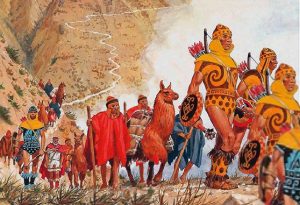
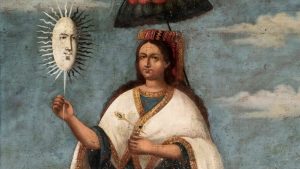
The Sapa Inca was the ruler of the Inca civilisation. Consequently, he wore only the finest clothing, usually made out of vicuña wool. A fun fact is that he wore an article of clothing only once and afterwards the worn cloth was burnt. He employed a group of “chosen women” that specifically wove and prepared clothes for him.
Jewels and pieces of turquoise adorned the Inca ruler’s coat. He also wore multiple pieces of jewellery on different parts of his body. A notable piece of jewellery was the gold earrings, which were so heavy that they literally elongated the Sapa Inca’s ear lobes. Additionally, he wore shoes made out of leather and fur. And he also carried a royal shield and badge. The shield was embossed with the picture of the sun god and the badge was made out of hummingbird feathers rimmed with gold.
A translucent cloth shielded the Sapa Inca’s face each time he left the palace. This signified that he was too important to be seen by the commoners.
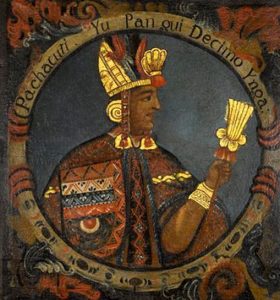
3) Only the Sapa Inca could adorn a headdress known as ‘Mascapaicha’
The headdress essentially had many layers of coloured braid, from which hung a red fringe ‘latu’ with red tassels fixed to gold tubes. It was further decorated with gold threads and 2-3 feathers from the mountain caracara, a sacred bird. The headdress essentially symbolised the power of the Sapa Inca.
4) What did the Inca men wear?
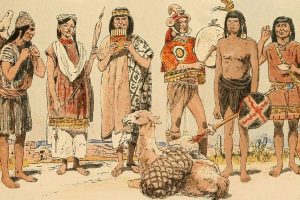
Inca clothes were simple in style. Men usually wore a sleeveless tunic (uncu) that was worn over a loincloth. The tunic was essentially a long piece of cloth that had slits cut out for the head and arms. To protect themselves against cold, the men would simply drape a cloak or poncho over it. The fabrics featured abstract geometric designs and motifs across the surface of the cloth. The men wore sandals made out of llama hide and braided fibre. Additionally, men also carried a small bag in which they carried their personal belongings.
5) What did the Inca women wear?
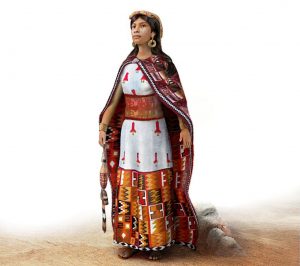
Inca women wore a one-piece dress that was wrapped around the body and pinned at the shoulder by a sash known as chumpi. Over this, they usually wore a cloak fastened with a tupu pin made of bronze, silver or gold. These cloaks also served the dual purpose of being a bag that carried everything from infants to vegetables. The women wore the same sandals as men and usually wore a folded cloth on their head.
6) What did the Inca military wear?
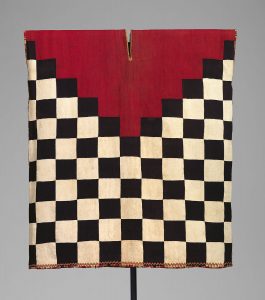
The Inca Empire had specialised communities that wove textiles specifically for the military. For the empire, the military was a symbol of their power hence they placed great importance on their clothing. The standard Incan military tunic had a black and white checkerboard design with an inverted red triangle at the neck. When a soldier showcased great skill during a battle, fine textiles were gifted to him alongside jewels and drinking cups. For the Incas, textiles were as valuable as any other precious goods.
7) Inca hairstyles
Inca hairstyles varied from tribe to tribe. However, Incas usually cut their hair leaving it short in the front and medium in the back, tying it with either a sling or a woven band. On the other hand, women did not cut their hair but simply parted it in the middle. However, when cut it denoted a sign of mourning.
8) The Inca weavers were highly skilled
Weaving was a very important skill in the Inca Empire. Both men and women wove. However, women from all classes were expected to master it. The main equipment for smaller pieces was the backstrap loom, while for bigger pieces like rugs the Incas used either the horizontal single-heddle loom or vertical loom with four poles. Additionally, they spun using a drop spindle, typically in ceramic or wood.
9) The Inca cloth was divided into three categories: the roughest being chusi (used primarily for rugs), slightly coarse being awasca (for daily use and the military) and the finest being qompi. Qompi was further divided into two categories: one for tribute and one for royal and religious functions.
10) A fun fact is that before a royal wedding, the textile designated for royalty, the qompi, was given to the new bride of the Sapa Inca. She would wear it underneath her jewellery and chains during the ceremony. Additionally, the Sapa Inca would wear a special tunic made by his new bride. The gift of the textiles denoted the new relationship and the continuing prosperity of the empire.
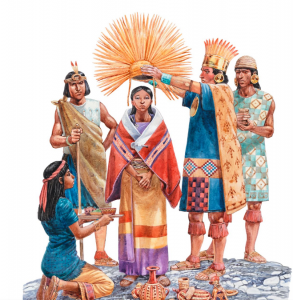
11) During religious rituals, Incas made numerous offerings to appease their gods- including textiles. Additionally, human sacrifices were clothed and buried in fine clothes designed specifically for that particular religious ceremony.
12) The role of textiles in Inca funeral services and burial
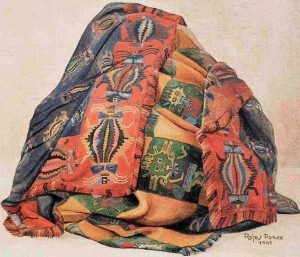
Those going to funeral services wore their finest clothing and the one being buried was dressed in the finest textiles as well. Once the body was prepared, the Incas wrapped it in more textiles and made it a funerary bundle. This was essentially a preservation method that worked very well.
13) The colours and meaning of the Inca clothes
To reiterate, what an Inca wore depended on his social status, similarly even the Incan colours had special symbolism. Their main colours were black, white, green, yellow, orange, purple, and red.
Each colour symbolised something. For example, red meant conquest, blood and royalty, yellow signified gold and maize while black signified creation and death. While on the other hand, purple, a colour of the rainbow was associated with Mama Ocllo, the founding mother of the Inca race. Furthermore, all foreigners had to wear only black clothes in Cuzco.
14) Inca designs
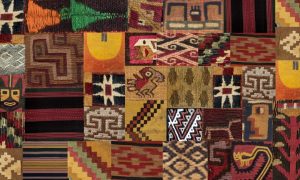
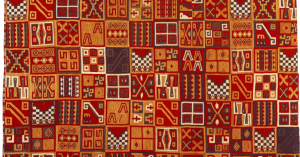
Inca designs consisted of abstracts patterns that were woven using dyed strands. For creating these designs they used various techniques such as embroidery, tapestry, mixing different layers of cloth, and painting.
Designs were often specific to family groups (ayllu). One of the reasons for repeated designs was that fabrics were often produced for the state as tax so fabrics could be associated with specific communities and their culture.
The weavers even added decoration to clothes in the form of tassels, feathers, threads and precious jewels.
15) In conclusion, clothing was a status symbol in the Inca Empire
Additionally, the Incas highly valued textiles so much so that they required its production as tribute or tax from conquered people. To enforce this, specific quantities of wool were handed over to weavers that were expected to produce a calculated amount of textiles. The fabrics that required the most amount of labour to produce were considered very valuable.
Enjoyed the above article? You may also enjoy Famous Egyptian Pharaohs – 11 Facts For You


