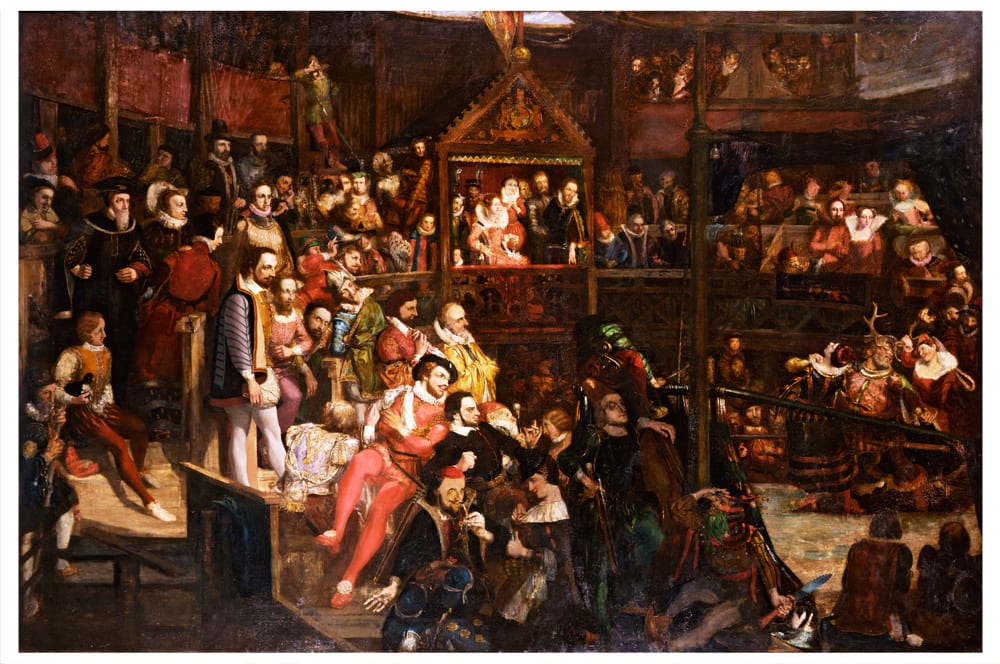

The English Renaissance theatre, simply known as the Elizabethan theatre blossomed in England between 1558 and 1642. This type of theatre mainly involved the plays of William Shakespeare, Christopher Marlowe and Ben Jonson.
Let us take a look at the Brief History Of Elizabethan Theatre.
1) At the start of the 16th century, most plays were based on religious themes
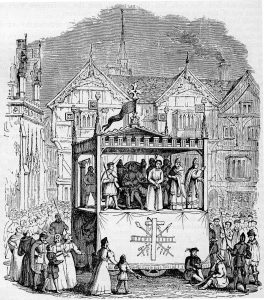
There were mainly two types of plays, one being ‘morality plays’ that showcased good and bad conduct. The other being ‘miracle plays’ that showed certain scenes from the Bible. However, there were plays of other themes as well. These were performed by troupes of actors known as ‘strolling players’. They were mostly far from religion and authorities often banned them.
2) Play themes changed during Elizabeth’s reign and English playwrights began writing comedies and tragedies
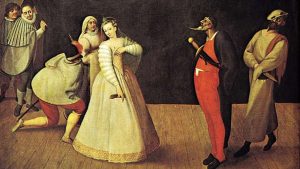
During the Elizabethan era, public performers took the form of professional performers. The first professional actors were sponsored by the queen, the nobility and anyone who had the funds for such entertainments. Subsequently, the plays changed themes and perhaps due to the English Reformation were devoid of religious themes. In fact, religious plays were banned in the 1570s. As a result, playwrights were allowed to explore their creativity and present plays that revolved around a variety of themes.
3) Elizabeth I and theatre
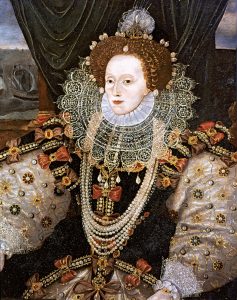
Arts, in general, flourished during the Elizabethan era, consequently making a lasting impact on English and world culture. Elizabeth I herself loved theatre and was an enthusiast of plays and performances. These were held regularly at her royal residences. She subsequently utilised theatre to project her glory along with that of her family, the Tudors.
4) Elizabethan theatre
Founded by James Burbage, London’s first permanent theatre was The Theatre. It was built at Shoreditch in 1576. Before this, plays were performed in the courtyard of inns or the country’s stately homes. However, a nobleman had to cautious about which play he allowed to be performed within his home. Anything political or controversial was likely to get him in trouble with the Crown.
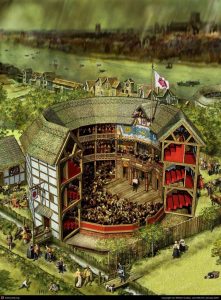
The Theatre was essentially a wooden enclosed building with an open roof. Additionally, it welcomed both nobility and commoners. The Theatre was a great success and subsequently, other theatres were built too, starting with the Curtain. Other popular theatres during the Elizabethan era included the Rose (1587) and the Swan (1595).
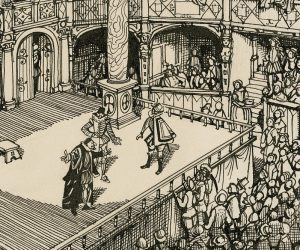
5) Elizabethan era- Globe theatre
The most famous Elizabethan theatre was the Globe Theatre. Following a dispute with the landlord, The Theatre was dismantled and subsequently reconstructed as the Globe. The Globe Theatre opened for business in 1599. It was jointly owned by Burbage’s sons and some members of Shakespeare’s playing company, the Lord Chamberlains’ Men.
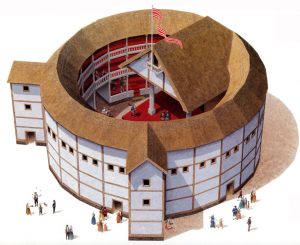
6) The Globe got its name from the Latin tag of Shakespeare’s most famous line ‘All the world’s a stage’
Like most Elizabethan theatres, the Globe Theatre was made out of wood, however, its exact dimensions are unknown. The most widely accepted measurements are that it rose to a height of 12 metres (40 ft.) and measured 24 metres (80 ft.). Additionally, it could house more than 2,000 spectators. The Globe had a rectangular stage known as the apron stage on which around 12 actors could perform at any one time. Moreover, the stage was set in the southeast corner of the theatre, so as to be in shade during afternoon performances in summer.
The base of the stage housed a pit, where for a penny, commoners (the “groundlings”) would stand to watch the performance. On the other hand, the well-off spectators sat on expensive stadium seats.
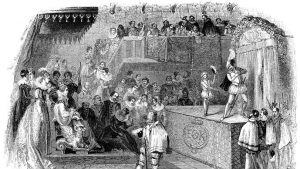
7) During the Elizabethan era, a different play was performed every day at the theatre. As a result, the theatre needed some way to advertise what was shown that afternoon. For this they used flags. Flags were put up to denote the play. They either had a picture advertisement or colour coding. In colour coding, a black flag meant a tragedy, a white meant comedy and a red indicated history.
8) Women attending theatre during the Elizabethan era
Men and women both attended theatre during the Elizabethan era, however, prosperous women wore masks to disguise their identity. At the time, women who attended plays were looked down upon. Additionally, women who did attend the theatre were generally assumed to be prostitutes. This was because the theatre was considered an unseemly place and most people thought women should stay at home with their children.
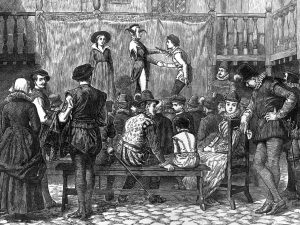
9) Women performing in theatre
Initially, no woman was allowed to perform in theatre and female roles were usually performed by young boys. However, this began to change in the second half of the 17th century and women began to play female roles.
10) The audience attending Elizabethan theatre
Elizabethan theatres were often located in the red light district. As a result, they witnessed a range of spectators from different social classes. Additionally, most plays were often three hours long and towards the end, the spectators became unruly and sometimes even joined in on the action occurring on stage. They also spoke during dull moments and threw rotting vegetables like tomatoes at the actors.
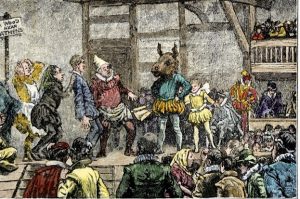
11) The famous playwrights of Elizabethan theatre
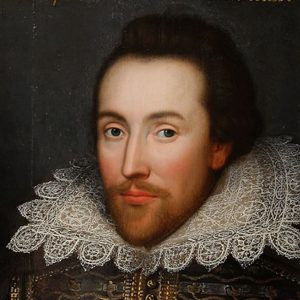
A. William Shakespeare
William Shakespeare is one of the most celebrated writers in the English language. The Bard of Avon is a playwright, actor and poet and has written around 37 plays with an average of 2 plays a year. His plays are categorised into 4 groups that essentially illustrate the broad scope of Elizabethan theatre. These being comedies, romances, histories, and tragedies.
Additionally, his works are difficult to date precisely as none have surviving original manuscripts. Hence, historians have looked to their content and written documentary evidence to date them. His earliest play is cited as one of the three parts of King Henry VI that was written between 1589–1591. And his most famous works include Romeo and Juliet, Hamlet, Macbeth and Julius Caesar.
B. Christopher Marlowe
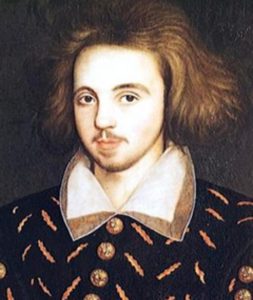
After Shakespeare, the next most famous Elizabethan playwright is Christopher Marlowe. He is the one that popularised the blank verse, which became the standard for that era. In fact, his two-part play Tamburlaine the Great is among the first English plays in blank verse. Another popular play of his is The Jew of Malta, which is also considered the first (successful) Black comedy, or tragicomedy. His other successes include Doctor Faustus and Dido, Queen of Carthage.
C. Ben Jonson
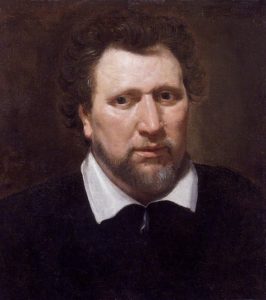
The third most famous playwright of the Elizabethan era is Ben Jonson. His artistry had a big and lasting impact on English poetry and stage comedy. Jonson’s first play, Isle of Dogs (1597), was a great success but it was suppressed for alleged rebellious content and Jonson was imprisoned for a short time. Subsequently in 1598, Jonson fell into further trouble after killing actor Gabriel Spencer in a duel. After narrowly escaping the gallows, he focused on what he was best at i.e writing plays. He wrote a string of successful plays and masques. His most celebrated works include Every Man in His Humour (1598), Volpone (1605) and Bartholomew Fair (1614).
12) Elizabethan theatre received its own fair share of criticism
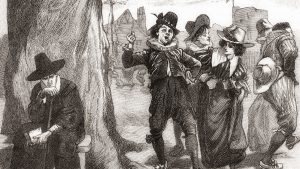
Puritans, who were prominent in Elizabethan society from the 1590s were hostile towards theatre, as they felt that “entertainment” was sinful. According to them, plots revolving around vengeance, murder, and romance corrupted a commoner’s mind. Additionally, local residents were often displeased to have a theatre in their vicinity due to the loud noise and its bad reputation. Business owner disliked theatre as well because their employees often skipped work and attended theatre instead.
Another concern was public health. When a new wave of the Black Death plague entered London in 1592, all theatres were closed for a year. Many mayors advocated to avoid public gatherings and even paid acting companies to not perform in case of a new outbreak of the plague. Furthermore, as theatres were wooden structures, they were susceptible to fires. The most famous one being at the Globe theatre when a cannon set off for a dramatic purpose set fire to the thatch roof.
13) The ban of Elizabethan theatre
Subsequently, the Puritans who became influential in the 17th century banned the staging of plays in the London theatres. Play performances remained banned for most of the next eighteen years. However, after the Restoration of the monarchy in 1660, theatres opened up again and acting companies were immediately reformed.
Enjoyed the above article? You may also enjoy Masquerade Balls- Brief History & Key Facts