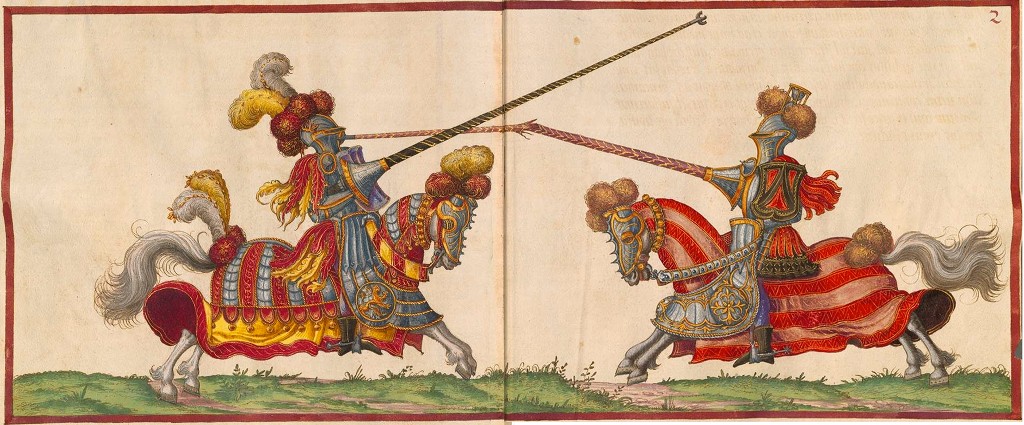
Jousting was a very popular medieval sport. It was essentially a game between two equestrians wielding lances. Its main objective was to knock the opponent off the horse using the lance. Additionally, this sport was often the main part of a tournament. In the below text we explore the brief history of jousting via key facts.
Let us take a look at the History Of Jousting In 17 Key Facts.
1) Jousting also known as tilting was mainly played by the nobility, kings and knights. Initially, it was a part of the military tactics however later it was categorised as a sport. Jousting became an important opportunity for the participants to showcase their courage, skill and talents.
2) Medieval tournaments
A medieval tournament (mêlée) was essentially mock combat. And its main objective was to capture opposing knights. A type of hastilude, tournaments probably began in France in the 11th century and subsequently spread all over Europe. They lasted several days and over time became grand and spectacular events.
3) Initially, jousting was a minor part of medieval tournaments and was an evening prelude to the big day. Additionally, it was even forbidden in England during the 12th century. One of the main reasons being that the king’s knights sustained unnecessary injuries during the sport.
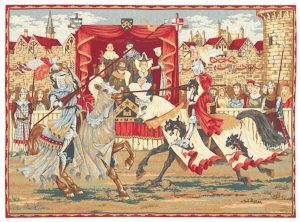
4) Jousting gained popularity in the early 13th century
The word joust essentially comes from the Latin word juxtare (‘to meet’), and in this period it was essentially a duel. Due to that, weapons were not limited to the lance. During these events, rivals would fight in groups in order to capture their opponents. Moreover, tournaments in the High Middle Ages were much rougher and less “chivalrous”.
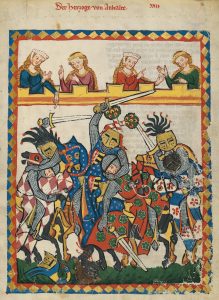
5) Jousting in the Later Middle Ages
In the Later Middle Ages, there was greater importance on chivalry and honour. Consequently, jousting became more regulated. As opposed to the free-for-all mêlée which took place across the countryside, knights showcased their skills in individual events. In these events, a good knight was to display qualities of martial prowess and noble manners. Additionally, competitors with a criminal background or an ill reputation were banned from participating.
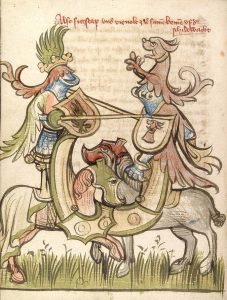
6) The earliest recorded jousting tournament was held in 1066. In the following centuries, they became so widespread that a series of regulations were implemented limiting the number of jousts that could be held, in case the king’s armies are preoccupied when an actual conflict arose.
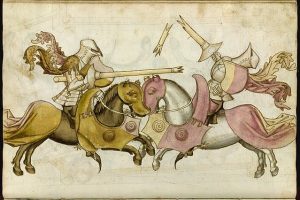
7) History of Jousting: Knights
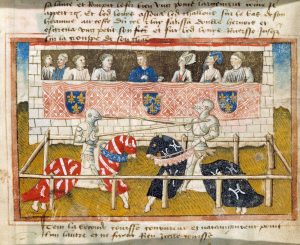
As tournaments became a grand event, knights were even expected to prove their lineage in order to participate. They had to display their family’s coat of arms on their armour and the horse’s coat. Oftentimes, knights dressed up such as legendary individuals like King Arthur, as traditional enemies like the Saracens and even court ladies.
8) History of Jousting: Weapons
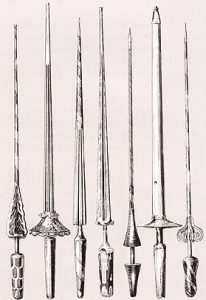
The main weapon used for medieval jousting was the lance. It was around 2.4 to even 3 metres (8-10 ft) in length. Commonly made of ash or cypress, a lance was made hollow so that it shattered without causing too much injury. Other jousting weapons included a dagger, a mace and a sword. Swords weren’t used while still on horseback. However, in case one knight dismounted then the other would also leave his horse and the two would engage in hand-to-hand combat if they wished.
9) In 1292, King Edward I (1272-1307) decreed the “Statute of Arms for Tournaments”.
This order essentially provided new laws for tournaments and jousting. It ordained that the lance used for jousting should be blunt. These new types of lance were called “lance of peace”. These were either blunt or replaced by a metal crown-shaped head called a coronel. However, in the case of grudge battles (a joust á outrance), the two rivals used lethal weapons and swore to fight until death.
10) In the 14th century, a vamplate was added to the lance to protect the hand. Subsequently, in the 15th century, the lance was made narrower where the hand gripped it.
11) History of Jousting: Armour
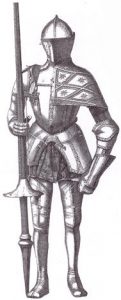
The jousting armour worn during the medieval times varied according to a knight’s financial status. These armours were extremely expensive. Thus many knights used the conventional medieval knight battle armour for jousting. Subsequently, armours were developed specifically for jousting. These armours had heavier protection of the side towards the opponent and lighter or no protection on the other side. Another type of jousting armour had a built-in shield on the part of the waist where the lance was to strike. Some jousting armours were even designed to break apart on impact, leaving the rider in the saddle and thus minimizing the possibility of injuries.
12) History of Jousting: Helmets
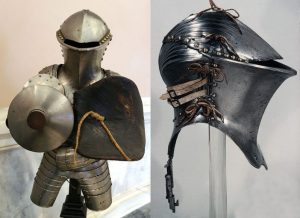
The helmet that was primarily used for jousting was the frog-mouth helm. The analogy was drawn from the way the bottom half protruded more than the top half thus resembling a frog. The horizontal slit essentially allowed the rider to see. By the late 15th century, it had become customary for this type of helmet to be screwed to the breast and back armour so that it did not fall off easily if struck. During tournaments, these helmets were adorned with plumes, crests and other decorative items.
13) History of Jousting: Shields
Medieval shields a.k.a the heater shields evolved into jousting shields. Often containing a bouche, a notch or “mouth” for the lance to pass through, these shields were made out of wood and leather, usually with iron reinforcing parts. Towards the 15th century, knights often wore pear-shaped padding (poire) on the shoulder to cushion any blows from the shield.
14) Horses were protected with a padded chest protector that hung around the animal’s chest
Oftentimes they also wore a metal plate that protected their head and eyes. Saddles were given a higher back thus making it easier for the knight to stay put when struck by an opponents lance. In the 14th-century saddles were fitted with curving protectors for the rider’s legs that were otherwise protected by shin guards.
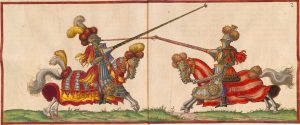
15) The area where knights jousted was known as the lists or list field. It was essentially a rectangular space that was usually spread with straw or sand.
From the early 15th century, the fields were separated by a wooden or cloth barrier known as tilts. This ensured that the knights did not clash head-on. Each rider essentially set off from the opposite ends and raced towards each other aiming with their lance to hit the opponent on the chest, throat or helmet. The objective being to knock the other from the horse.
Oftentimes, the lances broke on impact—a deliberate safety measure— and following this, the knight’s squire provided his master with a new one. Over time the size of the jousting field reduced and due to the greater safety, knights used lighter and more extravagant armour, helmet crests and shields.
16) Jousting rules during the Middle Ages
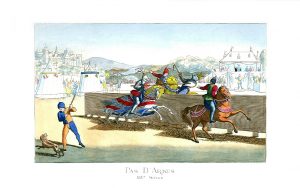
Gradually, jousting became less about knocking your opponent off his horse and more of a points-based sport. With the introduction of complex rules, points were given based on the number of shattered lances or hits on a particular part of the body. Moreover, taking off the helmet was a sign that a knight did not wish to continue the joust.
Furthermore, points could be withdrawn if the horse was struck, an opponent was hit on the back or if one galloped into the tilt three times. The winner won prizes such as a gold ring, a jewel or a gold coin while lesser commercial events’ prizes included a certain lady’s kiss or the general adoration of the crowd.
17) The decline of jousting
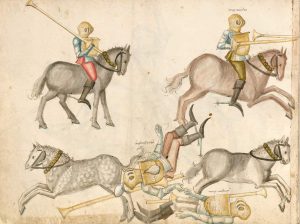
Jousting declined towards the end of the 16th century. Horsemanship, archery and fighting on foot became its popular alternatives. Additionally, another cause for its decline was the dangers associated with it. A famous example being the untimely death of King Henry II of France during a jousting match. The king suffered a fatal wound when a sliver of the opponent’s lance pierced his eye.
Subsequently, in the 17th century, traditional jousting was a thing of the past. However, some traces of the sport continued in Europe and were transferred to European colonies in North America.
Enjoyed the above article? You may also enjoy 15 interesting facts about the Sedan chair