

The Order of Santiago was established in the 12th century. Its members—the knights of Santiago— were tasked to fight the Spanish Muslims and to protect pilgrims en route to the shrine of Santiago de Compostela. Additionally, the Order is one of the most renowned military orders in history.
Let us take a look at the Order of Santiago- Brief History & Key Facts.
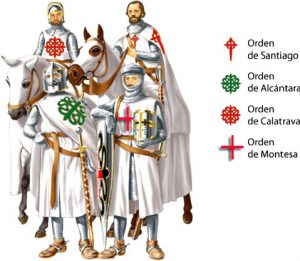
1) The Order of Santiago owes its name to the national patron of Spain St. James the Great. It is one of the four Spanish military orders, along with the Orders of Calatrava, Alcántara, and Montesa.

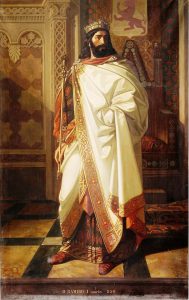
2) According to legend, the Order was founded by King Ramiro I of Asturias the day after his victory at the Battle of Clavijo in 844 AD
Additionally, during the battle, the apparition of Apostle Santiago suddenly appeared and led the Christians to victory. Thus also becoming the patron saint of Spain and gaining the title Santiago Matamoros (the Moor-killer). Subsequently, the site of Santiago de Compostela became an important pilgrim centre and cavalry was founded to protect the pilgrims. Although this battle is based on legend, it created a huge impact on Spain’s national identity.
3) The obscure beginning of the Order of Santiago
The widely accepted theory is that the Order was formed around the 12th century. The exact circumstances surrounding the founding of the order, however, are obscure as there are two rival claimers for the honour.
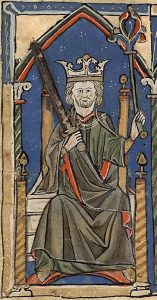
According to one account, the Order of Santiago was founded by King Ferdinand II of León. As he was returning back to León from Badajoz, he took control of the city of Cáceres. Subsequently, King Ferdinand II, the bishop of Salamanca, and 13 knights formed the Order of the Fratres of Cáceres.
The honour of being the first grandmaster was granted to Pedro Fernández de Castro; a veteran knight who had gone on a pilgrimage to the Holy Land. It was here that he had encountered the Order of the Temple and was inspired to form a similar order in his homeland.
4) The order was renamed the Order of Santiago in 1171. And its members were initially called the Freires. However, they identified themselves as “Cáceres y Espaderos” in honour of the city they defended. Additionally, their headquarters were allegedly in the round tower on the wall around the Carvajal palace.
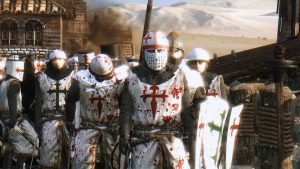
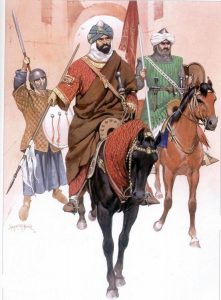
5) In 1173, Almohade Emir, Abu Jacob Yusuf launched an attack on Cáceres to recapture the city
The city was captured, however, the knights of Santiago refused to surrender and fought until their last breath. After their death, the Almohades decapitated them and displayed their heads as trophies and as a warning to the Christians.
6) The remaining members of the order allied with the regular canons of Saint Augustine
This meant that the knights of Santiago were now responsible for protecting the Sepulchre of Santiago de Compostela and the pilgrims that came to its city. The knights subsequently adopted new religious duties-including that of the vow of poverty.
7) As the knights were expelled from Cáceres, they were in poor standing with King Ferdinand II of León. As a result, they began searching for a new patron.
The knights of Santiago finally found a patron in King Alfonso VIII of Castile. On January 9, 1174, King Alfonso VIII handed the knights the castle and village of Uclés (in Cuenca). This would serve as their new headquarters. Additionally, using his influence, Alfonso VIII had the pope Alexander III, decree a bill recognising the Order of Santiago as a religious order. This also gave them all the privileges and exemptions of other monastic orders. Consequently, the knights of Santiago ceased to belong only to León. Furthermore, due to this, King Alfonso VIII is also considered the founder of the Order of Santiago.
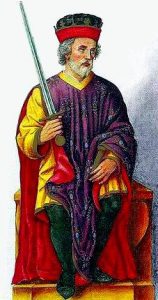
8) At its peak, the Order of Santiago alone had more possessions than the two older Orders of Calatrava and Alcántara combined
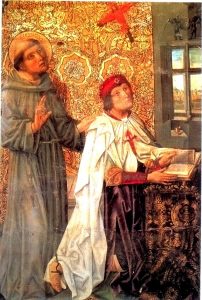
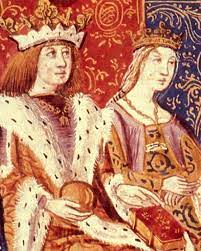
9) An important milestone in the history of the Order took place in 1499. After the completion of the Reconquista, Spain’s unification took place under the rule of the Catholic Monarchs, Ferdinand II of Aragon and Isabella I of Castile. Subsequently, to strengthen their position, the monarchs obtained the administration of the three major Spanish military orders: Santiago, Calatrava, and Alcántara.
10) The formation of the Council of Orders
During the reign of the Holy Roman Emperor Charles V (who ruled the Spanish Empire as Charles I), the authority and power of the Spanish military orders came to an end. At the time, the orders were incorporated into the Spanish crown. Additionally, even though the orders were unified under one government, they still had the right to hold their possessions, titles and functions separately. Subsequently, a Council of Orders was formed to supervise the orders.
11) The Order was suppressed when Spain became a republic
The Order of Santiago was suppressed during the First Spanish republic. However, this was a short-lived regime and after its fall, the order was re-established though as a nobiliary institute of honourable character. However, it was again extinguished following the proclamation of the second republic in 1931. In 1976, the Order was restored as a civil association along with the reinstation of the monarchy. Today, the Order of Santiago still exists under the protection of the Spanish crown.
12) The Order of Santiago: Insignia
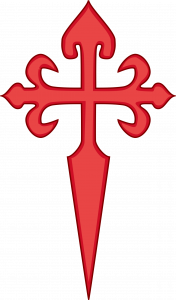
The Cross of Saint James also called the Santiago cross is a red cross resembling a sword, with the shape of a fleur-de-lis on the hilt and the arms. The knights of Santiago wore the insignia stamped on the royal standard and white cape. The royal standard’s cross had a scallop in the centre and another one at the end of each arm. The three fleurs-de-lis denote ‘honour without stain’, a reference to the Apostle St. James’s moral features. The sword signifies the Apostle’s chivalrous character and also the way he was killed by a sword.
12) Membership of the Order of Santiago
Initially, entrance to the Order was simple, however, after the mid-13th century, it became more complicated. Once the Reconquista was finalised, any candidate who wished to join the Order was to prove that at least 4 generations of his family were of noble descent by blood and not by privilege and had never worked in manual or industrial labour.
Additionally, many classes of people were disqualified from membership due to their origins or circumstances. These included Jews, Muslims, heretics, merchants, attorneys, people who worked a trade to support their livelihood or anyone who did not behave like a proper gentleman.
Furthermore, the prospective candidate had to live for 3 months in the galleys and reside for a month in a monastery to learn the Rule. Subsequently, the King and the Council of Orders scrapped many of these requirements.


