
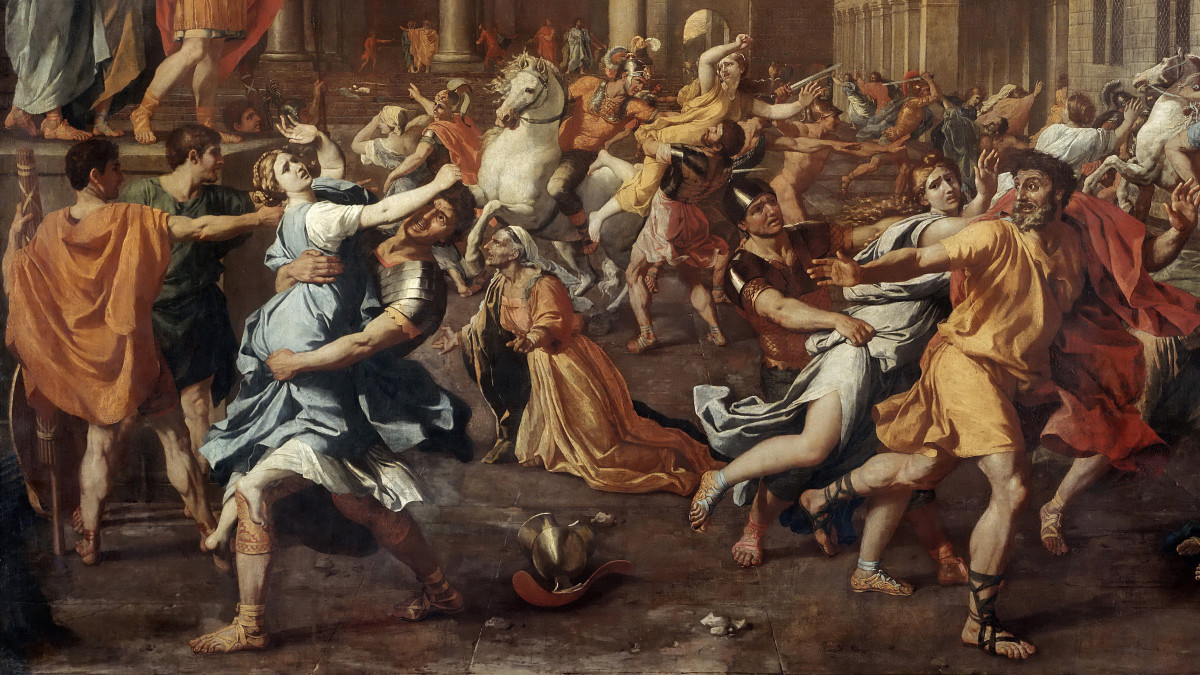

The Roman Empire was one of history’s most legendary empires. However, like most great empires it had its fair share of social, political, military and financial problems. These factors ultimately led to its decline and end. Let us explore the 9 major reasons why Rome fell.
Let us explore the 9 Major Reasons Why Rome Fell.
1) One of the primary reasons for Western Rome’s fall was the invasion by barbarians
The Roman Empire had its fair share of powerful enemies. Consequently, over the centuries they had fought several battles against these forces. Rome was always at war with Germanic tribes. However, by the 300’s “barbarian” forces like the Goths and Vandals had trespassed beyond the Empire’s borders. The Roman forces successfully defended themselves against these tribes. However, in 410, the Visigoth King Alaric successfully plundered the city of Rome. Subsequently, it was sacked another time in 455 by the Vandals.
Finally, in 476, Germanic military leader Odoacer staged a coup and deposed Roman Emperor Romulus Augustulus. Ultimately this coup marked the end of the reign of the Western Roman Emperor. Due to this, many historians cite the year 476 as the year that indicated the disintegration and the fall of the Western Roman Empire.
2) Financial crisis in the Roman Empire
The cost that came with constantly defending the empire was quite high. This was paired with heavy taxation, overspending and high inflation. These factors gave rise to a severe financial crisis. Additionally, the gap between the poor and the rich had considerably widened. Many wealthy even fled the empire and set up independent fiefdoms in the countryside.
The empire was dealt another blow when the Vandals claimed North Africa in the 5th century and started hampering the empire’s trade by roaming the Mediterranean as pirates.
Additionally, the flow of gold to the East to pay for luxury goods led to a shortage of gold to put in Roman coins. Ultimately, the roman currency was devalued to such an extent that a system of bartering returned to one of the greatest civilisations of the ancient world.
3) Overreliance on slave labour
Another reason why Rome fell was because of its overreliance on slave labour. It was the slaves who sustained Rome’s economy. And it was due to this that the number of slaves increased dramatically during the first two centuries of the Roman Empire. Although traditionally, new slaves were brought in from the conquered lands, towards the end of the 2nd century, an expansion halt contributed to an acute labour shortage. As the Romans were so dependent on slave labour, they failed to come up with better and new technology to produce goods effectively.
Additionally, the slaves also received harsh treatment, and this led to a rise in numerous Servile(slave) wars and revolts. In the later centuries, however, the attitudes towards slaves changed. And with manumission(the act of freeing slaves) the number of slaves declined and so did the manpower that the Roman Empire depended upon.
4) Another reason that contributed to the fall of Rome was the rise of another religion- Christianity
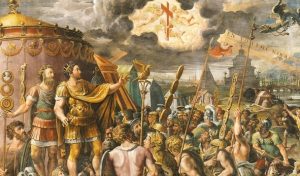
The Christian religion was monotheistic and this was a contrast to the Roman religion which was polytheistic. Additionally, for centuries, the Romans had persecuted Christians for their beliefs. However, they soon grew tolerant towards the religion and eventually the Roman Emperor, Constantine the Great proclaimed himself a Christian. Subsequently, in 313, the Edict of Milan legalized Christianity and later that century it became the official state religion of the Empire.
Although these decrees ended years of persecution, they also dissolved the traditional Roman values system. Additionally, at the time, the Romans considered their emperor a divine power. But the Christian monotheistic belief weakened the authority and credibility of the emperor.
5) The weakening of the Roman military
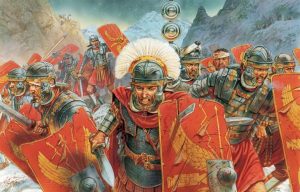
The mighty Roman Empire was able to defeat its enemies during its prime because of the effectiveness of its army. However, the weakening of the Roman army led to its eventual downfall. The Roman legion was essentially divided into the high-quality troops called the field force and the lower quality troops a.k.a the frontier force. However, due to the numerous civil wars and battles against outside invaders, the force field was considerably weakened and greatly reduced in number.
As a result, the Empire had to start recruiting foreign mercenaries in their armies. Eventually, the army consisted of a large number of Germanic Goths and other barbarians. As a result the Romans even began using the Latin word “barbarus” in place of soldier.
Although the foreign mercenaries were strong and fierce warriors, they held no loyalty to the Empire and often turned against it. This added to internal disunity in the army. Ultimately these factors injured the Roman army and rendered it incapable of protecting the Empire.
6) The East rises as the West falls
The Roman Empire was divided into two by Emperor Diocletian– with the Western Empire seated in the city of Milan and the Eastern Empire in Byzantium, later known as Constantinople. The division worked well in the beginning as the Empire was easier to govern. However, eventually, the two halves failed to work together and squabbled over resources and military aid.
Subsequently, the divide widened and the largely Greek-speaking Eastern Empire worshipped under the Eastern Orthodox branch of the Christian church, while the Western Empire worshipped Roman gods and spoke Latin.
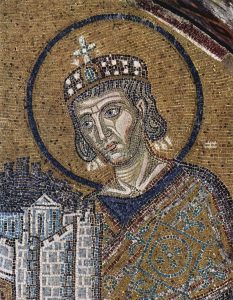
Over time, the east thrived while the west crumbled. Additionally, emperors like Constantine saw to it that the city of Constantinople is well guarded but the city of Rome and Italy were left vulnerable.
Eventually, the political structure of Western Rome disintegrated in the 5th century. However, the Eastern Empire survived as the Byzantine Empire for hundreds of years before being overwhelmed by the Ottoman Empire in the 1400s.
7) Another major reason for the fall of Rome was the widespread corruption and political instability
Another reason that contributed to the fall of Western Rome was the rampant corruption and political instability. During the height of its power, Rome stretched from the Iberian Peninsula to Northern Africa and Mesopotamia. Consequently, an empire of this magnitude was difficult to govern. Additionally, inconsistent and ineffective leadership only magnified the problem.
Due to the numerous civil wars, the empire was further thrust into chaos. And if one became an emperor they had essentially signed a death warrant. As emperors were usually murdered by their successors.
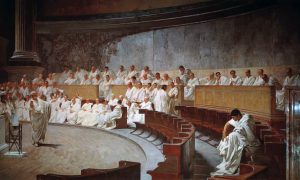
Furthermore, a chunk of the power was in the hands of the corrupt Praetorian Guard—the emperor’s bodyguards—who assassinated and installed new sovereigns at will. In fact, their power grew to such an extent that one time they sold, at auction, the throne of the emperor to the highest bidder. At the same time, the Roman Senate was filled with corrupt and incompetent officials as well. Due to the worsening situation, civic pride eroded and many Roman citizens lost trust in their leadership.
8) Constant warfare and military overspending
The Empire was constantly engaged in war with enemies such as the Goths and Huns. As a result, the Roman army needed lots of funds to gather troops and resources to defend its frontiers from civil wars and outside attacks. The army essentially became over-stretched which prompted them to allow the conquered mercenaries to join the legions.
This further cost money and dwindled the Empire’s treasury. Subsequently, as more and more funds were allocated to the military’s upkeep, other important aspects like civil infrastructure were sidetracked and fell into disrepair
9) A decline in morals and values
The final years of the Empire saw a major decline in morals and values. Those years witnessed decreasing safety, promiscuity, extravagant parties and violence. Additionally, rampant crime was seen on the streets of the major cities. According to historians during the reign of Trajan, there were around 32,000 prostitutes in Rome. Moreover, Roman Emperors such as Nero and Caligula were infamous for wasting money and indulging in lavish parties. The widespread violence eventually established the gladiator games. These games were infamous for their sadistic and cruel nature.