
Introduction
Christopher Columbus is often remembered as the explorer who opened sustained contact between Europe and the Americas. What is far less acknowledged is his role as a colonial governor whose administration in the Caribbean was defined by systematic violence, enslavement, and exploitation.
This article examines the documented atrocities committed under Christopher Columbus’s authority, drawing on eyewitness testimony, royal investigations, and Columbus’s own correspondence. Crucially, it shows that even by the standards of his own time, his conduct was considered brutal and unacceptable.
Who was Christopher Columbus beyond the voyages?
Christopher Columbus was not only an explorer but also the first European governor of Spain’s overseas colonies. After his 1492 voyage, he was granted sweeping powers as Governor of the Indies, placing him in direct control of Spanish settlements and Indigenous populations in the Caribbean, particularly on Hispaniola.
As governor, Columbus was responsible not just for exploration, but for law, punishment, labour systems, and resource extraction. Unlike earlier explorers such as Leif Erikson, whose voyages left little permanent colonial footprint, Columbus’s expeditions led directly to sustained conquest and exploitation.
The Taíno genocide: Columbus and the Caribbean population collapse


When Columbus arrived in 1492, Hispaniola was home to a thriving Taíno population numbering in the hundreds of thousands. Within decades, that population collapsed by as much as 90 percent.
While disease played a role, historians agree that forced labour, violence, starvation, and social breakdown dramatically accelerated the catastrophe.
The Columbus gold tribute system and the Hawk’s Bell
One of the clearest examples of systemic brutality was the gold tribute system imposed by Columbus.
Every Taíno person over the age of 14 was required to deliver a fixed quantity of gold dust every three months. The amount was measured using a small hawk’s bell. Those who met the quota were given a copper token to wear around their necks as proof of payment.
Those who failed faced severe punishment.
Contemporary accounts describe:
-
Hands being cut off
-
Public whippings
-
Execution or enslavement
This was not random cruelty. It was a structured system designed to extract wealth through terror.
Enslavement and human trafficking

Columbus openly advocated Indigenous enslavement. In private letters to the Spanish Crown, he calculated how many Taíno could be sold and described them as suitable for forced labour.
In 1495, he oversaw the shipment of hundreds of Indigenous captives to Spain. Many died during the crossing. Survivors were sold into slavery.
Although Queen Isabella later expressed opposition to Indigenous enslavement, Columbus continued forced labour practices in the colonies.
Columbus’s logbooks vs the reality on the ground
A striking contrast exists between Columbus’s public logbooks and his private correspondence.
In his voyage journals, he described the Taíno as generous, intelligent, and peaceful. Yet in letters sent to the Crown, he discussed how many could be enslaved, punished, or exploited for profit.
This contradiction demonstrates premeditation, not misunderstanding. Columbus understood the humanity of the people he ruled and chose to exploit them anyway.
Sexual violence and exploitation under colonial rule
Eyewitness accounts from the period describe widespread sexual exploitation of Indigenous women and girls by Spanish colonists operating under Columbus’s administration.
Bartolomé de las Casas, a contemporary priest and later critic of Spanish colonialism, documented:
-
Girls taken as sexual captives
-
Families torn apart
-
Sexual violence treated as a reward for soldiers
While Columbus did not personally commit every act, he created and maintained a system in which such abuse was routine and unpunished.
Why was Christopher Columbus arrested in 1500?

By the late 1490s, complaints against Columbus flooded the Spanish court. These came not only from Indigenous people but also from Spanish settlers.
The Crown dispatched royal investigator Francisco de Bobadilla.
Bobadilla compiled a 48-page report detailing abuse, torture, arbitrary executions, and misrule. This document was lost for centuries and only rediscovered in 2006 in the Spanish archives.
Its contents were damning.
As a result:
-
Columbus and his brothers were arrested
-
He was returned to Spain in chains
-
He was stripped of his governorship
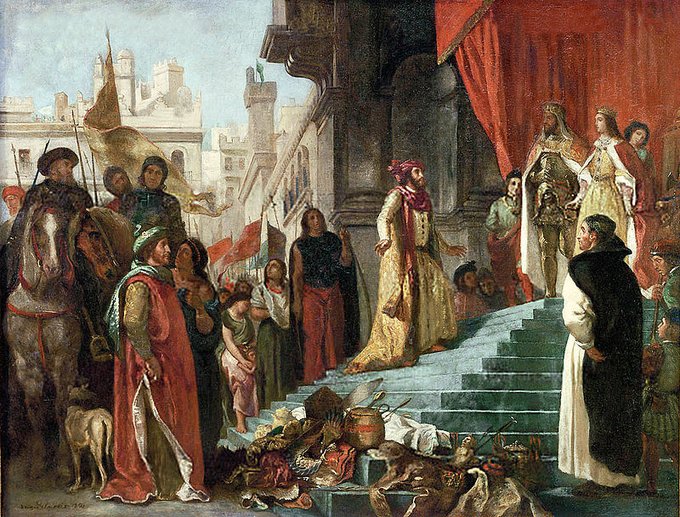
This is critical: Columbus was removed by his own contemporaries, not modern critics. His removal from power and forced return to Spain in chains marked one of the earliest acknowledgements that his rule had crossed acceptable boundaries Columbus’s return to Spain.
Was Columbus uniquely cruel for his time?
Columbus did not invent colonial violence. However, his rule stood out even within an already brutal system.
What makes his case distinct is:
-
The scale of forced labour imposed immediately
-
The speed of demographic collapse
-
The volume of primary documentation, including his own letters
His administration helped establish patterns of exploitation that would echo across the Americas for centuries.
Why Columbus remains controversial today
Columbus is controversial not because history has changed, but because access to historical evidence has expanded. Documents such as the Bobadilla Report and the writings of Bartolomé de las Casas force a reassessment of Columbus not merely as an explorer, but as a governor whose policies caused immense suffering.
This kind of historical re-evaluation is not unique to Columbus. Similar reassessments appear in studies of other powerful figures whose authority masked systemic harm, including those examined in Worst Roman Emperors.

Sources
-
Bartolomé de las Casas, A Short Account of the Destruction of the Indies
-
Francisco de Bobadilla, Report on Hispaniola (Archivo General de Indias)
He was arrested in 1500 after a royal investigation by Francisco de Bobadilla found extensive abuse, torture, and misrule under his administration.
Some acts are directly attributed to him; many others were carried out under his authority. As governor, responsibility rested with him.
No. Most educated Europeans knew the Earth was spherical. Columbus’s error was underestimating its size.
A legal document read in Spanish to Indigenous people—who could not understand it—demanding submission to the Crown or justifying violence.
As an eyewitness, his writings provided foundational evidence used by historians to document early colonial abuses.


