
From Geronimo’s last stand in the desert to Wilma Mankiller’s battles in the courtroom and council chamber, famous Native American leaders have shaped the story of North America in ways that go far beyond Hollywood stereotypes. For many Native nations, this story begins not with the Wild West, but with the first waves of European conquest and the atrocities committed by Christopher Columbus.
This overview looks at 15 influential Native American chiefs and leaders from the 1600s to the late 1900s. Some are remembered for dramatic battles; others for diplomacy, writing, or community-building. Together they show that Native American leadership is really a story of sovereignty, law, and survival, not just warfare.
Where possible, we’ve noted each leader’s tribal nation and traditional region (Great Plains, Southwest, Southeast, Great Lakes, etc.) to help you place them on the map.
How Did Native American Leadership Systems Work? (Hereditary Chiefs vs War Leaders)
Modern searchers often ask: “How did Native American leadership systems work?” There is no single answer. Indigenous governance was as diverse as Europe’s, with many different political structures, legal traditions and spiritual roles.
-
Some nations had hereditary chiefs, where leadership passed through family lines.
-
Others chose war leaders only during crises, separate from everyday civil or spiritual authorities.
-
Many used councils of elders or clan leaders to make decisions, rather than a single ruler.
-
In several matrilineal nations, such as the Cherokee and Haudenosaunee (Iroquois), women controlled land and could choose or depose male leaders.
European and US officials often called anyone they negotiated with a “chief”, but that can hide the complexity of tribal sovereignty. These leaders were operating inside fully developed legal and social systems, not “tribes without laws”.
In the 1800s, US policies such as the Indian Removal Act of 1830 tried to force Native nations west of the Mississippi. Later, treaties, boarding schools and reservation systems placed Indigenous governance under extreme pressure. The people below navigated this storm with very different strategies.
15 Influential Native American Chiefs and Leaders
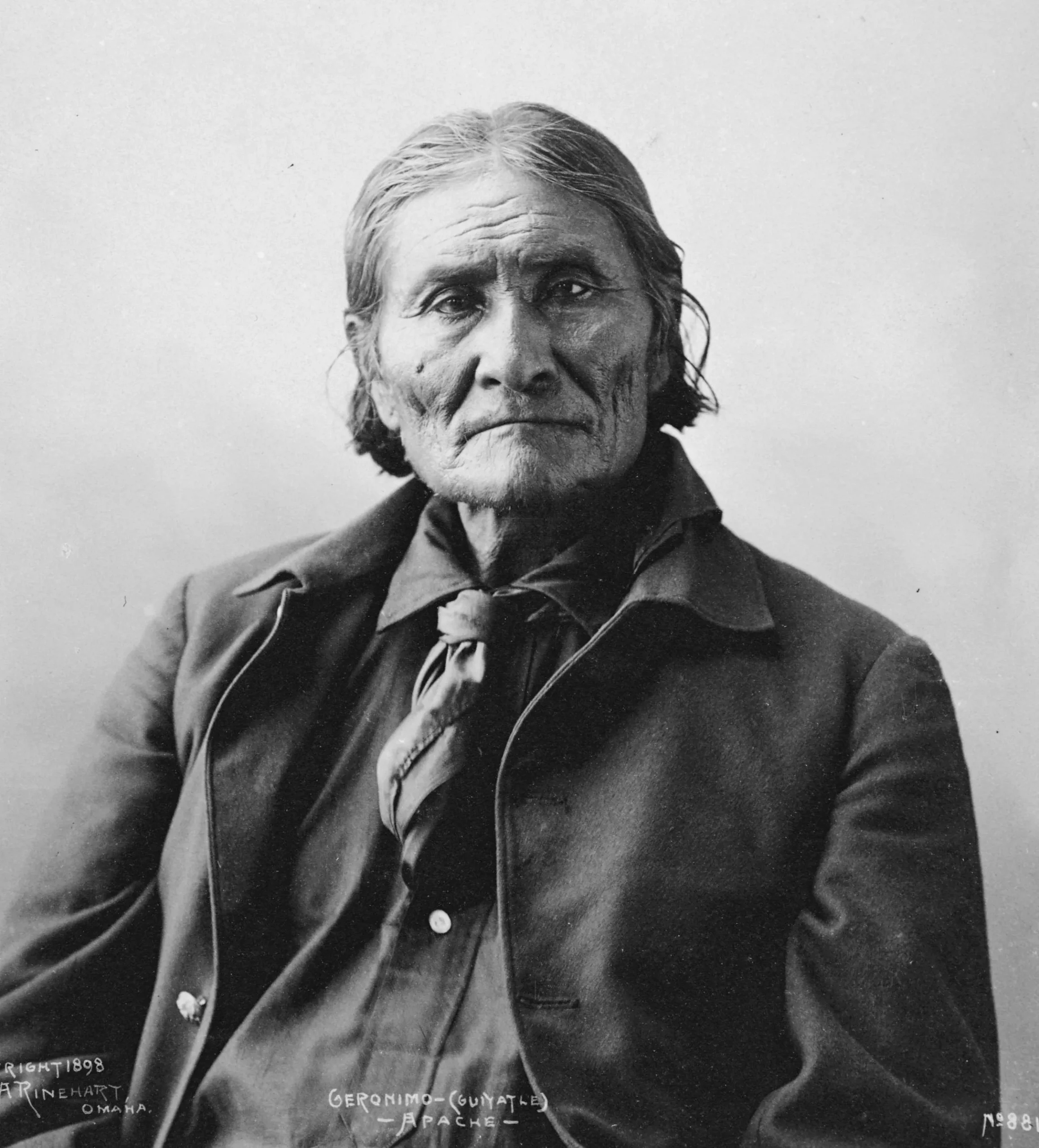
1. Geronimo: Apache Resistance and the End of the Indian Wars
Nation: Chiricahua Apache (Bedonkohe band)
Region: Southwest (Arizona / northern Mexico)
Known to his people as Goyaałé, Geronimo became one of the most famous Native American chiefs in history for his role in the final phase of the Indian Wars. After Mexican soldiers killed members of his family, he led small, fast-moving bands of Apache against both Mexican and US forces.
Geronimo’s deep knowledge of the rugged desert allowed him to evade thousands of soldiers. His surrender in 1886 is often treated as the symbolic end of large-scale armed resistance in the Southwest. He spent his remaining years as a prisoner of war, appearing at world’s fairs and parades as a living symbol of a frontier the government claimed was “closed”.
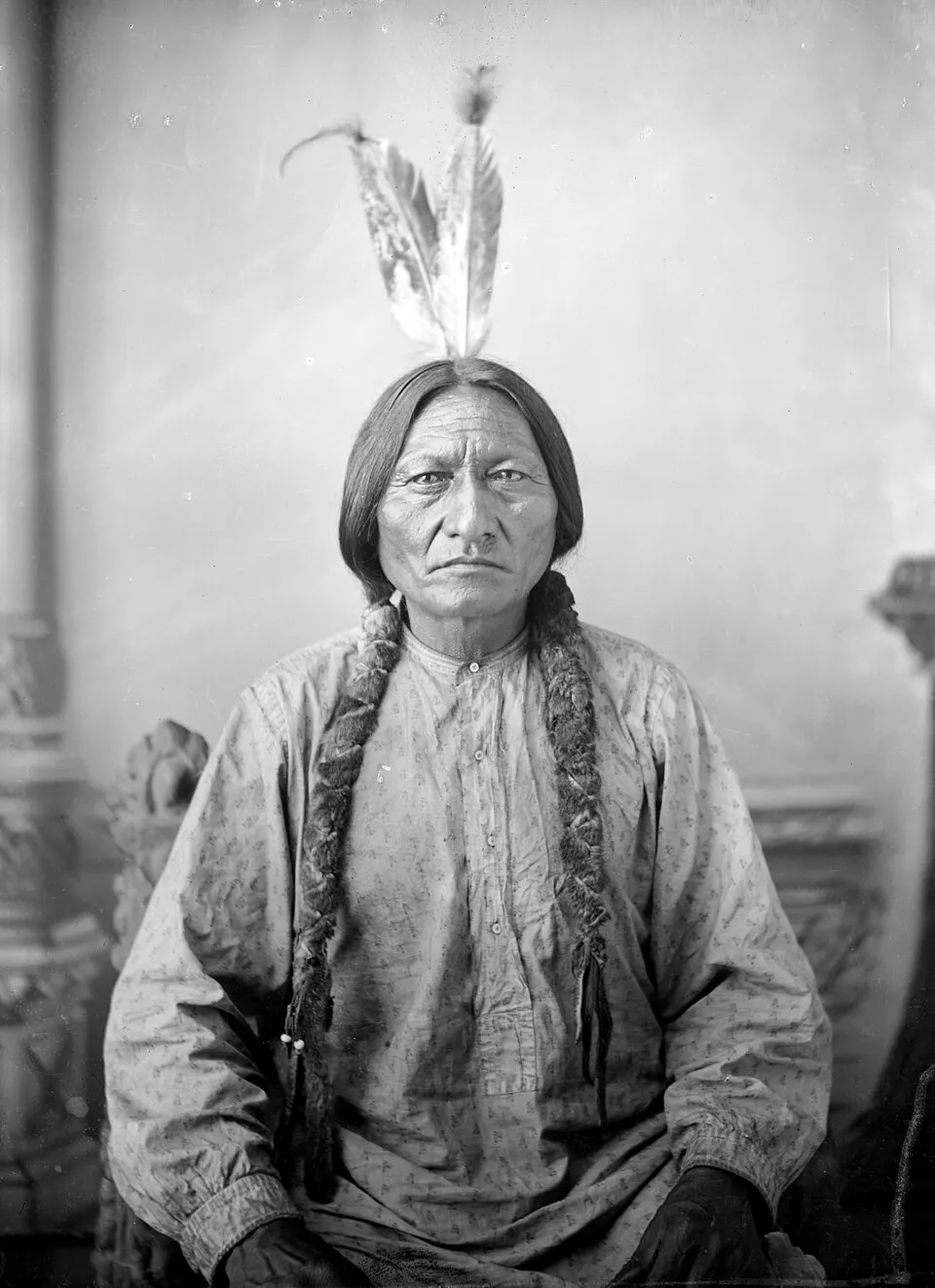
2. Sitting Bull: Lakota Spiritual Leader and the Ghost Dance
Nation: Hunkpapa Lakota (Sioux)
Region: Northern Plains (Dakotas / Canada)
Sitting Bull was a respected warrior, but above all a spiritual and political leader. He rejected US demands to move onto reservations and refused to sign away the sacred Black Hills.
In 1876, his vision of victory helped bring together a large Lakota, Cheyenne and Arapaho camp that defeated Custer at the Battle of the Little Bighorn. Later, as reservation life tightened, Sitting Bull became associated (often more in the government’s imagination than in reality) with the Ghost Dance – a peaceful religious movement that promised renewal of the old world.
US officials feared the Ghost Dance might inspire an uprising. In 1890, they tried to arrest Sitting Bull at his home; he was killed in the chaos, turning him into a martyr of Lakota resistance.
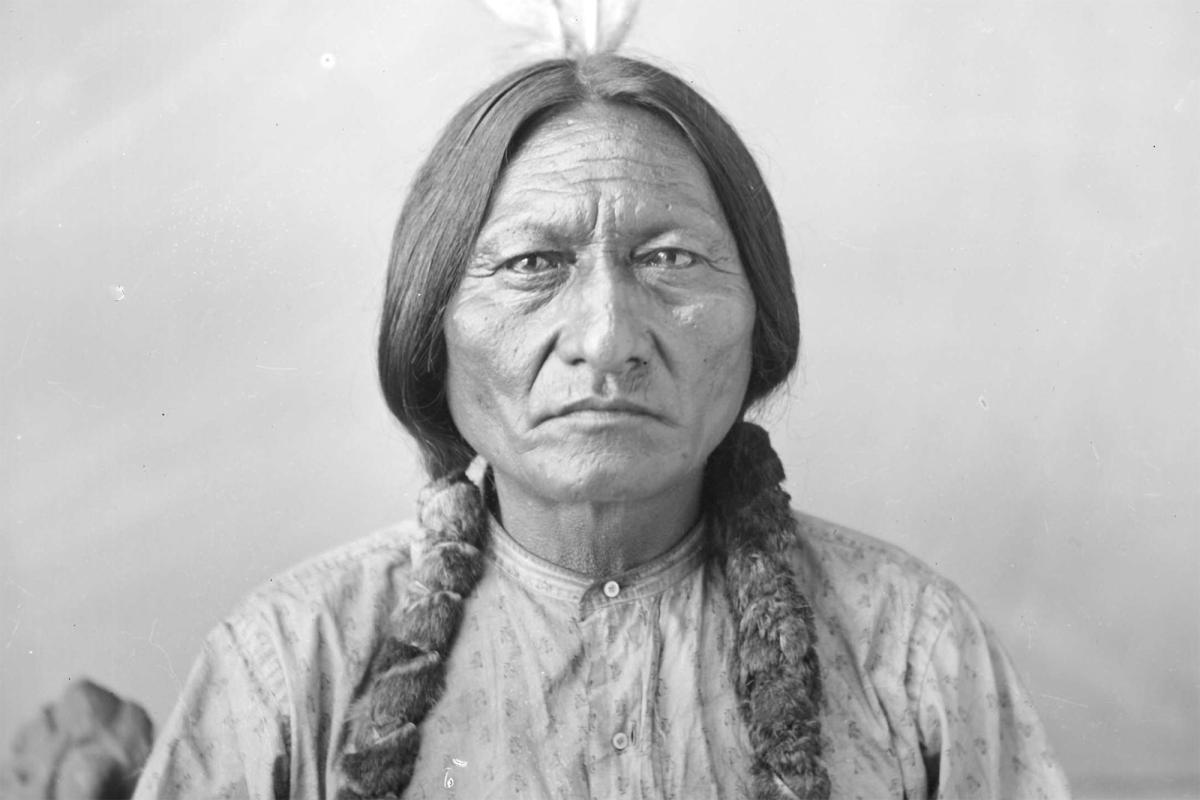
3.Crazy Horse (c. 1840-1877)- An iconic warrior who fought for the preservation of traditional Native American life.
Nation: Oglala Lakota
Region: Northern Plains (Black Hills / Wyoming / Montana)
Another one of the famous Native American leaders is Crazy Horse. He was a Lakota leader belonging to the Oglala Band. He fought for the preservation of traditional Native American life. Moreover, he also expressed resistance against the white settlers. He has participated in various famous battles. His notable battles are the Black Hills War, Fetterman Fight and Battle of the Little Bighorn.
During the Battle of the Little Bighorn, he led a war party to victory. Hence earning respect from both his people and the enemies. Additionally, the Last Sundance of 1877 was held in his honour. During the dance, five warrior cousins sacrificed blood and flesh in his honour. Additionally, offering prayers for the trying times ahead.
Crazy horse eventually surrendered to the U.S. forces in the year 1877. A guard mortally stabbed him when he allegedly resisted being imprisoned at Camp Robinson.
He is one of the most notable and influential Native American Leaders. Additionally, he was honoured by the U.S. Postal service with a postage stamp 13¢ Great American Series.
His legacy still lives on, a monument is under construction in his honour. The Crazy Horse Memorial began construction in 1948 and its construction continues today. It is located in the Black Hills. Post completion it will be the second tallest statue in the world.

4. Chief Joseph (1840-1904)- Famous Nez Perce Leader, Humanitarian and Peacemaker
Nation: Nez Perce (Nimiipuu), Wallowa Band
Region: Pacific Northwest / Rocky Mountains (Oregon, Idaho, Montana)
Chief Joseph – one of the most famous Native American leaders in US history was the best-known leader of the Wallowa Band of the Nez Perce Tribe. His people lived in the Wallowa Valley, in the rugged Rocky Mountains, until the US federal government forced them onto a smaller, inferior reservation in Idaho.
When white settlers flooded into Nez Perce homelands and tensions turned violent, Joseph and his band refused to accept this loss of land quietly. After a series of clashes, they chose to flee rather than submit. This decision launched what is now known as the Nez Perce War, as Joseph and his followers moved toward Canada, trying to escape US control.
Throughout this long retreat, Chief Joseph and his people were pursued by US troops under General Oliver O. Howard and other commanders. The Nez Perce fought skilfully while protecting families on the move, winning widespread respect and admiration from both soldiers and journalists. US newspapers covered the Nez Perce War closely, which helped make Joseph one of the most recognisable Native American chiefs of his time.
Eventually, exhausted and outnumbered, Chief Joseph surrendered to US forces. During the surrender he gave his famous Chief Joseph speech, often summarised as “I will fight no more forever,” which cemented his image as a humanitarian and peacemaker. Joseph believed he had negotiated terms that would allow his people to return to a reservation in western Idaho near their homeland. Instead, the Nez Perce were transported to reservations on the southern Great Plains, far from the cool mountain climate they knew, and were later moved again to the Colville Reservation in Washington.
For the rest of his life, Joseph travelled to Washington, D.C., repeatedly pleading for permission to return to the Wallowa country. All of these requests were denied. In 1904 he died, with the reservation doctor famously writing that the cause was “a broken heart.”
After his death, Chief Joseph was remembered not only as a brilliant strategist in the Nez Perce War, but also as an iconic Native American humanitarian and peacemaker – a leader who tried to balance resistance with a deep desire to protect his people from further suffering.
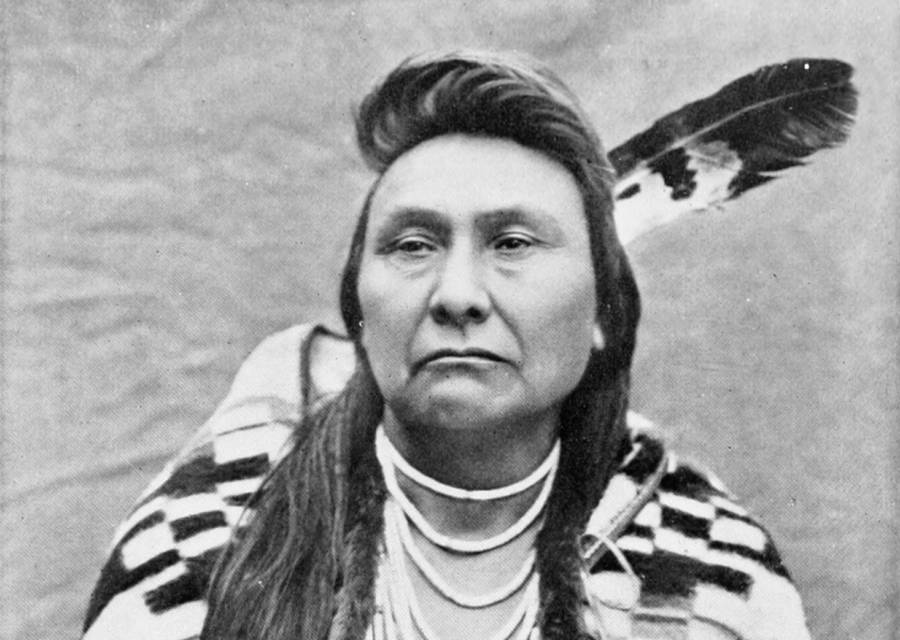
5. Black Hawk (c. 1767-1838)- Sauk War Leader and Author of a Landmark Native American Autobiography
Nation: Sauk (Sac), allied with Meskwaki (Fox)
Region: Great Lakes / Upper Mississippi Valley (Illinois / Iowa / Wisconsin)

6. Tecumseh: Architect of a Pan-Native Confederacy
Nation: Shawnee
Region: Ohio Valley / Great Lakes
Tecumseh devoted his life to building a pan-Native confederacy that could resist further US expansion. He argued that Native land was held in common by all nations and that no single group could sell it.
He travelled widely, urging alliances from the Great Lakes to the Southeast. During the War of 1812 he allied with the British, seeing them as a counterweight to American settlers. Tecumseh was killed at the Battle of the Thames in 1813, and his confederacy dissolved, but his vision of united Indigenous resistance remains central to many discussions of tribal sovereignty today.
7. Red Cloud: The Strategist Who Closed US Forts

Nation: Oglala Lakota
Region: Northern Plains (Wyoming / Montana)
Red Cloud led one of the few wars the United States effectively lost on the northern Plains. In the late 1860s he organised Lakota, Cheyenne and Arapaho resistance to US forts on the Bozeman Trail, a route cutting through critical hunting territory.
The resulting conflict, Red Cloud’s War, forced the US to abandon several forts and sign the 1868 Treaty of Fort Laramie, recognising a large Lakota territory including the Black Hills. When that treaty was later broken, Red Cloud shifted from battlefield strategy to diplomacy in Washington, D.C., seeking to defend what remained through negotiation.
8. Sequoyah and the Cherokee Syllabary
Nation: Cherokee
Region: Southeastern Woodlands (originally Georgia / Tennessee / North Carolina)
Sequoyah’s contribution was intellectual rather than military. He created the Cherokee syllabary, a set of written symbols representing Cherokee syllables. Within a decade of its adoption in the 1820s, the Cherokee had one of the highest literacy rates in North America and even published a national newspaper, the Cherokee Phoenix.
The syllabary gave the Cherokee a powerful tool to write laws, record history and communicate across distance – a form of “intellectual resistance” as US pressure mounted. Tragically, even this sophisticated written culture could not prevent forced relocation during the Trail of Tears, which followed the Indian Removal Act.
9. Pontiac: Great Lakes Resistance to British Rule
Nation: Odawa (Ottawa), with multi-tribal allies
Region: Great Lakes (Michigan / Ontario)
After Britain took over French forts in the Great Lakes region, Pontiac helped lead a multi-tribal uprising in 1763. Native fighters attacked forts and settlements across the region in what became known as Pontiac’s War.
While no clear “victor” emerged, the conflict convinced the British Crown to slow colonial expansion with the Royal Proclamation of 1763, which attempted to reserve western lands for Native peoples. In practice it was soon ignored, but it shows how Indigenous resistance could influence imperial policy.
10. Osceola: Guerrilla Leader of the Seminole
Nation: Seminole
Region: Southeast (Florida)
Osceola became the best-known leader of the Second Seminole War (1835–1842), sparked by US attempts to enforce removal treaties and push the Seminole to Indian Territory.
Fighting from the swamps and forests of Florida, Osceola and his followers used guerrilla tactics to tie down thousands of US troops in a long, costly war. In 1837 he was captured under a flag of truce – an action widely condemned – and died in captivity the following year. Some Seminole communities, however, remained in Florida, never fully subdued.
11. Cochise: War Leader Turned Reluctant Peace-Maker
Nation: Chiricahua Apache (Chokonen band)
Region: Southwest (Arizona / northern Mexico)
Cochise’s long conflict with the United States began with a wrongful accusation and a deadly ambush under a flag of truce in 1861. For years he led Apache bands in raids and ambushes, making travel across southern Arizona extremely dangerous for soldiers and settlers.
In the 1870s he agreed to peace with General Oliver O. Howard on the condition that his people could remain in their ancestral home region. For a short time, this reservation represented a rare example of Apache terms being honoured. After Cochise’s death, later policies dismantled that arrangement.
12. Metacom / “King Philip”: Early New England Resistance
Nation: Wampanoag
Region: New England (Massachusetts / Rhode Island)
Metacom, called “King Philip” by the English, led one of the earliest large-scale Indigenous resistances to colonisation in New England.
From 1675 to 1676, growing tensions over land, livestock, missionary activity and colonial law erupted into King Philip’s War. Native and colonial communities alike suffered devastating casualties. For many southern New England tribes, the war ended in death, enslavement or displacement, and it marked a turning point in the balance of power in the region.
13. Quanah Parker: Comanche Leader Between Two Worlds

Nation: Comanche (Quahada band)
Region: Southern Plains (Texas / Oklahoma)
Quanah Parker, the son of Comanche leader Peta Nocona and Cynthia Ann Parker (a white woman adopted into Comanche society), began his life as a raider defending Comanche territory on the southern Plains.
Once it became clear that the buffalo were gone and US power was overwhelming, he shifted towards strategic adaptation. On the reservation he became a successful rancher and influential spokesman for his people, travelling to Washington, D.C., and helping shape the Native American Church, which blended Indigenous and Christian elements.
14. Nanye’hi / Nancy Ward: Cherokee Beloved Woman
Nation: Cherokee
Region: Southeastern Woodlands / later Indian Territory (Oklahoma)
Nanye’hi, known to settlers as Nancy Ward, held the title of Ghigau, or “Beloved Woman” – one of the highest political and spiritual roles in Cherokee society. According to tradition, she gained this status after taking up her fallen husband’s weapon in battle.
As pressure grew from colonial and later US expansion, she often urged negotiation instead of war, hoping to save lives in an era that would culminate in Indian Removal and the Trail of Tears. Her story highlights the real political power of Native women in many matrilineal nations.
15. Wilma Mankiller: Modern Principal Chief of the Cherokee Nation
Nation: Cherokee Nation
Region: Oklahoma
Wilma Mankiller became the first woman elected Principal Chief of the Cherokee Nation in 1985, bringing the story of Native leadership into the late 20th century.
Her administration focused on practical sovereignty: clean water systems, housing, health clinics, education and economic development. Under her leadership, tribal membership and political engagement grew. Mankiller’s work shows that the history of Native American chiefs is not just about battles and treaties, but about rebuilding nations from within.
Article was fact checked and refreshed in Jan 2026.
Further reading and Sources
– National Museum of the American Indian – overview of Indigenous history and sovereignty
– Nez Perce National Historical Park – Chief Joseph and the 1877 flight
– National Park Service – The Battle of the Little Bighorn and Sitting Bull
Cristopher Columbus is one of the first Europeans to discover America. However, he did not make life easy for Native Americans. Read about the 12 Atrocities Committed By Christopher Columbus
Leaders like Red Cloud, Chief Joseph and Quanah Parker realised that, once war failed or became impossible, direct negotiation with the US President, Congress and federal agencies was sometimes the only remaining path to protect land, secure resources, or defend treaty rights.
Little Bighorn (1876) was a major tactical victory for Lakota and Cheyenne forces over Custer’s 7th Cavalry. However, it also shocked the US public and led to a stronger military push to force Plains nations onto reservations, so its long-term impact was tragic for Indigenous sovereignty
Yes. In many nations, including the Cherokee and Haudenosaunee (Iroquois), women were central to governance. They controlled land through matrilineal clans, selected or removed male leaders, and could veto wars. Figures like Nanye’hi and, in the modern era, Wilma Mankiller reflect this tradition.
Tribal sovereignty is the idea that Native nations are distinct political communities with the right to govern themselves, make laws, and manage their internal affairs. While limited today by federal and state law, it remains a key principle in court cases, treaty discussions and Indigenous activism.
For many Indigenous communities, the turning point is the era of European exploration and conquest. On MuseumFacts you can explore this background in more detail in our article on the atrocities committed by Christopher Columbus, which helps explain how later policies like the Indian Removal Act grew out of earlier patterns of colonisation.