
Introduction
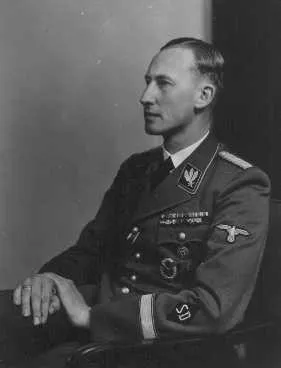
Few figures in Nazi Germany inspired as much fear as Reinhard Heydrich. As one of Adolf Hitler’s most trusted lieutenants, he stood among the infamous characters who rivalled Hitler in power and influence, helping to design the machinery of terror that defined the Third Reich.
Nicknamed the “Butcher of Prague”, Heydrich was not merely a brutal enforcer but a highly intelligent administrator who turned ideology into policy. His assassination in 1942 marked one of the most daring acts of resistance during the Second World War and triggered devastating reprisals across occupied Europe.
Who was Reinhard Heydrich?
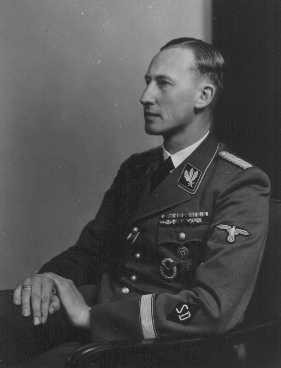
Reinhard Tristan Eugen Heydrich was born in 1904 in Halle, Germany, into a middle-class family with strong musical traditions. He was an accomplished violinist and initially pursued a naval career, coming of age during the rigid social order of Pre-war Nazi Germany – in colour pictures.
His dismissal from the German Navy following a personal scandal proved pivotal. In 1931, Heydrich joined the SS, where his intelligence and emotional detachment quickly caught the attention of Heinrich Himmler.
The man with the iron heart
Even within the Nazi leadership, Heydrich stood apart. Adolf Hitler reportedly referred to him as “the man with the iron heart”, a phrase that captured both his discipline and his lack of empathy.
Heydrich was known for his cold, almost clinical approach to violence. Unlike many Nazi officials who relied on ideological rhetoric, he focused on systems, efficiency, and results. His ability to plan mass repression without visible emotion made him feared not only by civilians, but by fellow Nazis.
Rise within the Nazi power structure
Himmler appointed Heydrich to build and lead the Sicherheitsdienst (SD), the SS intelligence agency. He later gained control over the Gestapo and criminal police, effectively merging intelligence, surveillance, and enforcement into a single apparatus that placed him at the centre of Nazi power.
By his early thirties, Heydrich had become one of the most feared figures within Hitler’s Inner Circle – The infamous men of Nazi Germany, maintaining secret files on party officials and wielding influence that extended across occupied Europe.
The Final Solution: Heydrich and the Wannsee Conference
Heydrich played a central role in the persecution of Jews, political opponents, and other groups deemed enemies of the state.
In January 1942, he chaired the Wannsee Conference, a meeting that lasted just 90 minutes. Over lunch and cognac, senior Nazi officials coordinated the logistics of what became known as the Final Solution.
The speed and bureaucratic tone of the meeting highlighted Heydrich’s approach: genocide treated as an administrative problem to be solved efficiently.
Music and violence: a disturbing paradox
Despite his brutality, Heydrich was a gifted violinist. He frequently played chamber music for guests at home, sometimes after days spent signing execution orders or approving deportation lists.
This contradiction — cultured, refined, yet profoundly cruel — reinforced his reputation as one of the most unsettling figures in the Nazi hierarchy.
Why was Heydrich called the “Butcher of Prague”?
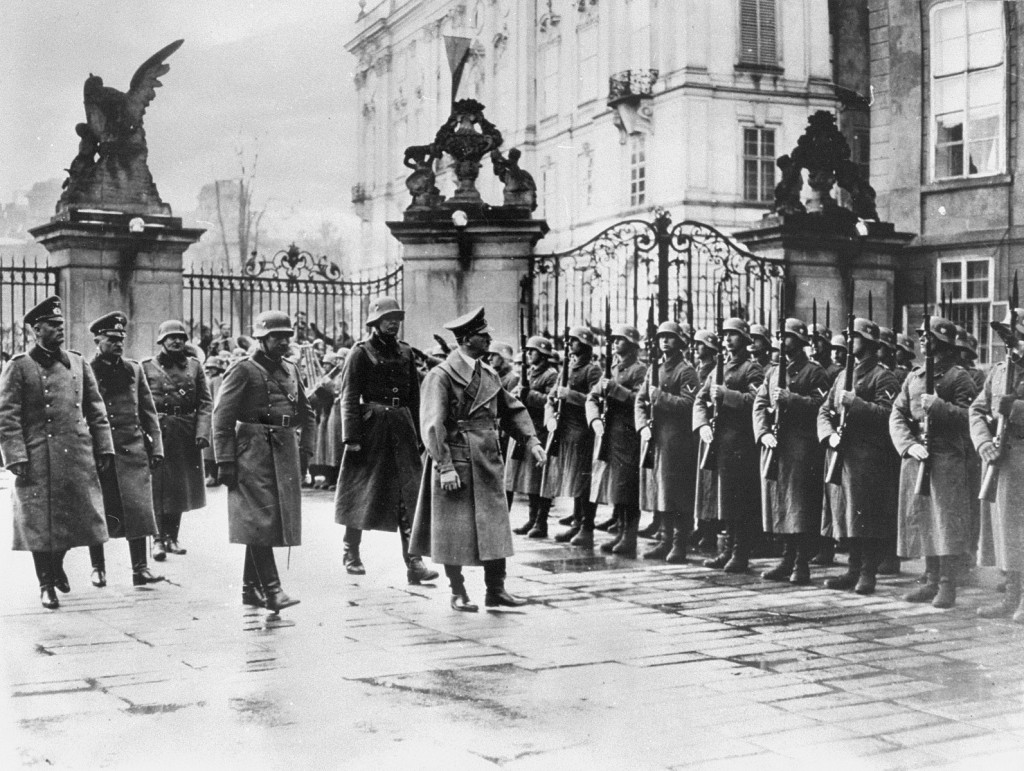
In September 1941, Heydrich was appointed Deputy Reich Protector of Bohemia and Moravia, ruling occupied Czechoslovakia from Prague.
His rule combined calculated economic incentives with extreme repression. Resistance networks were dismantled through mass arrests and executions, often carried out publicly. Within weeks, thousands were imprisoned or killed.
Operation Anthropoid: how was Reinhard Heydrich assassinated?
Heydrich’s confidence proved fatal. He refused to travel in an armoured vehicle and rejected a permanent security detail, believing the Czech population had been pacified.
In late 1941, the Czechoslovak government-in-exile approved Operation Anthropoid, deploying Jozef Gabčík and Jan Kubiš.
On May 27, 1942, Gabčík’s submachine gun jammed. Kubiš then threw a modified grenade at Heydrich’s open-top car. The explosion forced fragments of metal, horsehair, and upholstery into Heydrich’s body, puncturing his spleen.
Although he initially appeared likely to survive, Heydrich died days later from septicaemia (blood poisoning) on June 4, 1942.
Nazi reprisals and the destruction of Lidice
The Nazi response was catastrophic. Entire communities were punished in retaliation.
The village of Lidice was erased. Men were executed, women deported to camps, and children murdered or forcibly Germanised.

What happened to the assassins?
Gabčík and Kubiš were eventually cornered by German forces in the crypt of St. Cyril and St. Methodius Cathedral in Prague. After hours of fighting, both men died by suicide or gunfire rather than surrender.
Their deaths became powerful symbols of resistance.
Was Heydrich irreplaceable?
Hitler personally attended Heydrich’s funeral. He was succeeded by Ernst Kaltenbrunner, though no successor ever held the same concentration of intelligence, police, and administrative power.
The Nazi system continued, but one of its most efficient architects was gone.
Heydrich in film and popular culture
Heydrich’s life and death have been portrayed in films such as Anthropoid (2016) and The Man with the Iron Heart (2017). These portrayals have renewed public interest, particularly among viewers searching for the historical truth behind the dramatization.
How is Reinhard Heydrich remembered today?
Heydrich represents the dangers of technocratic cruelty — the transformation of mass murder into routine paperwork.
His legacy aligns with other moments where human tragedy is eclipsed by scale and spectacle, a pattern also seen in modern history such as R. Budd Dwyer: The Politician Who Died on Live Television.
Sources
- Robert Gerwarth, Hitler’s Hangman
- Richard J. Evans, The Third Reich in Power
- United States Holocaust Memorial Museum archives
- Czech National Archives
- Contemporary wartime documentation
He unified intelligence, policing, and administration, making him central to repression and genocide.
Ernst Kaltenbrunner succeeded him, though no one ever held his combined level of power again.
They were killed during a final stand in a Prague cathedral crypt after refusing to surrender.ehind the dramatization.
No, but it removed one of its most capable organisers and proved Nazi leaders were vulnerable.