
The House of Plantagenet is a royal house of England. The royal house held the English throne from 1154 to 1485. The house originated from the lands of Anjou in France, hence it is also called as the House of Anjou or the Angevin Dynasty. The House was a remarkable royal house which provided England 14 Kings, 6 of who were from cadet houses of Lancaster and York.
Introduction
The House of Plantagenet was not simply a line of English kings. It was a vast ruling family whose power stretched across England and large parts of France, at times controlling more French territory than the French king himself.
From 1154 to 1485, the Plantagenets shaped medieval Britain through conquest, lawmaking, dynastic conflict, and political reform. Their reign produced the foundations of English common law, Parliament, and the dynastic struggles that would later define the English monarchy.
Understanding the Plantagenets is not about memorising kings. It is about understanding how England became a nation governed by law rather than personal rule. The Plantagenet story unfolds in a time of castles, cathedrals, and kingdoms shaped by stone and steel many of which you can discover in our look at famous medieval buildings and their history.

Who Were the Plantagenets? Origins of the Angevin Kings
The Plantagenet dynasty began not in England, but in Anjou, a powerful region in western France.
The Name “Plantagenet” and Its Meaning
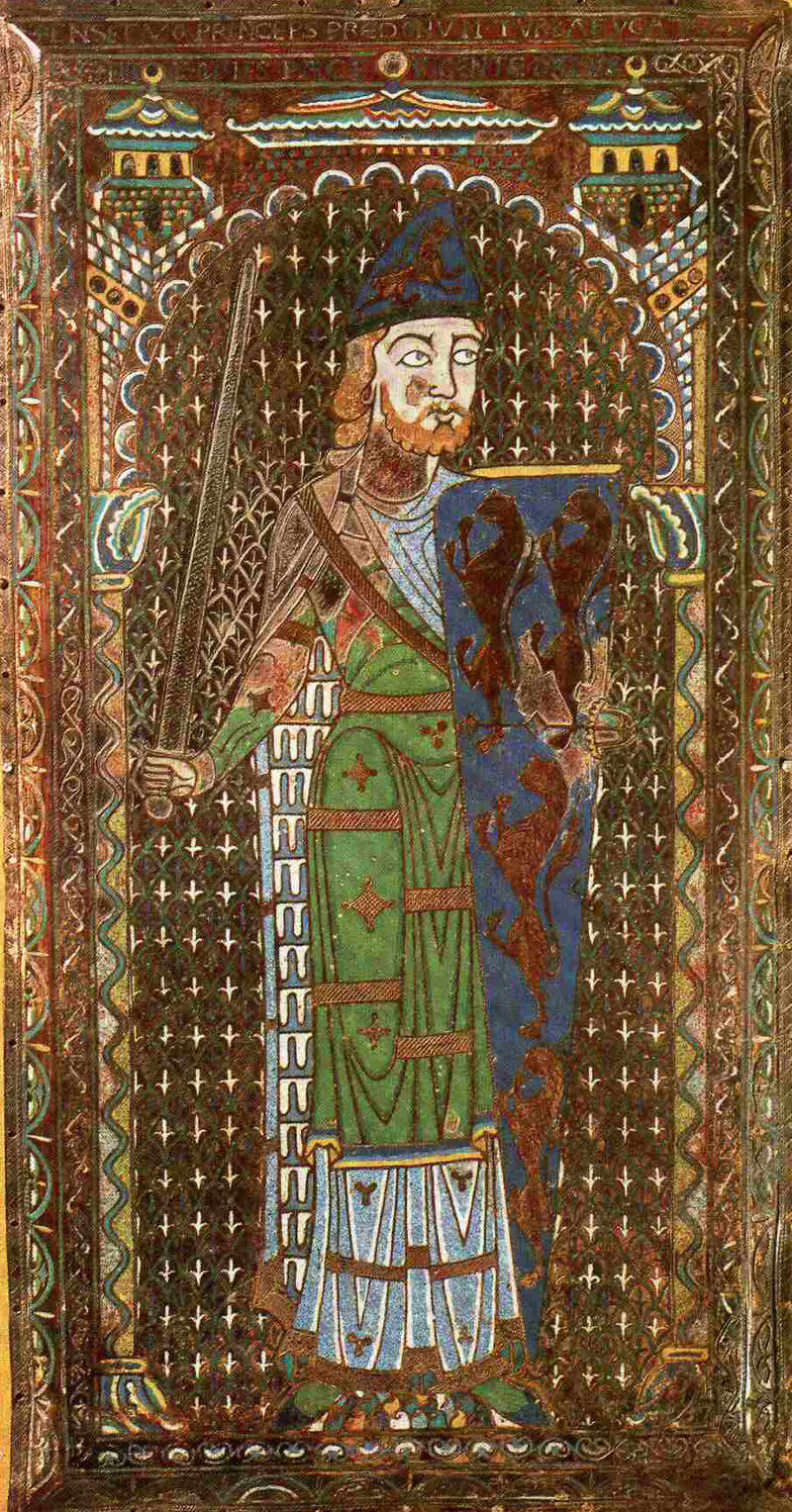
The name comes from Geoffrey, Count of Anjou, whose nickname “Plantagenet” likely referred to the planta genista, or broom plant, which he wore as a personal emblem. The broom sprig symbolised humility and endurance – a striking contrast to the lions and crowns later associated with his descendants.
Importantly, early Plantagenet kings did not use the name themselves. It was adopted retrospectively by historians to describe the dynasty that descended from Geoffrey.
The Angevin Empire: When English Kings Ruled France
The true power of the Plantagenets emerged with Henry II, son of Geoffrey and Empress Matilda, daughter of King Henry I of England.
When Henry II became king in 1154, he inherited or controlled:
-
England
-
Normandy
-
Anjou
-
Maine
-
Aquitaine
Together, these lands formed what historians call the Angevin Empire, a transnational realm stretching from the Scottish border to the Pyrenees.
At its height, this empire made the Plantagenets effectively French princes who ruled England, rather than English kings with foreign interests. This imbalance would later fuel centuries of Anglo-French conflict.
Henry II and the Birth of English Common Law
Henry II’s greatest legacy was not military conquest, but law.
The Legal Revolution
Under Henry II, England saw the birth of a professional legal system. His reforms included:
-
The Assize of Clarendon (1166), which introduced early forms of trial by jury
-
The expansion of royal courts over local justice
-
The standardisation of legal procedures across the kingdom
These reforms laid the groundwork for English Common Law, a system that still underpins the legal frameworks of the UK, the United States, and many former British territories today.
This makes Henry II one of the most influential legal reformers in European history.
From Richard the Lionheart to King John
Henry II was succeeded by his sons, whose reigns revealed the strengths and vulnerabilities of the Plantagenet system. Richard’s reputation was forged far from England, notably during the Third Crusade, one of the most dramatic campaigns of the era, explored in our piece on interesting facts about the Crusades.
Richard I (“The Lionheart”)
Richard I is remembered as a warrior king, celebrated for his leadership during the Third Crusade and his reputation for personal bravery. In reality, Richard ruled England more as an absentee landlord than a resident monarch.
He spent less than a year of his ten-year reign in England, preferring the battlefields of the eastern Mediterranean and the courts of continental Europe. England’s primary value to Richard lay in its wealth. Taxes, fines, and feudal payments funded his military campaigns, his fleet, and eventually his ransom after capture by the Holy Roman Emperor on his return journey.
To his contemporaries, this was not unusual. Medieval kings were expected to wage war and defend prestige. Yet Richard’s absence weakened direct royal oversight at home, placing strain on administration and leaving unresolved tensions between the crown and the nobility.
Richard’s reign preserved Plantagenet prestige abroad, but it quietly exposed a flaw: a vast empire held together by personality and force rather than stable institutions.
King John and the Magna Carta
Richard’s brother King John lost much of the Angevin Empire in France, weakening Plantagenet authority abroad. His domestic rule was marked by heavy taxation and baronial unrest.
In 1215, this tension produced the Magna Carta, signed at Runnymede. Though limited in its original scope, it established the principle that the king was subject to the law, a revolutionary idea for medieval Europe. John’s failures at home and abroad earned infamy among chroniclers, a theme echoed in our review of crazy rulers in history and their antics.
Edward I to Edward III: Power, War, and Identity
Edward I
Edward I strengthened royal authority, expanded Parliament, and sought to dominate Wales and Scotland. His campaigns reshaped Britain’s political geography, though resistance would endure for generations.
Edward III: The Hundred Years’ War and English Identity
Edward III reignited conflict with France by claiming the French throne, launching the Hundred Years’ War. This long struggle transformed warfare, taxation, and national identity.
During Edward III’s reign:
-
English replaced French as the language of government
-
Parliament gained greater importance
-
A clearer sense of “Englishness” emerged
Edward’s reign marked the height of Plantagenet prestige.
The Plantagenet Family Tree: From One Root to Civil War
Confusion often arises here — but the division is simple.
All later Plantagenets descend from Edward III.
From him emerged two rival branches:
-
House of Lancaster (Red Rose)
-
House of York (White Rose, symbolised by the “Sun in Splendour”)
Both claimed legitimate descent from Edward III. Their rivalry erupted into the Wars of the Roses, a dynastic civil war that tore England apart during the 15th century.
The End of the Plantagenets
The dynasty ended in 1485 at the Battle of Bosworth Field, where Richard III, the last Yorkist king, was killed.
The victor, Henry Tudor, became Henry VII, founding the Tudor dynasty. Though the Plantagenets fell, their bloodline did not disappear.
Key Plantagenet Kings at a Glance
| King | Reign | Key Achievement |
|---|---|---|
| Henry II | 1154–1189 | Founded English Common Law |
| Richard I | 1189–1199 | Crusader king, military prestige |
| King John | 1199–1216 | Magna Carta |
| Edward I | 1272–1307 | Parliamentary reform, conquest of Wales |
| Edward III | 1327–1377 | Hundred Years’ War, English identity |
| Richard III | 1483–1485 | Last Plantagenet king |
The House of Plantagenet was not a single story but a web of power, law, ambition, and family rivalry. Its kings ruled not just land, but ideas about justice, authority, and governance. The Plantagenets ruled in an age of evolving identity and name traditions. A subject linked to the origins of family names like those in medieval English surnames: origin & history.
In many ways, modern Britain still lives in a world the Plantagenets helped build.
Sources
Henry II’s legal reforms created the foundations of common law, influencing modern legal systems in Britain and beyond.
Yes. King Charles III descends from the Plantagenets through multiple lines, including the Tudors and the House of Stuart.
“Angevin” usually refers to the early kings (Henry II, Richard I, John) who ruled from Anjou. “Plantagenet” refers to the entire dynasty.
It formally ended in 1485 with the death of Richard III at Bosworth, when the throne passed to the Tudors.
Competing claims between the Lancastrian and Yorkist branches, both descended from Edward III.