

Introduction
The Roman Empire was not undone by a single battle or invasion. Its greatest wounds were often self-inflicted, caused by emperors who weakened institutions, destabilised succession, or hollowed out the economy.
This article examines the worst Roman emperors, not as exaggerated villains, but as rulers whose decisions left lasting scars. Their reigns explain how Rome moved from the stability of the Pax Romana to cycles of inflation, civil war, and political violence.
How do historians define a “bad” Roman emperor?
An emperor earned lasting infamy when his rule resulted in:
-
Breakdown of stable succession
-
Economic damage or inflation
-
Loss of army or Senate loyalty
-
Normalisation of political murder
-
Repeated civil wars
Cruelty alone did not doom an emperor. Systemic failure did.
Caligula – The emperor who shattered legitimacy
Why he was one of the worst:
Caligula’s assassination in AD 41 proved that emperors could be removed by force. This single act permanently weakened the illusion of imperial inviolability.
Key facts that define his failure:
-
His reign collapsed so badly that the Senate debated abolishing the imperial system altogether.
-
He relied increasingly on the Praetorian Guard, empowering them as political kingmakers.
-
Ancient claims that he planned to appoint his horse Incitatus as consul are widely interpreted as a calculated insult to the Senate.
His murder marked the moment when violence became an accepted tool of succession.

Nero – Crisis, fire, and civil war
Why he was one of the worst:
Nero’s reign destroyed public trust and ended the Julio-Claudian dynasty, plunging Rome into civil war.
Key facts that define his failure:
-
After the Great Fire of Rome in AD 64, he imposed heavy taxes to fund extravagant rebuilding.
-
He constructed the Domus Aurea, a palace of extreme luxury that symbolised elite excess.
-
His death triggered the Year of the Four Emperors, exposing the fragility of imperial succession.
Nero did not merely rule poorly; he left Rome without a functioning political centre.

Elagabalus – Cultural rupture and Damnatio Memoriae
Why he was one of the worst:
Elagabalus alienated Rome’s political and religious foundations, eroding legitimacy at every level. By elevating a foreign sun deity above Jupiter, he challenged the religious hierarchy central to Roman identity major Roman gods you need to know.
Key facts that define his failure:
-
He attempted to replace Jupiter with a foreign sun god as Rome’s chief deity.
-
His behaviour alienated both Senate and army.
-
After his murder, he suffered Damnatio Memoriae, with statues destroyed and his name erased from records.
The attempt to erase him reflects how thoroughly his reign was rejected.

Caracalla – The emperor who destroyed Roman money
Why he was one of the worst:
Caracalla inflicted long-term economic damage by prioritising military loyalty over financial stability.
Key facts that define his failure:
-
He sharply reduced the silver content of the Roman denarius to fund army pay rises.
-
This debasement accelerated inflation and weakened confidence in Roman currency.
-
His citizenship edict expanded taxation rather than equality.
These policies left the empire financially fragile for generations.

Maximinus Thrax – The beginning of collapse
Why he was one of the worst:
Maximinus Thrax marked the beginning of the Crisis of the Third Century, when emperors ruled by force alone.
Key facts that define his failure:
-
He never entered Rome during his reign.
-
Crushing taxes funded constant warfare.
-
He was murdered by his own troops in AD 238.
His rule cemented the army as the ultimate political authority.
Commodus – The end of the Pax Romana
Why he was one of the worst:
Commodus is widely regarded as the emperor who ended the Pax Romana. He was the first emperor “born in the purple” in over a century, abandoning the adoptive succession system that had produced capable rulers.
Key facts that define his failure:
-
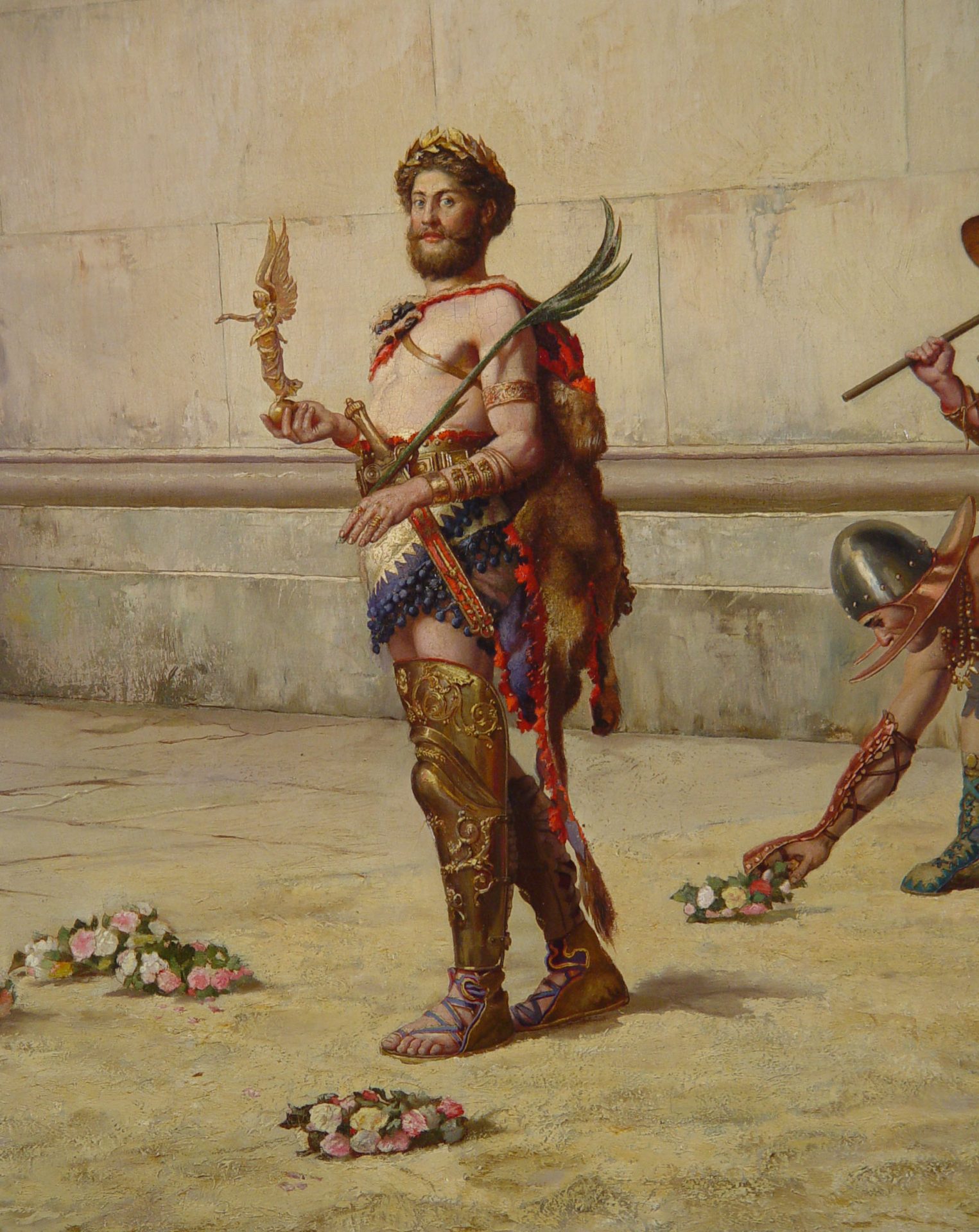
He neglected governance in favour of performing as a gladiator.
-
He renamed Rome Colonia Commodiana after himself.
-
His assassination in AD 192 led directly to the Auction of the Empire, where the Praetorian Guard sold power to the highest bidder.
His failure stood in sharp contrast to the adoptive succession system used by the best Roman emperors in history, whose reigns defined the Pax Romana. After Commodus, imperial stability never fully returned.

Why bad emperors mattered more than lost wars
Rome could recover from defeat. What it struggled to recover from was institutional decay.
These emperors normalised assassination, debased currency, weakened succession, and empowered armed factions. Over time, these patterns made the empire brittle.
Many of the patterns seen under these emperors such as economic instability, succession crises, and military dominance, would later be recognised as key contributors to the empire’s collapse major reasons why Rome fell. A similar pattern of leadership failure can be seen in later history, including Worst Kings and Queens of France, where poor rule likewise led to collapse and revolution.
Sources
Ancient sources say he intended to. Most historians interpret this as a deliberate insult to the Senate.
In AD 193, the Praetorian Guard sold the imperial throne to Didius Julianus after murdering Commodus.
A 50-year period of civil war, inflation, plague, and political instability caused by the breakdown of succession.
Some bias exists, but archaeological and economic evidence confirms systemic damage under these rulers.


