
Introduction
Adolf Hitler was the dictator of Nazi Germany and the leader of the Nazi Party. He orchestrated the Holocaust, the state-sponsored murder of millions, and his invasion of Poland in 1939 triggered the outbreak of the Second World War in Europe.
While Hitler was one of the most photographed figures of the 20th century, many images were tightly controlled, censored, or destroyed to preserve a carefully constructed public image. The photographs below are considered rare not simply because of age, but because they reveal moments the Nazi regime often tried to erase.
Volkswagen: Hitler’s “people’s car”
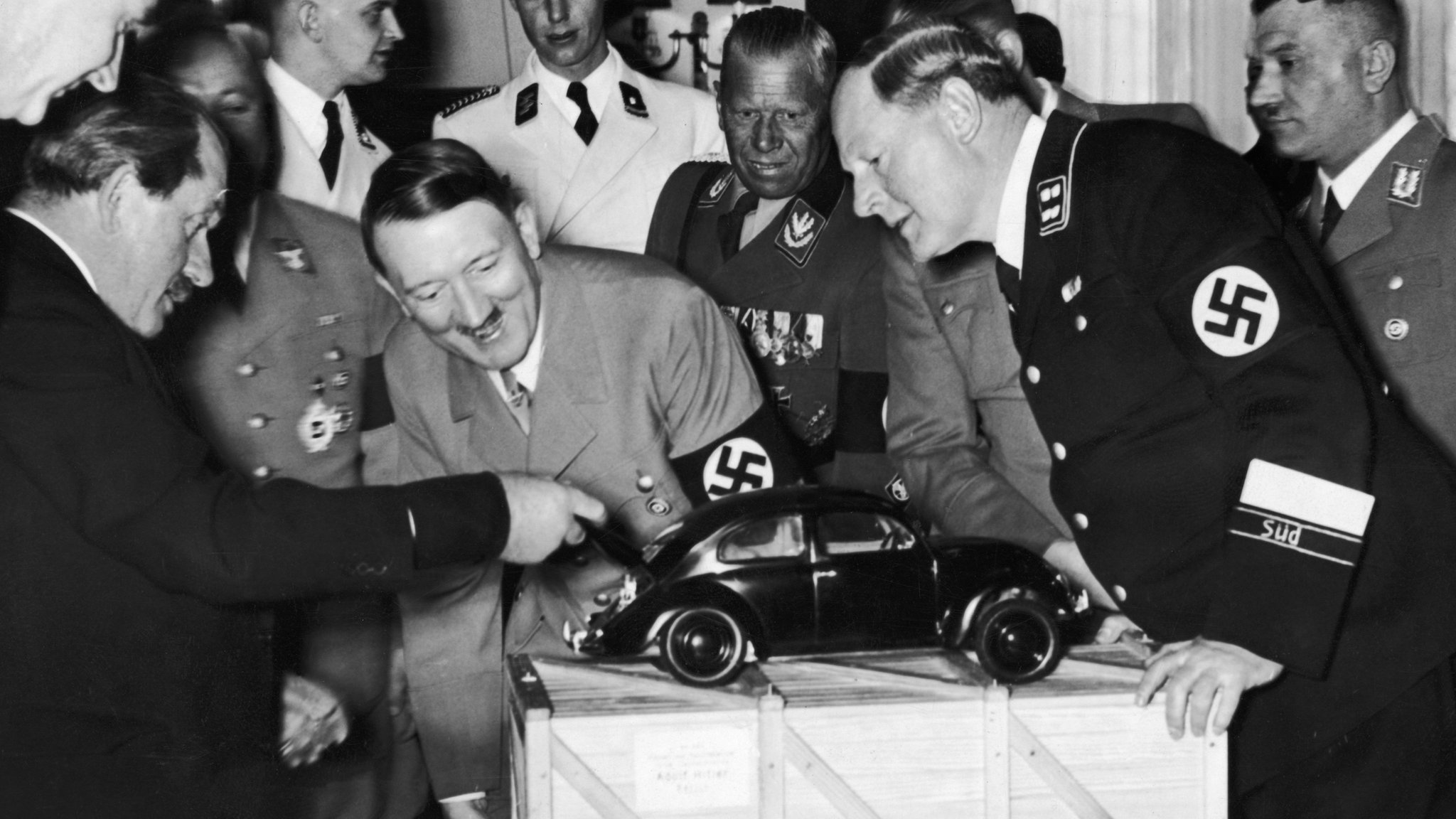
One of Hitler’s most publicised domestic ambitions was the creation of an affordable car for ordinary Germans. He commissioned Austrian engineer Ferdinand Porsche to design the KdF-Wagen, later known as the Volkswagen Beetle.
Although civilian deliveries never materialised due to the war, the project became a propaganda symbol of Nazi promises of prosperity and modernity.
Hitler photobombed by Joseph Goebbels

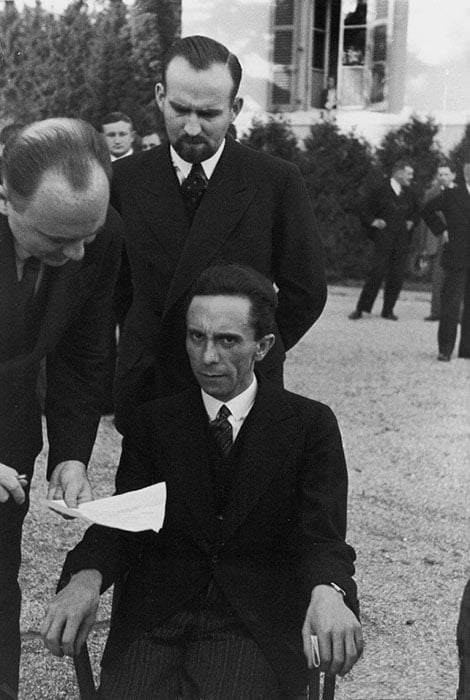
Joseph Goebbels was the chief architect of Nazi propaganda and one of several powerful figures who operated close to Hitler, forming what later became known as Hitler’s Inner Circle – infamous men. Most official photographs were meticulously staged.
This image stands out because it captures an unscripted moment, something rare in a regime obsessed with visual control.
Hitler with IBM president Thomas Watson
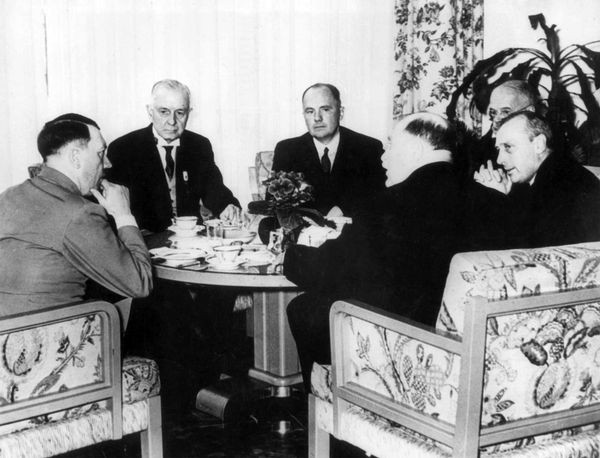
This photograph was taken during an International Chamber of Commerce meeting in Berlin in 1937. Thomas J. Watson, then head of IBM, later returned a medal awarded by Hitler as global outrage grew.
The image has become central to debates about the relationship between global corporations and authoritarian regimes in the pre-war period.
The banned photos: Hitler’s secret speech rehearsals
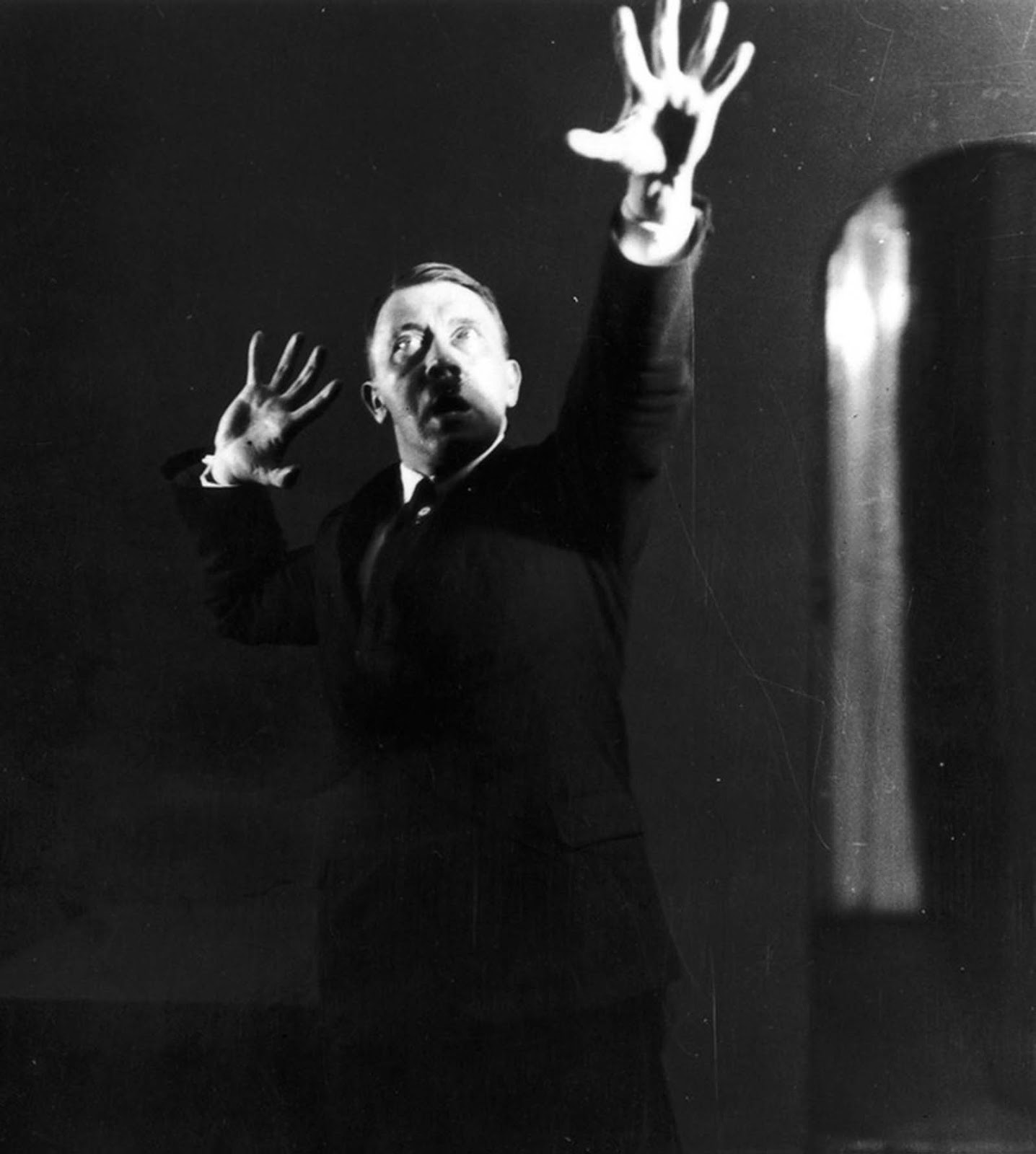
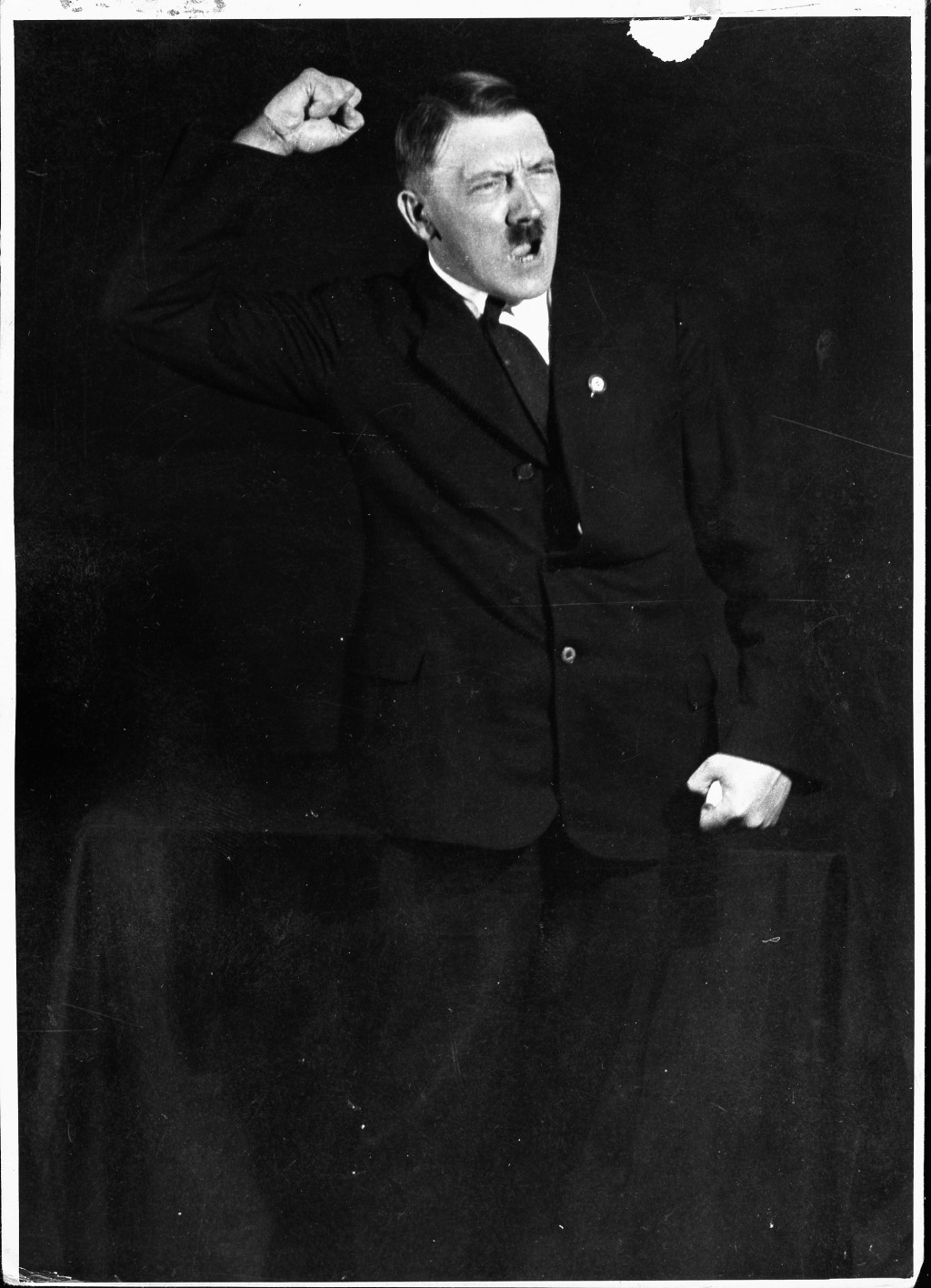
These photographs were taken by Hitler’s personal photographer Heinrich Hoffmann, using a Leica camera.
Hitler was furious when he saw them and ordered the negatives destroyed, believing they made him look foolish and undignified. Hoffmann secretly hid the negatives instead. The images survived only because of that defiance, offering rare insight into how carefully Hitler manufactured his public persona.
Rare childhood photos: Adolf Hitler’s early life and rejections
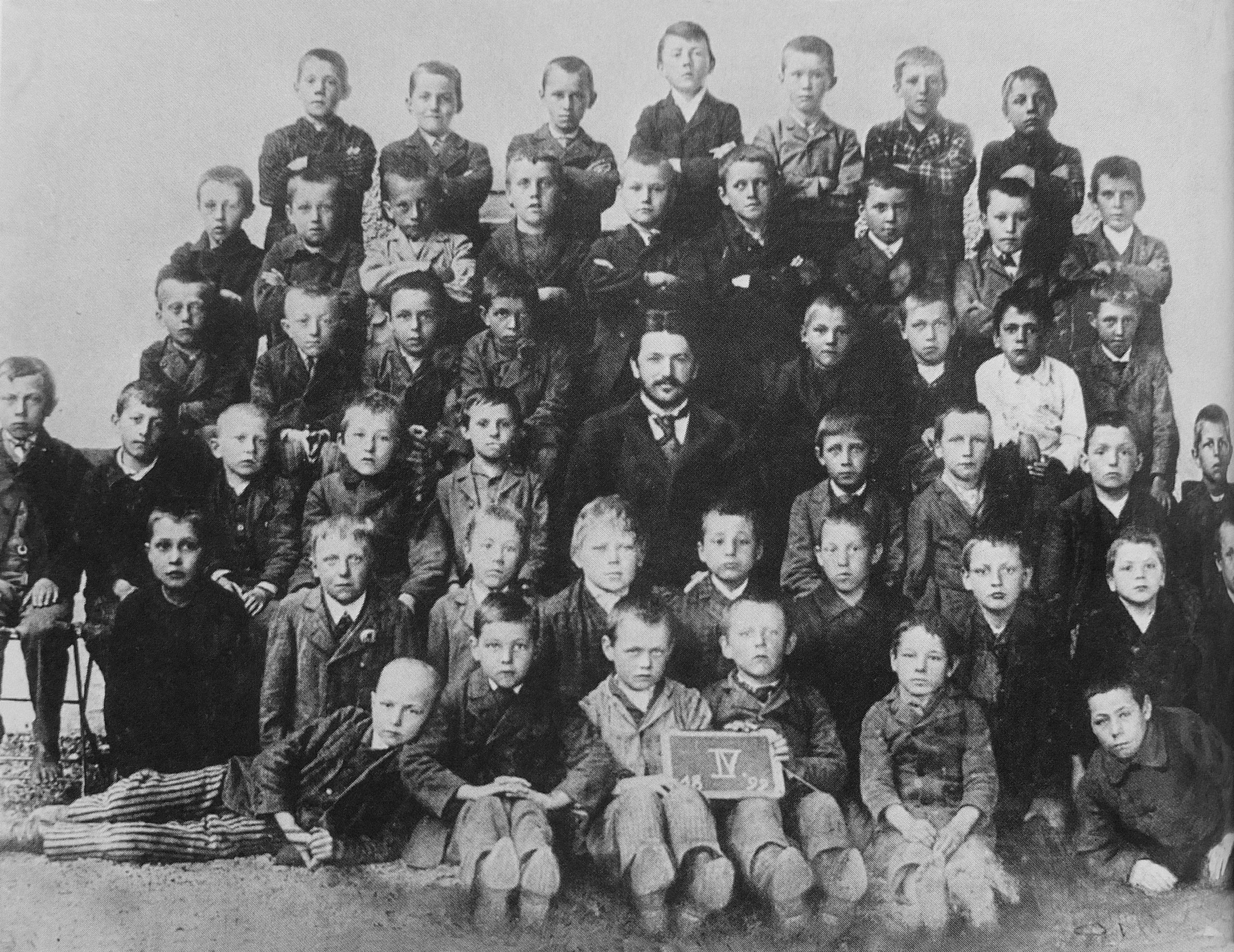
Hitler performed poorly in school and clashed frequently with authority. His teacher in this photograph, Eduard Huemer, later testified that Hitler was “willful, arrogant, and bad-tempered.”
The image is often cited by historians because it connects visual evidence with firsthand testimony, illustrating personality traits that appeared long before his rise to power. These early images belong to a society that would soon transform into pre-war Nazi Germany, captured in rare colour photographs.
Neville Chamberlain and Adolf Hitler
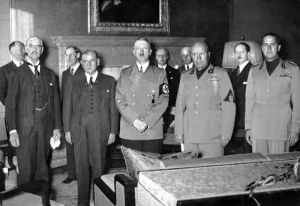
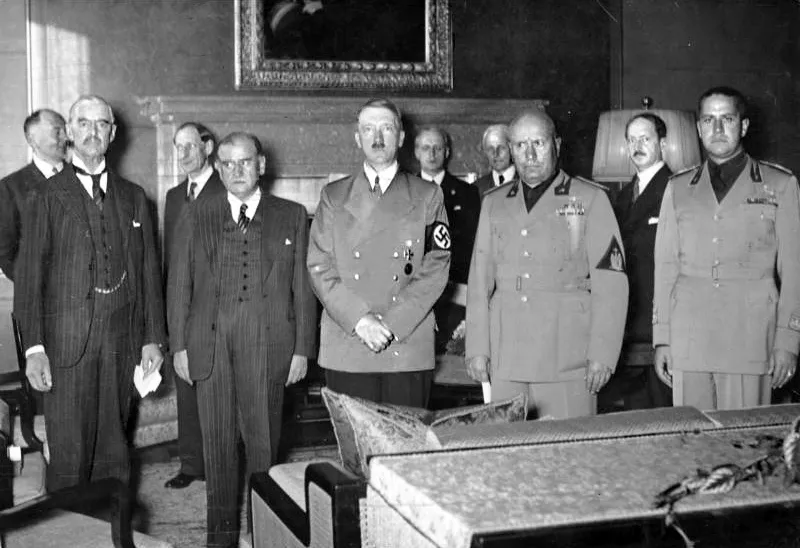
British Prime Minister Neville Chamberlain pursued appeasement in an effort to prevent war. The Munich Agreement allowed Germany to annex the Sudetenland, a decision that later came to symbolise the failure of diplomacy with Nazi Germany. The failure of appeasement would later culminate in vast military campaigns, including Operation Barbarossa, documented in rare photographs.
Adolf Hitler at Landsberg Prison

After the failed Beer Hall Putsch in 1923, Hitler was imprisoned at Landsberg Prison. There, he dictated Mein Kampf, laying out the ideological foundations of Nazism.
A “before and after” comparison between this image and later photographs of Hitler in power starkly illustrates how prison became a stepping stone rather than a setback.
The men who enforced Hitler’s rule
Hitler relied on loyal and ruthless subordinates to enforce Nazi policy. One of the most feared was Reinhard Heydrich: the notorious Butcher of Prague, whose assassination triggered some of the most brutal reprisals of the war. The system Hitler created would ultimately collapse through decisive defeats, including battles such as the Falaise Pocket and other major World War II engagements.
Sources
-
International Chamber of Commerce records
Heinrich Hoffmann. He was the only person allowed to take candid photographs of Hitler and later published books such as Hitler Was My Friend.
Yes. Many were taken by Hugo Jaeger, who used Agfacolor film and buried the negatives in glass jars to hide them from Allied forces.
Many images were censored or destroyed by Nazi authorities to preserve Hitler’s carefully controlled public image, while others were lost during Allied bombings.


