MuseumFacts

Home Blog

The 12 Scariest Mythical Creatures That Will Give You Nightmares!

12 Scariest Mythical Creatures That Will Give You Nightmares

Some people believe mythical creatures are only legends, while others insist that these
monsters from folklore have a real-world origin. From ghostly spirits and vampires to
child-snatching demons, these scary mythical creatures appear in stories from cultures
across the world. They come from folklore, mythology, and fairy tales, and their terrifying descriptions continue to fascinate people today.

Below is a list of 12 of the scariest mythical creatures from around the globe that will
give you nightmares.

1) La Cegua

The first creature on our list of the scariest mythical monsters is La Cegua</strong). This shapeshifting spirit comes from Central American folklore. La Cegua usually appears as a beautiful young woman when seen from behind, which lures unsuspecting men towards her on lonely roads
at night.

However, once she turns around, her true face is revealed. In many legends, her face is that of a horse or a skull with hollow eyes. She then speaks to the men she has trapped, and her words are said to be so horrific that the victim immediately loses his sanity. La Cegua is often seen as a warning against unfaithfulness, arrogance, and predatory behaviour.

Illustration of La Cegua, one of the scariest mythical creatures and monsters
(C: Xaramar / DeviantArt)

2) Chupacabra

One of the most famous Latin American mythical creatures is the Chupacabra,
which translates as “goat sucker”. The first reported sightings appeared in Puerto Rico in 1995, where it allegedly attacked goats, sheep, and other domestic animals. The bodies were found with puncture marks and were said to be completely drained of blood.

Witnesses describe the Chupacabra in different ways. Early reports claimed it stood upright like a large, reptilian kangaroo with huge red eyes. Other accounts describe it as more dog-like, while some say it looks like a lizard or hairless coyote. The most consistent features are that it is a heavy, powerful creature with a row of sharp spines running from the neck down to the base of the tail. Over time, there have even been claimed sightings outside the Americas, including in Russia and the Philippines. Whether real or not, the Chupacabra remains one of the most talked about modern mythical monsters.

Exhibit model of the Chupacabra, a legendary bloodsucking mythical creature
(C: Roberto Machado Noa / Shutterstock.com)

3) Wendigo – A cannibalistic mythical creature

Another truly terrifying mythical monster is the Wendigo (also spelt Windigo). This creature comes from the folklore of the First Nations of the Great Lakes region and central Canada. According to legend, a Wendigo is created when a human resorts to cannibalism to survive, especially during harsh winters and famines when food is scarce.

In some stories, people who show extreme greed, gluttony, or selfishness can also become possessed by a Wendigo spirit. The creature is usually described as a giant, often over 15 feet tall, with glowing eyes, long yellow fangs, gruesome claws, and an unnaturally long tongue. Its skin is tightly stretched over its bones, giving it a starved, corpse-like appearance.

The Wendigo is strongly associated with winter, the north, cold, famine, and starvation. Cursed with a bottomless appetite for human flesh, it wanders the forests searching for victims. No matter how much it eats, it can never feel full. If there is no prey, it is said to slowly starve, yet it never truly dies. This combination of cannibalism, hunger, and horror makes the Wendigo one of the most disturbing mythical creatures in North American folklore.

Artistic depiction of a Wendigo, a cannibalistic mythical monster
A terrifying depiction of a Wendigo

4) Skinwalker

The Skinwalker is a powerful and frightening creature from Navajo folklore.
It is considered an extremely taboo topic, and many people believe that speaking about it invites bad luck or even attracts the creature itself. In legend, a Skinwalker is a type of harmful witch who has turned to dark magic.

Most stories say that a Skinwalker is created when a medicine man or healer uses his knowledge of magic for evil instead of healing. This gives him the ability to transform into, possess, or disguise himself as an animal, such as a wolf, coyote, owl, or other creature of the night. Other versions suggest that any man, woman, or even child who commits a deep and unforgivable taboo can become a Skinwalker.

Witnesses describe Skinwalkers as four-legged monsters with twisted, human-like faces and glowing red eyes. They are said to move at unnatural speed, emit chilling cries, and stalk their victims from the shadows. According to some beliefs, they are almost impossible to kill, except with a weapon coated in white ash.
This combination of witchcraft, shapeshifting, and terror makes the Skinwalker one of the most feared mythical beings in Native American stories.

Illustration of a Skinwalker from Native American folklore
A terrifying Skinwalker from Native American folklore

5) Alp – A nightmare inducing creature

The Alp is a frightening mythical creature from German folklore that is
said to cause nightmares. Often described as something between a vampire and an incubus, an Alp is usually male and has the ability to shapeshift into animals such as cats, dogs, snakes, or even white butterflies. One characteristic detail in many legends is that an Alp always wears a special cap, which is the source of its power.

According to tradition, the Alp sits on a sleeping person’s chest, pressing down and making it impossible to move or breathe properly. This is believed to cause sleep paralysis, sleepwalking, and terrifying dreams. People in the past blamed the Alp for many unexplained sleep disorders.

Various methods were used to protect against an Alp. These include sleeping with a mirror on the chest, placing shoes by the bed with the toes pointing towards the door, or putting a broomstick under the pillow. If someone woke while an Alp was attacking, they could trick it by politely inviting it back in the morning for coffee or to borrow something. The Alp has also inspired a number of scary paintings and other works of dark art.

Painting often associated with the Alp, a nightmare causing mythical creature
A classic painting often linked to Alp legends

6) Qalupalik

The Qalupalik is a chilling monster from Inuit folklore. According to
legend, this creature lurks beneath the icy waters, waiting for children who wander too close to the edge of the sea. If a child strays near the shore without adult supervision, the Qalupalik snatches them and drags them under the water, never to be seen again.

The Qalupalik is usually described as a woman with green, decaying skin, long, tangled hair, and long, sharp fingernails. She carries an amautik, a traditional pouch worn by Inuit women, which she uses to carry away captured children. Many people think this terrifying myth was used as a warning to keep children away from dangerous waters and thin ice.

Illustration of the Qalupalik from Inuit folklore
The Qalupalik, a child-snatching creature from Inuit legend

7) Banshee

The Banshee is a famous mythical creature from Irish folklore. She is
usually described as a female spirit whose terrifying wail predicts the death of a family member. Her cry is said to be so mournful and piercing that it chills the blood of anyone who hears it.

Beliefs about Banshees vary. Some people see her as a sorrowful figure who warns families of impending death out of sadness or duty. Others believe she is malevolent, taking pleasure in tragedy and grief.
In more sinister versions, a Banshee actively seeks out victims, screaming at them until they lose their sanity or even take their own lives.

Her appearance also changes from story to story. In some tales she is a young, beautiful woman with long flowing hair and a pale face. In others, she appears as an old hag with a ghastly, death-like complexion. No matter the form, the Banshee remains one of the most haunting spirits in European mythology.

Illustration of a Banshee, a wailing spirit from Irish folklore
A Banshee, the wailing spirit of Irish legend

8) Penanggalan – A vampiric creature that hunts babies

The Penanggalan is a terrifying vampiric entity from Malaysian folklore.
Its name comes from the Malay word Tanggal, meaning “to remove” or “to take off”. This is because the Penanggalan appears as a woman whose head detaches from her body, leaving her organs and entrails hanging beneath her as she flies through the night.

Stories of the Penanggalan are found across Southeast Asia, including Laos, Cambodia, Thailand, Indonesia, and the Philippines, although she is known by different names in each place. Despite the different names, one detail remains the same: she is always hungry. She is said to prey on pregnant women and newborn babies, feeding on their blood while they sleep.

In many versions of the legend, the Penanggalan is created when a woman turns to dark magic in search of power or beauty. As a result, she is cursed to live as this monstrous creature, hunting innocent victims at night and returning to her human body by day in an attempt to hide her true nature.

Illustration of the Penanggalan, a vampiric mythical creature from Southeast Asia
(C: Pinterest)

9) The Nian

The Nian is now closely associated with Chinese New Year traditions, but it began as a
feared mythical monster. According to legend, once every year at the beginning of the
new year, the Nian emerges from its hiding place in the mountains or the sea and devours everything it finds. It attacks crops, animals, and even people, including children.

Eventually, villagers discovered that the Nian was terrified of loud noises, bright lights, and the colour red. To drive the creature away, people lit firecrackers, banged drums, and decorated their homes and streets with red lanterns and banners. Over time, these protective rituals evolved into the lively celebrations of the Spring Festival. Legend says that as long as the celebrations continue, the Nian will stay away. If the traditions ever stop, the monster may return.

Chinese New Year celebrations inspired by legends of the Nian
Chinese New Year traditions said to frighten away the Nian

10) Kamaitachi – A creature that slices its victims

Kamaitachi is a terrifying Japanese mythical creature that is often
described as a weasel riding on a whirlwind. In some regions, it is considered the vengeful spirit of an abandoned sickle, while in others it is seen as a trio of invisible gods or demons that travel together.

According to legend, the first spirit trips a person, the second one slices their legs with razor-sharp claws or blades, and the third quickly stitches up the wounds. This all happens in an instant, so the victim only feels a sudden gust of wind and sharp pain. When they look down, they find deep cuts but
little or no blood. Kamaitachi is sometimes used to explain mysterious injuries or marks that appear without warning.

Illustration of Kamaitachi, a Japanese wind and weasel spirit
Kamaitachi, the whirlwind weasel of Japanese legend

11) Kuchisake-Onna

Kuchisake-Onna is one of the most popular legends in Japanese urban folklore. Her name
means “slit-mouthed woman”. The story dates back to at least the Edo period, but it became especially well known in the late 20th century.

She is usually described as a woman wearing a mask who walks the streets at night, carrying a sharp pair of scissors or a knife. She approaches her victim and asks, “Am I pretty?” If the person answers “no”, she kills them on the spot. If they say “yes”, she removes her mask to reveal a horrifying sight:
the corners of her mouth are slit from ear to ear. She repeats the question. If the victim now says “no”, she kills them. If they say “yes”, she cuts their mouth in the same way, leaving them disfigured.

Various tricks are said to confuse or delay her, such as giving a vague answer or throwing sweets on the ground. However, like many Japanese ghost stories, the legend of Kuchisake-Onna remains unsettling and continues to inspire horror films, books, and artwork.

Illustration of Kuchisake-Onna, the slit-mouthed woman from Japanese folklore
Kuchisake-Onna, the slit-mouthed woman of Japanese legend

12) La Llorona – The wailing ghost that steals children

La Llorona is a famous mythical creature from Hispanic American folklore.
Her name means “the weeping woman”. According to the most common version of the legend, a woman named Maria marries a wealthy man and has two children with him. Over time, he grows distant and pays more attention to other women than to his family.

In a moment of rage and heartbreak, Maria drowns her children in a river. Immediately regretting her actions, she throws herself into the water as well. However, when she dies, she is not allowed to enter the afterlife. Instead, she is condemned to wander the earth as a ghost, forever searching for her lost children and weeping by riversides and lakes.

In many stories, La Llorona kidnaps children who wander out at night, mistaking them for her own. In other versions, she punishes unfaithful husbands. Her eerie crying is said to be a warning to stay away from dangerous waters and to behave honourably. La Llorona is one of the most enduring and frightening spirits
in Latin American mythology.

Illustration of La Llorona, the weeping woman from Hispanic folklore
La Llorona, the weeping woman who haunts rivers and lakes

Enjoyed this article?

If you liked reading about these scary mythical creatures, you may also enjoy
The Legend of the Green Man: Raymond Robinson.

10 fun facts about the industrial revolution


10 Fascinating Facts About the Industrial Revolution

The Industrial Revolution, which took place in the late 18th and early 19th centuries, was a period of rapid technological and social change. It marked the shift from manual labour and traditional manufacturing to machine-based production powered by steam engines. This transformation led to huge growth in industrial output, trade, and urban life, shaping the modern world we live in today.

Here are 10 fun facts about the Industrial Revolution you need to know

1. The Industrial Revolution began in Britain

The Industrial Revolution started in Britain in the late 18th century, thanks to its rich coal deposits, expanding population, capital, and strong global trade networks. From there, industrialisation spread to countries such as the United States, Germany, and France.

Children working in coal mines during the Industrial Revolution
Children working in coal mines

2. The steam engine powered a new age of industry

The steam engine, improved by James Watt in the late 18th century, was one of the most important inventions of the Industrial Revolution. Steam engines provided reliable power for factories, mines, and mills, greatly increasing efficiency and output.

3. The rise of the factory system

The Industrial Revolution led to the development of the factory system, where workers, machines, and production processes were brought together in one place. This system used specialised machinery and division of labour to produce goods on a much larger scale than traditional workshops.

Illustration of power loom weaving in a textile factory
Illustration of power-loom weaving

4. Mass production made goods cheaper

New machines and factory methods caused a huge increase in industrial production. As output rose, the cost of many goods fell. Everyday items such as textiles, tools, and household products became more affordable for ordinary people.

Illustration of industrial machines operating in a factory hall
Industrial machinery in a 19th-century factory hall

5. Cities grew rapidly as people moved for work

As factories and mills spread, millions of people left the countryside to work in industrial towns and cities. This rapid urbanisation transformed places like Manchester, Birmingham, and other industrial centres, but also created overcrowded housing and tough living conditions for many workers.

6. Steam-powered transport changed travel and trade

The Industrial Revolution brought major advances in transportation, including the development of the steam-powered railway and the steamship. Railways and steamships connected cities, ports, and countries more quickly than ever before, boosting trade and the movement of people.

Workers operating machinery in a cotton mill

7. A new middle class emerged

The Industrial Revolution helped create a growing middle class made up of factory owners, merchants, professionals, and skilled workers. Many people in this group enjoyed rising incomes and could afford better housing, education, and consumer goods.

Victorian middle-class women in the 19th century
Victorian middle-class women

8. The environment suffered from pollution

Heavy reliance on coal and other fossil fuels led to severe air and water pollution. Smoke from factory chimneys and soot-filled air became common features of industrial cities, and rivers were often contaminated by chemical waste.

9. The Industrial Revolution sparked social change

Industrialisation encouraged people to question traditional social hierarchies and working conditions. The hardships faced by factory workers and children helped inspire early labour movements, reforms, and new laws to improve safety and limit working hours.

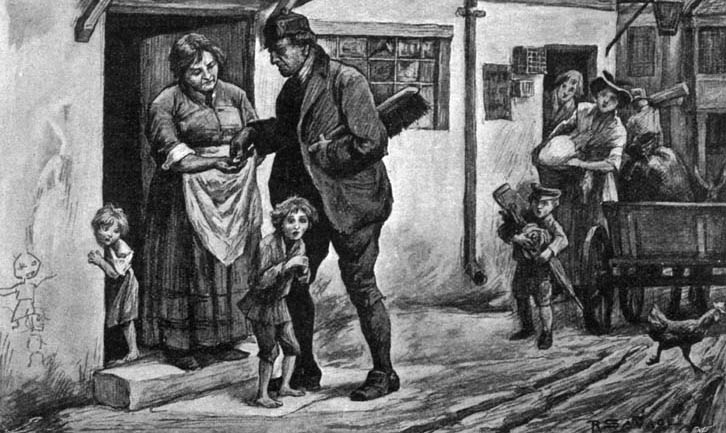
Child chimney sweeps during the British Industrial Revolution

10. Art and literature reflected a changing world

The Industrial Revolution also influenced culture, art, and literature. Writers and artists began to explore themes of industry, technology, class, and the contrast between rural and urban life, capturing both the excitement and the challenges of this new industrial age.

Why the Industrial Revolution still matters today

The Industrial Revolution is considered one of the most important turning points in history. It transformed how people worked, travelled, and lived, and laid the foundations for the modern industrial and technological world. Many of the systems and technologies we use today can be traced back to innovations from this remarkable period.


10 Most Important Ancient Egyptian Symbols

Symbols played an important role in Ancient Egypt. The Egyptians depicted them on their temple walls, inscriptions, obelisks, and hieroglyphics. Additionally, these symbols were instrumental in bringing good fortune and offering protection. We have compiled a list of the 10 most important ancient Egyptian symbols.

Let us take a look at the 10 Most Important Ancient Egyptian Symbols.

1) Ankh- The most easily recognised ancient Egyptian symbol

The most easily recognised ancient Egyptian symbol is the ankh. The ankh essentially represents eternal life in Ancient Egypt. Its Latin translation is crux ansata, and it is essentially a cross surmounted by a loop. Egyptian iconography often depicts the talisman in the hands of important Egyptian figures, such as pharaohs and kings. Additionally, according to many, it is thThe ankh also symbolises the cohesion of

Additionally, according to many, it is the first cross.

The ankh also symbolises the cohesion of heaven and earth. According to some historians, it may have developed from the tjet, the ‘Knot of Isis,’ a similar symbol. It is depicted in almost every kind of ancient Egyptian artwork, from sarcophagi to tomb paintings, hieroglyphics, statuary and engravings.


A picture of the ankh- Ancient Egyptian Symbols

2) Djed- An ancient Egyptian symbol that represents stability, resurrection and eternal life

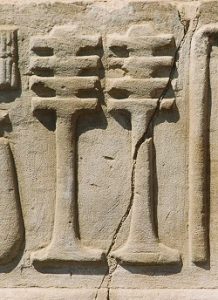
Another commonly found symbol in Ancient Egypt is the Djed. The pillar-like symbol essentially represents stability, resurrection and eternal life. According to the ancient Egyptian religion, it portrays the spine of the god Osiris. Additionally, the spell 151 of the Book of the Dead deems the Djed fetish as “the magical protection of Osiris”. The spell was recited over this amulet as it was put on the neck of a mummy.

A picture of the Djed pillars- Ancient Egyptian Symbols

3) The Was Sceptre

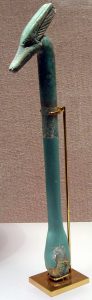
The was sceptre a.k.a tcham-sceptre is a symbol that appears often in ancient Egyptian relics, art, and hieroglyphics. It is depicted as a stylized animal head at the top of a long, straight staff with a forked end. The was sceptre symbolises power & dominion. And the ancient Egyptians often associated it with the gods Set or Anubis. The was sceptre was also found in the hands of the pharaohs. In the funerary context, the symbol was responsible for the well-being of the deceased. 

Additionally, according to the ancient Egyptians, the sky was balanced on four pillars, which could have been in the shape of the was. Furthermore, in ancient Egyptian mythology, the god Ptah holds the was sceptre and combines it with the symbols ankh and djed, with a circle at the bottom symbolizing unity. The three symbols together essentially create a powerful combination. 

A picture of the was sceptre- Ancient Egyptian Symbols

4) The Scarab

Another popular ancient Egyptian symbol is the scarab. The beetle image essentially represents the Scarabaeus sacer, a species of the dung beetle. The beetle lays its eggs in dung balls fashioned through rolling, the dung subsequently serves as food for the young when they hatch.

The ancient Egyptians associated the beetle with the god Khepri who was believed to roll the ball of the morning sun across the sky and push it up into the dawn the next day. Later on, amulets in the form of scarab beetles became very popular in Ancient Egypt by the early Middle Kingdom and remained so for the duration of Egypt’s history until the rise of Christianity.

A picture of the scarab- Ancient Egyptian Symbols
(C: Stephen Sandoval. Brooklyn Museum, New York, Charles Edwin Wilbour Fund, 37.475E)

5) The Tjet

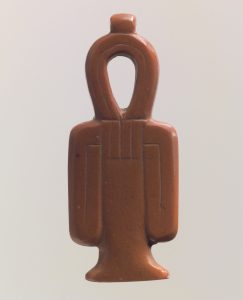
The tjet a.k.a the “knot of Isis” and “the blood of Isis” is an ancient Egyptian symbol associated with the goddess Isis. It is very similar to the ankh except that its arms curve down. It was considered a powerful symbol of protection in the afterlife and according to the Book of the Dead, the tjet made of a blood-red stone was placed at the throat of the mummy. 

Its red colour also symbolises menstruation and childbirth. According to myth, Isis used this amulet to protect Horus while he was still in her womb. Hence, pregnant women used magic spells linked with it to prevent undesired miscarriages. The ancient Egyptians engraved tjet on their bedposts and temple walls. And it was most popular during the New Kingdom of Egypt coinciding with the peak of the Isis cult.

A picture of the knot of Isis- Ancient Egyptian Symbols
(C: Met Museum)

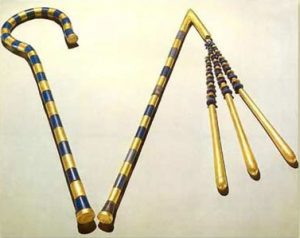
6) The Crook & Flail- The most prevalent symbols of royalty in Ancient Egypt

The crook (heka) and flail (nekhakha) were the most prevalent symbols of royalty in Ancient Egypt. The crook was similar to the shepherd staff while the flail was an agricultural tool to thresh grain. Since Osiris was originally an agricultural/fertility deity, these symbols were originally his attributes that subsequently became insignia of pharaonic authority. 

According to myth, the evil god Set assassinated Osiris and seized his kingdom. However, Isis resurrected him and bore him the son Horus. Horus defeated Set and gained back the land. He then took the crook and flail of his father to signify the legitimacy of his reign. Thus the crook and the flail became the symbols of a king. 

A picture of the crook and the flail

7) The Shen

The shen, a.k.a the shen ring, is a loop of knotted rope that forms a circle. Its name comes from the Egyptian word for ‘encircle.’ and it symbolises eternal protection. The ancient Egyptians frequently wore it around the neck for protection. The falcon god Horus and the vulture goddess Nekhbet are mainly seen holding the shen. The ancient Egyptian symbol is frequently seen on sarcophagi, in temples and tombs as well as personal inscriptions. 

A picture of the shen

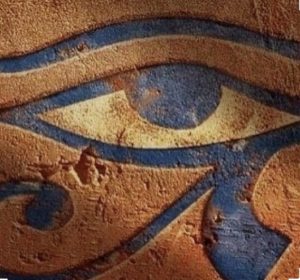
8) The Eye of Horus- An important and famous ancient Egyptian symbol

Another important ancient Egyptian symbol is the Eye of Horus. Also known as udjat-eye, it essentially represents well-being, healing, and protection. According to myth, Horus lost his left eye in a battle with Set. However, Hathor restored his eye, and this restoration came to represent the process of making whole and healing. Hence ancient Egyptians used the symbol in healing. The Eye of Horus remained one of the most powerful symbols throughout Egypt’s history. 

A picture of the eye of horus

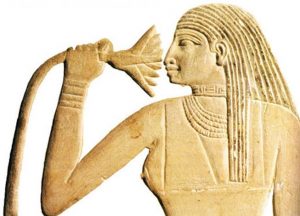
9) The sensen

The sensen i.e the lotus flower represents life, creation, rebirth and, especially, the sun. It appears in many Egyptian artworks and dates to the Early Dynastic Period. The lotus closes in the evening and sinks below water and then emerges and blooms at daybreak; akin to the pattern of the sun and therefore life.

Ancient Egyptians associated the flower with the god Osiris. Additionally, canopic jars frequently depict the Four Sons of Horus standing together on the lotus in the presence of Osiris. It was also the symbol of the Upper Egypt while the papyrus was the symbol of the Lower Egypt. Furthermore, images sometimes depict it with its stem entwined with that of the papyrus plant. Thus signifying the unification of the two regions. 

A picture of the sensen

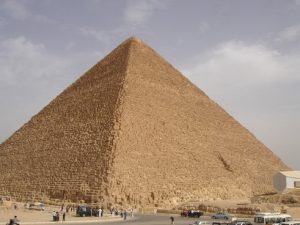
10) Benben

According to ancient Egyptian creation myth, the benben was the primordial mound upon which the creator deity Atum stood at the beginning of creation. Although one doesn’t easily recognise its name, it is a famous ancient Egyptian symbol. The pyramids of Egypt essentially represent the benben as they rise from the earth towards the sky.

According to one myth, at the beginning of time, there was only a watery abyss. This was until the benben rose as the first dry land. Atum then settled on the benben and started creation. The pyramids and other similar structures represented both creation and eternity by invoking the symbolism of this myth. The benben dates from the Early Dynastic Period but became more prevalent during the Old Kingdom. The symbol appears on many inscriptions, engravings, temple walls and sarcophagi.

A picture of the pyramids

Enjoyed the above article? You may also enjoy 20 facts about Romans that you must know


Shocking Secrets of the Infamous Characters Who Rival Hitler!

Infamous Historical Figures: The Dark Legacies of Himmler, Pol Pot, Tojo, and More

Throughout history, there have been individuals whose actions and atrocities have left an indelible mark on the collective conscience of humanity. While Adolf Hitler remains notorious as one of history’s most heinous figures, there are other individuals whose evil deeds rival his in magnitude. This article delves into the lives and actions of Heinrich Himmler, Pol Pot, King Leopold II, Hideki Tojo, and Genghis Khan. By exploring their actions and the consequences they wrought, we gain a deeper understanding of the horrors perpetrated by these individuals and their impact on the world.

Heinrich Himmler: Architect of the Holocaust and Nazi Atrocities

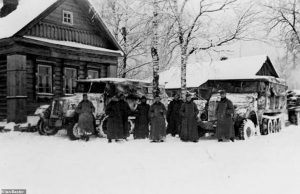
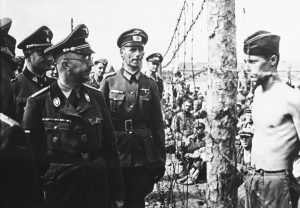
Heinrich Himmler inspects a prisoner of war camp during World War II
Heinrich Himmler inspects a prisoner of war camp in Russia during World War II.

Heinrich Himmler, one of the most infamous figures of World War II, played a central role in orchestrating the Holocaust. Known as Adolf Hitler’s right-hand man, Himmler meticulously planned and executed the systematic extermination of millions of people, earning him infamy that rivals Hitler himself. Below, we explore his actions and their devastating impact.

Himmler’s Role in Nazi Ideology and the SS

As the head of the SS (Schutzstaffel) and the Gestapo, Himmler wielded immense power to enforce Nazi ideology. These organizations suppressed dissent and ruthlessly persecuted those deemed undesirable or racially inferior, such as Jews, Romani people, and political dissidents. Himmler’s unwavering commitment to Hitler’s vision of an Aryan master race fueled his actions.

Death Camps and the Holocaust: Himmler’s Master Plan

Himmler played a pivotal role in designing the network of death camps, including Auschwitz and Treblinka. He oversaw the establishment of extermination methods such as gas chambers and crematoriums, implementing the Final Solution—the systematic genocide of millions.

One chilling milestone was the Wannsee Conference, chaired by Himmler in 1942, where high-ranking Nazis formalized their plans for mass extermination. Under Himmler’s guidance, approximately six million Jews and millions of others were murdered during the Holocaust.

Legacy of Genocide: Himmler’s Chilling Quotes and Actions

Himmler’s words exemplify his chilling mindset. In an infamous speech to SS officers in 1943, he stated, “Most of you will know what it means when 100 bodies lie together, when 500 are there, or when there are 1,000… To have seen this through and… to have remained decent has made us hard.”

After Germany’s defeat, Himmler tried to escape but was captured by the Allies. He committed suicide in 1945, avoiding justice for his crimes.

Hideki Tojo: Japan’s War Crimes Leader and His Brutal Legacy

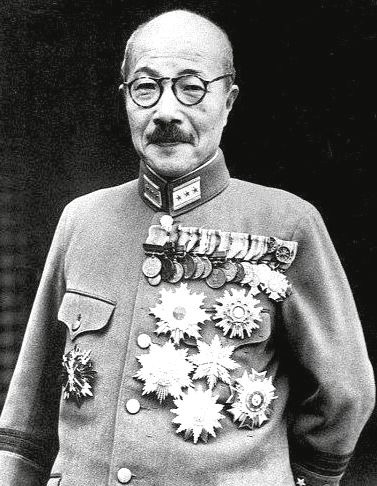
Hideki Tojo: Japan’s war crimes leader during World War II
Hideki Tojo, leader of Japan’s war crimes during World War II.

Hideki Tojo, Prime Minister of Imperial Japan during World War II, oversaw numerous atrocities, including biological warfare and massacres that devastated millions of people.

Unit 731: Biological Warfare and Experiments

Under Tojo’s leadership, Unit 731 conducted horrific experiments on prisoners, including vivisections and forced infections. These atrocities resulted in the deaths of up to 250,000 individuals.

The Bataan Death March

Tojo’s regime was responsible for the infamous Bataan Death March in 1942, where 60,000–80,000 prisoners of war were forced to march 65 miles under brutal conditions, resulting in thousands of deaths.

Pol Pot: Khmer Rouge Leader Behind Cambodia’s Genocide

Pol Pot: Leader of the Khmer Rouge
Pol Pot, leader of the Khmer Rouge, responsible for Cambodia’s darkest period.

Pol Pot’s Khmer Rouge regime aimed to create a self-sufficient agrarian society but instead caused immense suffering. Between 1975 and 1979, an estimated two million Cambodians—one-third of the population—died due to forced labor, starvation, and executions.

The Killing Fields

The Khmer Rouge executed perceived enemies of the state in what became known as the Killing Fields. Mass graves across Cambodia stand as haunting reminders of this tragedy.

Leopold II of Belgium: Colonial Atrocities in the Congo Free State

Leopold II of Belgium and the atrocities in the Congo Free State
Leopold II of Belgium, infamous for his brutal exploitation of the Congo Free State.

Under Leopold II, the Congo Free State became a site of brutal exploitation. Enforced quotas for rubber production led to millions of deaths through forced labor, starvation, and mutilations.

Genghis Khan: Conqueror’s Legacy of Destruction and Bloodshed

Genghis Khan, the Mongol conqueror
Genghis Khan, the legendary conqueror, led an empire built on conquest and destruction.

Genghis Khan, revered for his military genius, also left behind a legacy of destruction. His conquests caused an estimated 40 million deaths and the collapse of entire civilizations. From the Khwarazmian Empire to Eastern Europe, cities were razed, and populations decimated.

Ruthless Campaigns

Genghis Khan’s forces used scorched-earth tactics, leaving destruction in their wake. His infamous quote, “The greatest happiness is to scatter your enemy… and gather to your bosom his wives and daughters,” reveals his brutal mindset.

Conclusion

History’s darkest figures remind us of the depths of human cruelty and the lessons we must learn to prevent such atrocities from recurring. By understanding their actions, we ensure that their legacies of destruction are never repeated.

1964 New York World’s Fair- in pictures

The 1964 New York World’s Fair, a remarkable event held in Queens, New York City, captivated the imagination of millions of visitors. With its theme of “Peace Through Understanding,” the fair aimed to promote global harmony and cooperation. The centerpiece of the fair, serving as a powerful symbol of unity, was the magnificent Unisphere. This awe-inspiring structure stood an impressive 12 stories high and was crafted from stainless steel. Representing the Earth, the Unisphere stood as a beacon of hope, reminding visitors of the importance of mutual understanding and peaceful coexistence among nations.

Let us take a look at the 1964 New York World’s Fair- in pictures.

1) An aerial view of the 1964 New York World’s Fair taken from the New York State tower.

An awe-inspiring aerial view captured from the New York State tower provides a bird’s-eye perspective of the expansive 1964 New York World’s Fair, showcasing the grandeur and scale of this monumental event.

A picture of the view of the New York World’s Fair taken from the New York State tower

2) A picture depicting the Unisphere with world flags.

A captivating picture showcases the iconic Unisphere, surrounded by fluttering world flags. This image captures the essence of the fair’s theme of global unity and peace, as represented by the majestic stainless-steel globe.

A picture of the Unisphere with world flags

3) Michelangelo’s famous Pietà on display at the Vatican pavilion.

Michelangelo’s renowned masterpiece, the Pietà, takes center stage at the Vatican pavilion. This awe-inspiring sculpture, carefully transported from Italy, offers fairgoers a rare opportunity to marvel at the exquisite artistry of one of the world’s most celebrated artists.

A picture of the Pieta
(C: Albert Lamperti)

4) The prime feature of the State of Illinois Pavilion was an audio-animatronic representation of Abraham Lincoln.

The State of Illinois Pavilion boasts an audio-animatronic marvel—a lifelike representation of Abraham Lincoln. Visitors are treated to a remarkable display as the animatronic Lincoln delivers poignant speeches, bringing history to life in a truly captivating manner.

A picture of the audio-animatronic Abraham Lincoln

5)The Atomsville, U.S.A. exhibit, designed by the Atomic Energy Commission, combines education and entertainment. It offers young fairgoers an engaging experience, introducing them to scientific concepts through interactive and entertaining displays. One such exhibit showcases the concept of relative weight in a fascinating and accessible manner.

A picture of children using the Atomville

6) A Rockets take the spotlight in a captivating picture from the 1964 New York World’s Fair. Some of these historic rockets remain on display at the New York Hall of Science, providing a glimpse into the extraordinary achievements of space exploration.

A picture of a exhibit at the fair

7) Michigan Governor George Romney and his son, Mitt, observe the fairgrounds from the heliport, creating a memorable snapshot of the fair’s influential visitors and their appreciation for the magnitude of this grand event.

A picture of Governor Romney and his son Mitt

8) An enchanting picture captures the bustling energy as more than 50 million people flock to the fair. This image represents the sheer scale and popularity of the event, showcasing the vibrant atmosphere and the excitement felt by the visitors.

A picture of visitors at the fair

9)Renowned actress Shirley MacLaine chooses the New York subway as her means of transportation to attend the New York World’s Fair for her film’s premiere, adding a touch of glamour and star power to the fair’s festivities.

A picture of Shirley MacLaine

10)The Eastern Kodak Pavilion, a popular destination on the fair’s sightseeing tour, is beautifully depicted in a photograph. This pavilion offers fairgoers a fascinating journey through the world of photography, showcasing cutting-edge technology and innovative visual experiences.

A Picture of the roof of the Eastern Kodak Pavilion

11)A striking juxtaposition is captured in a picture, where a prehistoric giant stands in the shadow of a 20th-century rocket. This powerful image symbolizes the blend of history and progress, highlighting the fair’s celebration of both the past and the future.

A picture of a exhibit

12)The New York State Pavilion, an architectural marvel, is showcased in a captivating photograph. This iconic structure captivates fairgoers with its unique design, leaving a lasting impression on the visitors’ minds.

A picture of the New York State Pavilion

13)A stunning image captures the Swiss sky ride, one of the fair’s highest rides. Not only does this attraction offer thrilling experiences, but it also provides panoramic views of the fairgrounds and the breathtaking Manhattan Island.

A picture of the Swiss sky ride

14)A historic picture immortalizes U.S. President Lyndon B. Johnson, accompanied by Lady Bird Johnson and Norman K. Winston, head of the U.S. Pavilion. This image showcases the fair’s significance as a platform for important political figures and dignitaries.

A picture of U.S. president Lyndon B. Johnson

15) The Unisphere, a remarkable symbol of the fair’s theme, takes the spotlight as a magnificent creation by Gilmore D. Clarke. This enduring symbol of unity and understanding continues to inspire and evoke a sense of wonder even decades after the fair’s conclusion.

A picture of the Unisphere

16)A mesmerizing night aerial view captures the splendor of the 1964 New York World’s Fair, illuminating the fair

A picture depicting the night view of the New York World’s Fair

17) A futuristic car on display at the General Motors Pavilion.

A picture of a car of the future on display at the General Motors Pavilion

18) A picture depicting space stations and spacecraft in the night sky in the General Motors Futurama II exhibit.

19) The city of the future- part of General Motors Futurama II exhibit at the World’s Fair.

A picture of the city of the future

20) A picture depicting a demonstration of the Picturephone at the AT&T Pavilion at the 1964 New York World’s Fair.

A picture depicting the Picturephone

21) A grocery shopping trip in the future- part of the General Motors Pavilion.

A picture depicting furutristic grocery shopping

The 1964 New York World’s Fair, with its powerful theme and iconic Unisphere, left an indelible mark on the collective memory of those who attended. It served as a beacon of hope and a testament to humanity’s shared aspirations. The fair’s message of “Peace Through Understanding” resonated deeply with visitors, reminding them of the profound impact that mutual understanding and cooperation can have in shaping a brighter future for all.

Enjoyed the above article? You may also enjoy 15 Iconic pictures from the 1939 New York World’s Fair

10 Famous Women Of The Middle Ages

During the medieval times, women, in general, weren’t given many rights. However, that did not stop them from taking professional and leadership roles traditionally meant for men. One of the most famous medieval women is Joan of Arc, but there exist others who have made an equally significant impact in history. To commemorate this, we have compiled a list of the 10 famous women of the Middle Ages.

Let us take a look at the 10 Famous Women Of The Middle Ages.

1) Margery Kempe

The first on our list of famous women of the Middle Ages is Margery Kempe. She is noted for her work The Book of Margery Kempe, which is deemed as the first autobiography in the English language. Margery grew up in a wealthy household and later married John Kempe and bore him 14 children. However, she subsequently left her husband and embarked on a series of pilgrimages to Jerusalem, Rome, Germany, and Spain in 1414.

Her book essentially chronicles her experiences during her extensive pilgrimages, her domestic tribulations as well as her faith and beliefs. The book also provides the best insight into the life of a female in the Middle Ages. Additionally, Kempe was criticized several times and even numerously tried by the Church for heresy but never convicted. However, this did not stop her from challenging patriarchy and living her life on her terms. Apparently illiterate, she dictated her famed autobiography to two clerks. Subsequently, it was first published (modernized) in 1936 and in Middle English in 1940.

A picture of Margery Kempe- Famous Women Of The Middle Ages- Famous medieval woman

2) Hrotsvitha of Gandersheim- A famous medieval woman who was the first playwright of the West

Hrotsvitha is a famous medieval woman who is regarded as the first playwright of the West. She also holds the title of the first poetess of Germany, the first female historian and the first female writer from German lands. Hrotsvitha was born in a noble family and grew up to be a nun. She then went on to write six Latin comedies that embodied Christian themes. Due to her works, she has been deemed “the most remarkable woman of her time”.

A picture of Hrotsvitha of Gandersheim- Famous Women Of The Middle Ages- Famous medieval woman

3) Margaret I of Denmark

Margaret I was a fierce queen and one of the famous women of the Middle Ages. Deemed as the ‘Lady King’, Margaret I was the regent of Sweden, Norway and Denmark. Additionally, it was her efforts and dynastic policies that led to the Kalmar union: the unification of Sweden, Norway and Denmark under one ruler. Due to her exceptional capabilities, historians deem her as “the first great ruling queen in European history”. Read more about the Demark royalty here: 10 important Danish Royal Family facts that you must know!

A picture of Margaret I of Denmark- Famous Women Of The Middle Ages- Famous medieval woman

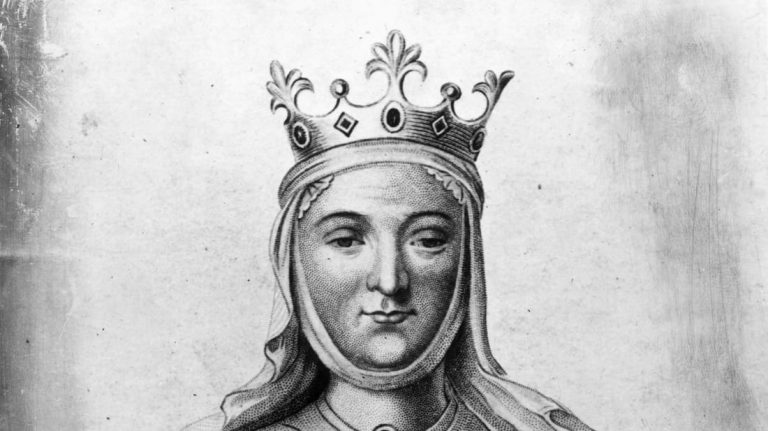
4) Eleanor of Aquitaine- One of the famous and powerful women of the Middle Ages

Eleanor of Aquitaine was perhaps the most powerful woman in the 12th century Europe. During her lifetime, she was the queen consort of both Louis VII of France (1137–52) and Henry II of England (1152–1204). Additionally, she was the mother of the famous rulers Richard I (the Lionheart) and John of England.

She was a headstrong queen who did not sit idle at home. For example, she led armies and was a leader during the Second Crusade. And when she was married to Henry II, she participated actively in the administration of the realm and even more actively in the management of her own domains. Moreover, she was a great patron of literary figures during her time. She then went on to have a large impact on the political and social structure of England till the end of her days. According to historians “She was beautiful and just, dignified and modest, humble and elegant”.

A picture of Eleanor of Aquitaine- Famous Women Of The Middle Ages- Famous medieval woman

5) Hildegard of Bingen

Hildegard of Bingen is regarded as one of the most famous women of the Middle Ages. Hildegard was a famed German abbess, mystic and composer. She started experiencing religious visions from childhood. And she was only 15 years old when she joined a monastery and began pursuing a life as a nun. Subsequently, at the age of 43, she recorded her visions and compiled them into the book Scivias (1141–52). The book consists of 26 visions and chronicles around topics like the Church, the relationship between God and humanity and redemption.

She then left her monstery and found a new order at Rupertsberg. Here she continued to exercise the gift of divination and recorded her writings. Additionally, she even invented her own language for her amusement. Although she never received any formal education, she was highly literate and well versed in musical composition.

A picture of Hildegard of Bingen- Famous Women Of The Middle Ages- Famous medieval woman

6) Julian of Norwich

Julian is one of the most important and famous medieval English mystics. Deemed as Lady Juliana of Norwich, she is noted for having authored the religious work Revelations of Divine Love. However, Julian’s actual name is unknown and very little is known about her personal life. In May 1373, at the age of 30, Julian was seriously ill and thought she was on her death bed. Subsequently, she received 16 visions from God and recovered. She wrote down these visions shortly and later expanded on them. Her writings focused on God and His compassion and love for all. Additionally, her works inspired her contemporary medieval mystic Margery Kempe and even 20th-century poets such as T.S Eliot.

A picture of Julian of Norwich

7) Beatriz Galindo- One of the famous and most educated women of the Middle Ages

Beatriz Galindo is regarded as one of the most educated women of her time. She was an educator, a humanist and a Spanish Latinist. The famous medieval woman was nicknamed ‘La Latina’ for her prolific Latin skills. She enjoyed reading from a young age, consequently, her family chose her to become a nun.

Due to her literary skills, she pursued an academic career and went on to tutor the children of Queen Isabella of Castile, including Catherine of Aragon. Additionally, she also wrote poetry and a commentary on Aristotle. She subsequently got married and had five children and founded the Hospital of the Holy Cross in Madrid. The hospital still exists today and the neighbourhood in Madrid where she once lived is known today as La Latina in her honour.

A picture of Beatriz Galindo

8) Theodora, Empress of Byzantine- One of the most famous and powerful women of the Middle Ages

Deemed as one of the most famous women of the Middle Ages, Empress Theodora was highly influential. Although little is know about her early life, we know that she worked as an actress and a prostitute. She subsequently converted to Christianity and took up wool-spinning and weaving as a profession.

It’s not clear how she met the future Emperor Justinian I. However, he was so head over heels in love with her that he changed existing laws that forbade emperors from marrying actresses. Justinian I considered Theodora an intellectual equal and regularly took her advice on how to run the Empire. The couple jointly ruled the Byzantine Empire until Theodora’s demise, likely from breast cancer, in 548.

A picture of Theodora, Empress of Byzantium

9) Catherine of Siena- A famous medieval woman who highly influenced Italian literature

Another famous medieval woman is Catherine of Siena. She was a mystic, activist and author that highly influenced Italian literature and the Catholic Church. Additionally, Pope John Paul II deemed her as the patron saint of Europe in 1999. Catherine of Siena had a strong influence on the papacy. And she was the one behind the return of the Pope from Avignon to Rome. Moreover, she carried out many missions entrusted by the Pope, an uncommon thing for a woman in the Middle Ages. In 1970, the Church declared her as ‘Doctor of The Church’.

A picture of Catherine of Siena

10) Matilda of Tuscany

The last on our list of famous women of the Middle Ages is Matilda of Tuscany. Matilda, the most powerful woman in medieval Italy was a strong supporter of the papacy during the Investiture Controversy. Matilda was the daughter of Margrave Boniface III of Tuscany and Beatrice of Lorraine. From a young age, Matilda became an active supporter of the papacy. Additionally, she was well-versed in traditionally feminine pursuits, such as needlework, but also literate studies including knowledge of Latin.

Furthermore, her prolific military skills were instrumental in defending her lands and the authority of Pope Gregory VII from the aggression of Henry IV of the Holy Roman Empire. Following the demise of Gregory VII, Matilda continued to protect the papacy and her reign until finally defeating Henry IV in battle personally in 1095. Subsequently, in 1111 she became the Imperial Vicar and Vice-Queen of Italy.

A picture of Matilda of Tuscany

Enjoyed the above article? You may also enjoy Girl Power: 10 Amazing British Women in History

The Incredible Dunkirk Evacuation- in rare pictures

The Miracle of Dunkirk a.k.a the Dunkirk evacuation was the evacuation of Allied soldiers during WWII. It took place after the Allied loss in the Battle of France. The operation essentially rescued a whopping 338,000 British and French soldiers! To commemorate this historic event, we have compiled a list of pictures that depict the incredible Dunkirk evacuation.

Let us take a look at the The Incredible Dunkirk Evacuation- in rare pictures.

1) A picture depicting the incredible Allied evacuation of Dunkirk.

A picture of troops- Dunkirk Evacuation

2) A picture depicting British troops lined up on the beach while awaiting evacuation.

A picture depicting British troops- Dunkirk Evacuation

3) ‘Little ships’ were used to bring the British Expeditionary Force (BEF) troops from the shores in and around Dunkirk to the safety of British warships and other vessels.

A picture of the Little ships- Dunkirk Evacuation

4) A picture depicting Allied minesweepers clearing the English Channel while a convoy of evacuation ships heads for Dunkirk.

A picture depicting ships- Dunkirk Evacuation

5) BEF troops wade out to one of the little ships during the Dunkirk evacuation.

A picture depicting little ships -Dunkirk Evacuation

6) Men of the BEF wait for the evacuation at Dunkirk.

A picture of troops awaiting rescue- Dunkirk Evacuation

7) A picture depicting the Allied troops wading towards evacuation ships off Dunkirk beach.

A picture depicting the Allied troops wading toward rescue ships off Dunkirk beach.

8) However, all rescue operations weren’t successful. One of the unfortunate ships, the French destroyer Bourrasque sank after hitting a mine on the way back from Dunkirk. The vessel carried around 1,200 men, many of whom died.

A ppicture of the sinking French Destroyer- Dunkirk Evacuation

9) The Allied troops watch the German bombardment of Dunkirk.

A picture depicting troops on a ship- Dunkirk Evacuation

10) A picture depicting troops climbing aboard a rescue vessel during the Dunkirk evacuation.

A picture of troops climbing aboard a vessel -Dunkirk Evacuation

11) A picture depicting Dunkirk while under heavy bombardment.

A picture depicting Dunkirk -Dunkirk Evacuation

12) The surviving crew members of the French destroyer Bourrasque are hauled aboard a British vessel.

A picture of troops climbing aboard a vessel

13) Another picture depicting troops being hauled onto a British vessel during the Dunkirk evacuation.

A picture depicting troops

14) A picture depicting the Allied soldiers arriving safely at a British port. 1940.

A picture depicting French and British soldiers

15) Some of the last troops to be rescued during the Dunkirk evacuation.

A picture of troops crowded on ships

16) The crew of a London-based tugboat, one of the many ‘little ships’ that took part in the evacuation, take a break for a cup of tea. 1940.

A picture of the crew drinking tea

17) A British destroyer vessel takes soldiers home while the town of Dunkirk burns and the rearguard continues to fight.

A picture of troops aboard a rescue ship while Dunkirk burns in the background

18) British and French soldiers crowd aboard one of the evacuation ships at Dunkirk.

A picture of Allied troops on a boat

19) A German cameraman documents the departure of the last Allied troops from Dunkirk.

A picture depicting a German cameraman taking photos

20) A picture of British soldiers resting aboard a train after evacuating from Dunkirk.

A picture of troops sleeping

21) A picture depicting BEF troops safely arriving back in the UK.

A picture of the troops back in England

22) Famished Allied soldiers enjoy refreshments upon returning to Britain.

A picture of troops having supper

23) A picture depicting the rescued troops enjoying tea and refreshments. Addison Road station, London, 1940.

A picture of troops having supper

24) Another picture depicting a soldier enjoying food upon returning to Britain.

A picture of a soldier eating
(C: REX/Shutterstock)

25) A picture depicting the evacuated French troops at a train station in the UK.

A picture of troops from the train

26) Children gather around and greet returning British soldiers.

A picture of troops

27) Local residents providing tea and other refreshments to a trainload of British soldiers

A picture of locals giving refreshments to soldiers

28) A troop’s girlfriend affectionately greets him upon arriving in the UK.

A picture of a troop greeted by his girlfriend

(C: Hulton Archive / Davis / Topical Press Agency / Getty Images)

Enjoyed the above article? You may also enjoy The Korean War- in pictures

Elizabethan Food and Drink- Brief History & Key Facts

The Elizabethan era is a period in England that denotes the reign of Queen Elizabeth I. The era saw a growth in many factors-both political and social. Additionally, during the Elizabethan era, food played an important role. A typical individual’s diet was rich in meat and fish, however, Elizabethan food varied according to one’s social class. 

Let us take a look at Elizabethan Food and Drink- Brief History & Key Facts.

1) In Elizabethan England, food varied according to one’s social class. The Elizabethans ate 3 meals a day: breakfast, dinner and supper. Breakfast was eaten as early as 6-7 a.m, dinner was consumed at midday and supper was had between 5-8 p.m. 

A picture of an Elizabethan market- Elizabethan Food

2) For the Elizabethans, food had to be visually appealing, hence they put in a lot of effort in its presentation

This was especially important during feasts when they went all out in decorating their meals. Feasts were a way for the rich to show off their wealth. For example, the Elizabethans reared peacocks for their consumption and used their feathers to decorate the cooked food. Additionally, they sculpted their foods into various shapes to make them look unique. 

A picture of extravagant meal- Elizabethan Food

3) Food consumed by the rich during the Elizabethan era

The major difference between the meals consumed by the wealthy and the poor was that the former consumed more meat. In fact, the wealthy consumed meat in such large quantities that they frequently complained of stomach problems. The meat they ate included beef, veal, pork, lamb, mutton, and poultry such as chicken, duck, goose and pigeon. They even consumed game meat such as rabbit, venison, woodcock, and many other types of birds. 

The wealthy also ate cheese at the end of the main course, along with nuts such as walnuts and chestnuts. Desserts included fruit, honey, pastries, puddings, biscuits, gingerbread, different types of cakes, and tarts. 

A picture of the wealthy Tudors eating- Elizabethan Food

4) The use of refined sugar

The wealthy used a lot of refined sugar for preparing their desserts. It was imported from the Americas and was very expensive. Sugar was also used for making marzipans, jams and other sweets. The wealthy consumed so much sugar that their teeth would turn black! Moreover, this became a status symbol and people started purposely blackening their teeth so it looked like they were affluent enough to purchase sugar. 

A picture of a Tudor kitchen- Elizabethan Food

5) Elizabethan food during special occasions

During special occasions, wealthy Elizabethans served a variety of meat. In fact, guests even asked for a sample before choosing a dish of their choice. The food was flavourful and included exotic spices like cloves, pepper, saffron and nutmeg. Common flavours included vinegar, fennel and salt. Additionally, even flowers such as violets and marigolds were added to give a distinct flavour. Moreover, meat and fish were frequently cooked in ale, almond milk and wine. 

A picture of Tudors eating

6) What did the poor eat during the Elizabethan era?

During the Elizabethan era, the poor ate whatever meat they could find, such as rabbits, hens, pigeons, and fish caught from the nearby water bodies. However, being a luxury for them, they consumed meat only on special occasions. The poor mainly ate cheese, bread, milk, porridge and fruit. 

The type of bread eaten during the Elizabethan era depended on one’s social class. The poor ate the cheapest one available i.e Carter’s bread; a dark brown or black bread which was a mixture of rye and wheat. The middle class consumed ravel—also known as yeoman’s bread—made of wholemeal. While the wealthy ate the most expensive bread manchet, made of white flour.

A picture of men with bread

7) The consumption of fish

Elizabethans regularly consumed fish. This was because Queen Elizabeth I decreed a law making it mandatory to eat fish on Wednesdays, Fridays and Saturdays. Disobeying it could land one in jail for up to 3 months. However, if one really wanted to eat meat they could buy a license that exempted them from the law. 

A picture depicting meat and fish

8) Fruits and vegetables consumed during the Elizabethan era

Elizabethans consumed vegetables such as turnips, parsnips, carrots, lettuce, peas, cabbage, onions, leeks, spinach, radishes and garlic. Subsequently, potatoes were introduced in the 1580s CE by Sir Walter Raleigh. However, it was deemed an expensive delicacy.

The fruits consumed included cherries, lemons, raspberries, blackberries, melons, and strawberries. While more expensive fruit such as pomegranates and peaches were consumed by the rich. Although fruit was consumed during Tudor times, it was hardly eaten raw. It was usually baked into pies or boiled to make jams.

A picture depicting various fruits and vegetables

9) Elizabethan drink

As drinking water was considered unsafe, Elizabethans, including children consumed ale. The stronger ale was reserved for festive occasions. Additionally, most people consumed beer from hops as it was the cheapest drink available and could be stored for a long time. 

Wines were expensive as they were imported from Greece, France, Madeira and other countries. As a result, it was drunk on formal occasions and mainly by the rich. Milk was also consumed, although only by the children and the old. 

A picture of Elizethans eating food

10) Cooking food during the Elizabethan era

Cooking a meal was quite arduous during the Elizabethan era. People had to prepare a meal from scratch. Plus as there were no refrigerators, storage was a problem. The cooking was done on an open fire. Stews would be boiled in pans while meat would be roasted on a spit. The meat had to be rotated slowly to ensure even roasting. This was usually done by the ‘turnspit dogs’, that were specially bred to walk on a wheel—called a turnspit or dog wheel— to rotate the meat. These dogs also churned butter. 

Elizabethans baked bread in an oven. However, only the rich households had their own oven. The poor used communal ovens. These ovens were so large that they could bake almost 20 loaves at once. People would take their loaves to the ovens, leave them there to be baked and collect them once done. And they could do the same for pies, tarts and other baked goods. 

A picture depicting the turnspit dog

11) Preservation and Storage

The main methods of preservation were salting, pickling, desiccation and smoking. Additionally, large households stored their food in huge airtight chests. While hutches (boxes with air holes) were used for storing fresh foods like cheese. These containers were kept locked to prevent stealing.  

A picture of a medieval kitchen

12) Table etiquette

A meal table during the Elizabethan era consisted of a large wooden plate that had a hollowed-out centre for the food and a little dip in the corner for placing the salt and waste. As forks weren’t used at the time, diners brought their own knives. Before eating one had to wash hands and napkins were provided as well. 

There was also a drinking cup, which would be ornate or a simple glass mug. Additionally, the host would sometimes read out a list of instructions to be followed. These included not picking your nose or passing wind at the table. 

A picture depicting a feast

Enjoyed the above article? You may also enjoy The Viking Diet- What did the Vikings eat?


The 10 Most Famous Spies In History

A spy or double agent, whatever you call them one thing is clear, is that they played an important role in history. Additionally, spies often faced extreme dangers while working undercover for their beliefs and country. To commemorate their achievements, we have compiled a list of the most famous spies in history.

Let us take a look at The 10 Most Famous Spies In History.

1) Melita Norwood- A British communist who famously spied for the Soviets

The first on our list of famous spies is Melita Norwood, who was a spy for the Soviet Union. She was a long-time member of the Communist Party who wanted to bring communism to Eastern Europe. Norwood essentially feared a world where the United States and Western Europe held unchallenged nuclear power.

Thus she began her spying career in the 1930s. She was instrumental in stealing nuclear secrets and passing them along to Kremlin. Although her employers were suspicious of her, they never investigated her, due to the sexist belief that women cannot be “good spies”. Because people underestimated her, she went on to work as a spy for the Soviet Union for nearly four decades!

She popularly became known as the “the spy who came in from the Co-Op” because of the shopping bags she was carrying when her true loyalty was exposed at the age of 87. After being exposed her initial reaction was that she thought she had gotten away with it. Ironically, she had because the government declined to prosecute her.

A picture of Melita Norwood- Famous Spies

2) Sir Francis Walsingham

Sir Francis Walsingham a.k.a the ‘Spymaster’ was principal secretary to Queen Elizabeth I of England. At the time, the Protestant royal Queen Elizabeth was facing continuous threats to her life and reign. To counter these threats Sir Francis Walsingham, built up an extensive intelligence network.

Walsingham, a staunch Protestant wanted to erase Catholicism by any means. He used his network to wipe out and expose Catholic priests and conspirators. In the end, his efforts were instrumental in the execution of Queen Elizabeth’s Catholic half-sister Mary, Queen of Scots in 1587.

A picture of Sir Francis Walsingham- Famous Spies

3) Sidney Reilly- The famous Ace of Spies

Sidney Reilly, famously dubbed as the “Ace of Spies” is rumoured to have spied for at least four different great powers! Reilly studied chemistry in Vienna, before going to Brazil. There he met British Army officers who recommended him to the British Intelligence in London.

For many years he was a part of the British Secret Intelligence and carried out numerous missions on their behalf. Reilly is most famous for his involvement in a counter-coup against Lenin in September 1918. However, due to the plot’s failure, he was subsequently sentenced to death by the Soviets. Although he escaped his sentence that time, he was arrested and executed on his next visit to Russia in September 1925.

A picture of Sidney Reilly -Famous Spies

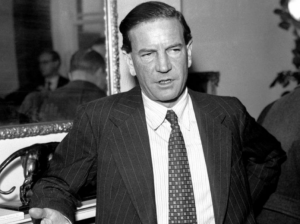
4) Harold “Kim” Philby

Harold “Kim” Philby was a double agent who attended Cambridge University from 1929 to 1933. At the time, the Soviet Union was actively recruiting students as spies. Philby was one of the recruited students. Thus he began spying for the Soviets in the 1930s and would continue to do so for nearly 30 years!

During his long career, he was successful in securing both British and American secrets at the highest levels of government. And is said to be accountable for the deaths of numerous agents.

He was finally confronted in January 1962 and was offered protection in exchange for information about the Soviet spy network. He agreed and was questioned for 3 days but never taken into custody. After the third day, he defected to Russia and stayed there until his death. Due to his efforts, he is deemed as the most famous Soviet spy of the Cold War period.

A picture of Harold “Kim” Philby - Famous Spies

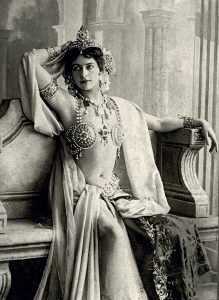
5) Mata Hari- Deemed as one of the most famous female spies of the 20th century

Margaretha Geertruida Zelleis a.k.a ‘Mata Hari’ was an exotic dancer and double agent. During the outbreak of World War I, she began touring all over Europe. Consequently, she had numerous high-level military officers as lovers. However, at the time she was also working as a spy for Germany.

Subsequently, in February 1917, she was arrested by French authorities and charged with espionage. Mata Hari was accused of revealing sensitive details of the Allies’ new weapon, the tanks, leading to the deaths of thousands of soldiers. She was subsequently sentenced to death. During her execution, she famously refused to be blindfolded before being shot to death by the firing squad. Although most of her life is riddled with fact and fiction, she is deemed as one of the most famous female spies of the 20th century.

A picture of Mata Hari -Famous Spies

6) James Armistead

James Armistead was an enslaved man who worked as a double agent during the American Revolution. Armistead volunteered to the army under Lafayette in 1781 and subsequently started working as a spy for the Patriots. He posed as a runaway spy and infiltrated the British Intelligence.

As Armistead was a native Virginian, the British received him without suspicion. Additionally, they put him to work under the command of the notorious turncoat, Benedict Arnold. As a spy, he relayed critical information to Lafayette and deceiving intel to the enemy. Subsequently, the intelligence reports from Armistead were instrumental in helping to defeat the British during the Battle of Yorktown.

A picture of James Armistead

7) Nathan Hale

Nathan Hale is often regarded as a symbol of patriotism for his work during the Revolutionary War. When George Washington asked for volunteers to spy for the Patriots, Hale courageously stepped forward. Hale was essentially assigned to go behind enemy lines and gather information.

Disguised as a Dutch schoolmaster, he successfully did so for several weeks. However, he was discovered by the British. He was subsequently convicted and executed as a spy on September 22, 1776. Nathan Hale is famously remembered for his last lines where he states that “he regrets he has only one life to give for his country”.

A picture depicting Nathan Hale

8) Frederick “Fritz” Joubert Duquesne- One of the most notorious and famous spies in history

A master of disguise, Duquesne went by many aliases, fictionalized his identity and background on various occasions and worked as a con man. He essentially worked as a spy during 3 wars: the second Boer war and both the world wars.

During the Boer war, he was nicknamed “Black Panther” and during World War II he worked under the code name DUNN. As a German spy, he gathered human intelligence, operated a spy ring, and carried out several sabotage missions. Additionally, he was captured many times over the years but managed to escape every time.

The FBI finally caught up with him in 1941 and he was arrested along with 32 other members of the Duquesne Spy Ring. Subsequently, their conviction went down as the largest espionage conviction in the history of the United States.

A picture of Frederick “Fritz” Joubert Duquesne

9) Virginia Hall

Virginia Hall was a famous female spy during the World War II, who carried out several missions for the Allies. Hall lost her left leg at the age of 27, however, she did not let her disability stop her. She went on to join the ambulance corps in France at the beginning of World War II. It was then that she met a spy and subsequently got in touch with the British Intelligence. After limited training, she was sent into Nazi-occupied France in 1941 where she posed as a reporter from the New York Post.

Code named Marie and Donna, Hall constantly changed her appearance. Additionally, as a spy, she was responsible for conducting espionage, sabotage and reconnaissance in occupied Europe against the Axis powers. The Nazis soon got the wind of her activities and were determines to hunt her down. They nicknamed her Artemis and the Gestapo deemed her “the most dangerous of all Allied spies”. However, they could never catch her.

A picture of Virginia Hall

10) Oleg Gordievsky

Oleg Gordievsky was initially a London resident spy for the KGB. However, he switched loyalties and started working as a double agent for the British Intelligence. Gordievsky was instrumental in averting a nuclear war and exposing various Soviet spy rings in Britain.

Ultimately it was an American double agent, Aldrich Ames who sold him out to the Soviets. Gordievsky was recalled back to Russia for questioning. However in a daring rescue plan, the British helped him escape. Subsequently, Russian authorities sentenced him to death in absentia.

A picture of Oleg Gordievsky

Enjoyed the above article? you may also enjoy 7 famous World War II Military Operations


10 Famous Female Warriors Who Made Their Mark On History

In ancient times, while men were expected to go out on the battlefields, women were restricted to more traditional roles. However, some women broke these stereotypes and impacted history. In the below text we celebrate 10 such famous female warriors. 

Let us take a look at the 10 Famous Female Warriors Who Made Their Mark On History.

1) Fu Hao- A famous female warrior from Ancient China

Fu Hao was a famous female warrior from Ancient China. She was an exceptionally gifted woman who also held the position of the high priestess. She was one of the 64 wives of the Shang King Wu Ding. However, due to her abilities, she rose to become one of his 3 queens. As a high priestess, she oversaw important ceremonies such as sacrifices and oracle seeking. 

At the same time, she was also a military commander who led the armies to battle on the king’s behalf. According to records, she allegedly leads an army of 13,000 soldiers to battle against Qiang, the neighbouring kingdom. Making it one of the largest military campaigns at the time. Additionally, she also fought many wars in other regions. She died during the reign of Wu Ding, and after her death, she was deified. 

A picture of Fu Hao- Famous Female Warriors

2) Artemisia I of Caria

Named after the Greek goddess Artemis, Artemisia I of Caria was a fierce queen. During the 5th century, she reigned over Halicarnassus, a kingdom that exists in modern-day Turkey. She is best known for her role in the naval battles that took place during the second Persian invasion of Greece. Here she personally commanded 5 ships and distinguished herself as a fearsome warrior. 

Additionally, she provided valuable insight and advice to Xerxes, the King of Persia. Due to this, he held her in the highest regard and praised her courage. She is mostly known through the writings of the Greek historian Herodotus of Halicarnassus, who lists her achievements in his account of the Battle of Salamis.

A picture of Artemisia I of Caria - Famous Female Warriors

3) Lozen- A famous female Apache warrior

Lozen was a famous female Apache warrior. Along with that she was a prophet and was believed to have the ability to predict the movements of her enemies. Lozen was a protector of her people and due to her tragic and eventful life, she is often called the “Apache Joan of Arc”. 

From childhood, she was gifted in archery, horseriding and strategy. And as an adult, she accompanied her brother Victorio in raids against the U.S. government that threatened their lands. After her brother’s death, she went on to fight alongside Geronimo in the last campaign of the Apache Wars. After Geronimo’s final surrender, she was taken into U. S. military custody and spent the rest of her life as a prisoner of war. 

A picture of Lozen- Famous Female Warriors

4) Trieu Thi Trinh

Trieu Thi Trinh, also called Lady Trieu was a famous Vietnamese female warrior of the 3rd century. At the time, Vietnam was under the oppressive rule of the Chinese. Like her other counterparts, Lady Trieu was strongly opposed to Chinese rule. When she was 19 years old, she made up her mind to fight against the Chinese and formed an army of 1,000. According to myth, her brother advised her against this and asked her to become a housewife instead. To this, she responded:

“I’d like to ride thunderstorms, kill whales in the oceans, drive out the invaders, reconquer the nation, undo the ties of serfdom, and never become the concubine of a man”.

Lady Trieu subsequently led more than 30 successful campaigns against the Chinese. On the battlefield, she cut an impressive figure, carrying two swords and wearing bright yellow clothes while she rode a war elephant.

A picture of Trieu Thi Trinh- Famous Female Warriors

5) Nakano Takeko- A famous Japanese female warrior of the Aizu Domain

Nakano Takeko was a famous Japanese female warrior of the Aizu Domain. From childhood, she excelled in martial arts and subsequently got trained in wielding a naginata, a traditional Japanese polearm wielded by onna-bugeisha. Takeko’s family were loyal to the ruling Tokugawa Shogunate. Later the Meiji imperial family challenged the Tokugawa clan, resulting in a civil war that came to be known as the Boshin War. Takeko wanted to join the Aizu army as well, but, due to her gender, she was rejected. However, this did not stop her and she went on to form her own army of women warriors known as the Aizu Joshitai.

Subsequently, during the Battle of Aizu, Takeko led her army into battle despite not having the permission to do so. She went on to kill 5 enemy soldiers before being fatally shot in the chest. Rather than let the enemy defile her body as a trophy, she asked her sister to cut off her head and bury her. Takeko was buried beneath a pine tree at the Hōkai-Ji Temple in modern-day Fukushima. Today, in her honour a monument is erected near the grave.

A picture of Nakano Takeko -Famous Female Warriors

6) Boudica

Boudica, a famous female warrior was the wife of Prasutagas, the king of the Iceni tribe. Subsequently, in 43 AD, the Romans conquered most of Southern England. Consequently, many Celtic tribes were forced to submit. However, the Romans allowed Prasutagas to be in power as a forced ally of the Empire. Prasutagas subsequently died without a male heir and in his will jointly left the kingdom to his daughters and the Roman Emperor. However, the Romans ignored his will and took over his kingdom and lands. Additionally, to add further humiliation they publicly flogged Boudica and raped her daughters. The queen then vowed vengeance stating:

“Nothing is safe from Roman arrogance and ego. They will destroy the sacred and will deflower our virgins. Win the battle or die, that is what I, a woman, will do.”

Boudica then went on to lead a rebellion against the Roman Empire. The queen’s forces successfully wiped out the Roman Ninth Legion and destroyed three Roman towns, Camulodinum (Colchester), Verulamium (St. Albans) and Londinium (London). During her rebellion she killed nearly 70,000 Romans, however in the end her army was defeated. To avoid capture, Boudica and her daughters committed suicide. 

A picture of Boudica

7) Zenobia

Zenobia was a remarkable 3rd-century queen of the Palmyrene Empire in Syria. Her husband Odaenathus was instrumental in making Palmyra the supreme power in the Near East. After his death, she became the regent of her son and ruled the kingdom via him. In 269, she launched an invasion and defeated the Roman prefect Tenagino Probus which brought most of the Roman East under her sway. 

She also conquered Egypt in the process and assumed the title of queen of Egypt. She then went on to conquer parts of Anatolia (modern Turkey), Syria, Palestine, and Lebanon, taking vital trade routes from the Romans. Subsequently, she clashed with the Romans and after heavy fighting the Romans were victorious. She was captured by Roman Emperor Aurelian who exiled her to Rome where she spent the rest of her life. 

A picture of Zenobia

8) Tomoe Gozen

Tomoe Gozen was a 12th-century Japanese female warrior who was famous for her exceptional fighting skills. Although it is believed Tomoe Gozen might not have been her real name. Tomoe refers to the pattern on her shoulder pads while Gozen was a title of respect. She learned martial arts from a young age under the shogun Minamoto no Yoshinaka. However, most of her life story is shrouded in fact and myth. 

She is believed to have commanded an army of 1,000 men and her weapon of choice was a katana. Additionally, she also participated in the Genpei War (1180–85). Gozen’s last battle was the Battle of Awazu, where after showing exceptional skill, she retired. Although sources vary, it is said she subsequently became a nun.

A picture of Tomoe Gozen

9) Joan of Arc- One of the most famous female warriors

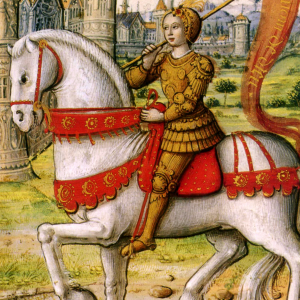
Undoubtedly one of the most famous female warriors, Joan of Arc was a force to reckon with. Acting under the divine guidance of Archangel Michael, Joan was instrumental in leading the French army in a momentous victory at Orléans. This essentially helped recover France from English domination during the Hundred Years’ War. However, Joan was later captured by the English. Arrested and convicted, she was burned at the stake in 1431.

Even after her death, her influence was strong. The Church subsequently visited her trial in 1456 and declared her innocent. And in 1803, Napoleon Bonaparte declared her as the national symbol of France. Read more about Joan of Arc and other medieval knights here: 10 Legendary Medieval Knights in history

A picture of Joan of Arc

10) Khutulun

The last on our list of famous female warriors is Khutulun. Popularly known as the wrestler princess, she was a descendant of Genghis Khan. From a young age, she excelled in wrestling, riding horses and archery. In fact, she was such a famed wrestler, that she had a reputation of beating every opponent that she faced. She found the same success on battlefields, where she regularly accompanied her father on his military campaigns. 

A picture of Khutulun

Enjoyed the above article? You may also enjoy Girl Power: 10 Amazing British Women in History


John Harvey Kellogg- Cornflakes & Controversies

John Harvey Kellogg is a man remembered for his famous surname. Yes, he is the inventor of corn flakes. Along with that, he was a wellness guru and health activist. However, little do people know of his bizarre and complicated past. Read the below text to find out more.

Let us take a look at John Harvey Kellogg- Cornflakes & Controversies.

1) John Harvey Kellogg was born on February 26, 1852, to a family of staunch Seventh-day Adventists. The Church was essentially known for its emphasis on hygiene and diet and was opposed to alcohol and sex. These views heavily influenced Kellogg’s theories on health and wellness.

A portrait of John Harvey Kellogg

2) He was not formally educated 

The Kelloggs essentially believed in the Second coming of Christ. As a result, neither John Harvey nor his siblings got formal education. However, John Harvey Kellogg saw to it that he completed his education. He subsequently went on to earn a medical degree in 1875.

A picture of a young John Harvey Kellogg

3) John Harvey Kellogg became director of the Western Health Reform Institute

In 1877, Kellogg took over the Adventist-inspired Western Health Reform Institute in Battle Creek and renamed it to Battle Creek Medical-Surgical Sanitarium. The term “sanitarium” implied both hospital care and emphasis on personal hygiene and health. At the time, America was just understanding its importance, thus the Sanitarium merged as a beacon of wellness. 

A picture depicting an advertisment of the Sanitarium
A 1916 advertisment of the Sanitariumn

4) John Harvey Kellogg wanted to invent a breakfast food that was very bland in taste 

Hence over the years, he and his brother William worked tirelessly to perfect low-maintenance, grain-based breakfast cereal. Their first attempt was essentially a dough that was a mixture of wheat, oats, and corn which after baking broke into little pieces. This was called ‘Granola’. The product was usually eaten by members of the Sanitarium and former patients.

5) The discovery of the flaked cereal

Cornflakes is said to be an accidental discovery. And there are many varied stories regarding its invention. One popular instance tells that John Harvey accidentally kept a batch of wheat out overnight. The next day they went stale. 

However, instead of disposing of them, he sent them through the rollers and was surprised to obtain fine flakes, which could then be baked. He asked his brother William to perfect the recipe and they called it Granose. Subsequently, in 1902, they remanufactured the commodity out of maize and called it corn flakes.

A picture of Granose biscuits

6) John Harvey Kellogg’s brother William subsequently brought his brother’s share of corn flakes and started his own company the Battle Creek Toasted Corn Flake Company

At the same time, John Harvey continued to manufacture and sell Granose out of his own company named “Kellogg’s”. Later the Battle Creek Toasted Corn Flake Company renamed itself, Kellogg. John Harvey sued his brother over who got the right to use their last name and William sued him back. Thus ensued a decade’s long legal battle between the two. William eventually won the right as corn flakes became more popular. Thus William’s company came to be known as Kellogg’s Corn Flakes in 1920.

A picture of toasted cornflakes

7) John Harvey Kellogg’s main battle was against masturbation

Yes, you read that right! Kellogg considered sugary and spicy food as the gateway to sin. And in his opinion bland foods like cereal prevented masturbation. In fact, he intended for corn flakes to rid people of their carnal desires.

Kellogg had numerous extreme ideas to battle masturbation. These involved sewing up penises of young boys and pouring carbolic acid on young girls’ clitorises. Of course, these methods were too grisly so he instead opted to use corn flakes as a method of controlling children’s sexual desire. Additionally, he himself abstained from sex all his life and despite being married for 40 years he never consummated his marriage.

A picture of J.H with a bird on his shoulder

8) Additionally, John Harvey Kellogg was an ardent eugenicist and was one of the founders of the first Race Betterment Conference, which was essentially a fair for eugenicists. 

9) The bizarre medical treatments at the Sanitarium 

John Harvey Kellogg was hell-bent on trying anything to cure his patients’ illnesses. Some of these treatments were prescient however others were plain bizarre. Some unusual practices included:

Multiple enemas

John Harvey Kellogg encouraged his patients to get multiple enemas in a day. He essentially invented a device that could run 15 quarts of water through an individual’s bowels within seconds. He also advised they consume a daily pint of yoghurt— partly through the mouth and the rest through the anus. 

Vibrating chairs

Kellogg invented numerous contraptions, one of them being the vibrating chairs. These chairs were essentially designed to send shockwaves that would make the occupant defecate themselves. He also invented slapping and flogging machines for the same purpose.

A picture depicting vibrating chairs

Hydrotherapy

Kellogg implemented several hydrotherapy procedures. One of them included continuous baths. These were regular bathtubs however they could last “for several hours, days and months”. With the only break being for using the toilet. According to Kellogg, these treated various skin conditions and even mental maladies including delirium, hysteria and mania.

A picture depicting hydrotherapy procedures

10) At its peak, the Sanitarium was treating tens of thousands of patients

The Sanitarium was a huge success in the United States and was deemed as one of the “premier wellness destinations”. It had a wealthy and famous clientele, including Henry Ford, Thomas Edison, Amelia Earhart, and President William Howard Taft.

11) His Legacy

Along with his wife Ella Ervilla Eaton, John Harvey fostered 42 children, seven of whom they legally adopted. Additionally, he never mended his relationship with his brother. Although on his deathbed, he tried making amends by writing a heartful apology to his brother, the letter ultimately did not reach William until it was too late. 

John Harvey’s legacy is complicated and his life was controversial. However, he was instrumental in providing America with one of its most beloved breakfast foods. Subsequently, in 2006, John Harvey Kellogg was initiated into the National Inventors Hall of Fame for the discovery of tempering and the invention of the first dry flaked breakfast cereal. 

Furthermore, although his ideas on health might seem unusual, he might have been doing something right because he passed away at the ripe age of 91. 

A picture of Dr. John Harvey Kellogg sitting on a chair


Enjoyed the above article? You may also enjoy 9 Bizarre Facts about Nikola Tesla that you won’t believe are true!


Rocky Dennis: The Extraordinary Life of a Determined Fighter

Rocky Dennis was a truly remarkable person who showed us that disabilities don’t have to hold us back. Despite doctors believing he wouldn’t live past the age of seven, Rocky proved them wrong and lived a full and vibrant life. He became an inspiration to many and even inspired the famous movie ‘Mask’ in 1985. Rocky’s determination and strength of spirit allowed him to overcome incredible challenges and show the world that nothing is impossible.

Let us take a look at The Incredible Life of Rocky Dennis.

1) Rocky Dennis: Early life and diagnosis

Roy Lee Dennis, nicknamed Rocky was born on December 4, 1961. He was born to Florence “Rusty” Dennis and had an older half-brother, Joshua. Rocky was a healthy baby boy and showed no signs of any abnormality. However, it wasn’t until he was a little more than two years old that the first signs of his impending disorder appeared in his medical exams. Upon conducting further tests, it was discovered that Rocky had an extremely rare disorder called craniodiaphyseal dysplasia, also known as lionitis.

The disorder essentially causes calcium to build up in the skull, consequently distorting facial features and reducing life expectancy. Additionally, the doctors foretold that Rocky Dennis would become progressively deaf, lose his eyesight and die before his seventh birthday.

A picture of Rocky Dennis

2) Florence “Rusty” Dennis did not give up on her son

Rusty Dennis, a headstrong woman wasn’t going to accept her son’s fate. She wanted him to have a normal life. Consequently, she enlisted him into a public school at the age of six and raised him like any other boy. Despite his disorder, Rocky Dennis went on to become the star student and was also popular with other kids. 

Additionally, his mother tried healing him with natural remedies like vitamins and alfalfa sprouts. Rusty also raised him to believe in himself and advocated the philosophy of healing through willpower. Whenever Dennis had severe headaches, she would simply send him to his room to rest, advising him to “make yourself well”.

Rocky Dennis’ mother instilled a sense of strong self-belief in him. According to his mother when Rocky was seven he visited an eye specialist who said Rocky would never have enough vision to read. Rusty handed him a book and the boy promptly read it. The astonished doctor asked Rocky how he had done it. To which he simply replied, “I don’t believe in being blind”.

A picture of Rocky and his mother

3) Due to his mother’s perseverance, Rocky Dennis got to live a relatively normal life. At the Southern California summer camp for handicapped children he attended, Rocky went on to win many awards and medals after being voted “best buddy,” “most good-natured,” and “friendliest camper”.

4) However things weren’t easy, as Rocky faced constant discrimination and judgement

According to his mother, one day he came home from the playground crying because a kid called him ugly. His mother consoled him and firmly said that “if they laugh at you, you laugh with them. If you act beautiful, you will be beautiful and the people will see that and they’ll love you”.

He faced judgement in school as well. Doctors and teachers always tried to hold him back. In one instance his teachers tried putting Rocky in a separate school for the handicapped ”because of his appearance”. However his mother would not allow it and raised hell. Rusty recalled that “they tried to keep him out of the classroom because they believed it would upset the kids’ parents”. But Rocky Dennis continued to excel at school and graduated at the top of his class. 

A picture depicting a still from the movie 'Mask'
A still from the movie ‘Mask’

5) As a teenager, Rocky developed a strong sense of humour about his condition and even joked about it

Halloween was one of his favourite holidays and he took full advantage of the occasion. He would go to trick-or-treat with the neighbourhood kids and pull pranks on unsuspecting people. After collecting the candy from the neighbours, Rocky would pull down the fake Halloween mask to reveal his face. 

The neighbours would feign surprise thinking he’s wearing another mask. The boy would then pull at his own skin and say “Gee it must be stuck on”. Once the neighbours realised what was actually going on, they promptly gave him more candy. According to Rusty “Rocky always got a lot of candy”. 

A picture of young Rocky Dennis

6) Rocky Dennis learned to accept himself the way he was to such a degree that when a plastic surgeon offered to make him look “normal”, he declined it. 

7) Rocky Dennis: Later years and demise

Although Rocky Dennis had defied all odds, there was no denying his declining health and imminent death. Rocky became progressively weaker and his headaches got severer. On October 3, 1978, after suffering yet another headache, his mother sent him to bed with the instructions to feel better, but that was the last time she saw him alive. The next morning, on October 4, 1978, Rocky Dennis passed away at the age of 16. His mother subsequently donated his body to the UCLA genetics research centre.

A picture depicting a still from a musical inspired by Rocky Dennis' life
A still from a musical inspired by Rocky Dennis’ life

8) The inspiration for the 1985 movie ‘Mask’

Rocky Dennis’ life became an inspiration for the movie ‘Mask’ when screenwriter Anna Hamilton Phelan saw Rocky while visiting UCLA’s genetics research centre. The movie subsequently premiered 7 years after Rocky’s death. It received worldwide acclaim from both critics and general audiences. 

The Mask : Our love is like a red, red rose… and I am a little thorny.

The role of Rocky Dennis was portrayed by teen actor Eric Stoltz, who won an Oscar nomination for his performance. While the role of Rusty was portrayed by pop icon Cher, who won Best Actress at the Cannes Film Festival Awards for her role. 

A picture depicting the cover of people's magazine

In the movie ‘Mask,’ there are several notable differences in how Rocky Dennis is portrayed compared to his real-life persona. Firstly, in the film, Rocky is depicted as a charismatic and outgoing teenager with a larger-than-life personality. He is shown as someone who effortlessly captivates the people around him with his charm and wit. This portrayal highlights his ability to connect with others on a deep level, despite his physical appearance.

“My mom always told me I was a lion in my past life, but I did not completely leave my old body for this one!”

In reality, however, those who knew Rocky described him as more introverted and private. While he did have a close circle of friends and was well-liked, he was not necessarily the extroverted, social butterfly depicted in the movie. Rocky’s real-life personality was nuanced, and he possessed a quieter strength that resonated with those who took the time to truly know him.

Another notable difference is the focus on Rocky’s relationship with his mother, Rusty Dennis, in the movie. ‘Mask’ portrays their bond as the central driving force in Rocky’s life. The film highlights Rusty’s unwavering support and dedication to her son, portraying her as the primary source of inspiration and motivation for Rocky’s indomitable spirit.

While it is true that Rocky and Rusty had a close and loving relationship, the movie places a stronger emphasis on their connection than was perhaps the case in real life. In reality, Rocky had meaningful connections with friends, teachers, and peers who were equally inspired by his courage and determination. The movie’s narrative choice to amplify the mother-son relationship is a storytelling device that serves to heighten emotional impact and create a more streamlined narrative.

Furthermore, it is important to note that the movie ‘Mask’ condenses and dramatizes certain events from Rocky’s life for storytelling purposes. Real-life experiences are often compressed or modified to fit within the constraints of a cinematic narrative. While the film captures the essence of Rocky’s journey and the impact he had on those around him, it may not fully capture the intricacies and complexities of his actual life.


Read about another inspirational figure who did not let his disability hinder him from living a fulfilling life: The Legend of the Green Man: Raymond Robinson


Operation Barbarossa- in rare pictures

Operation Barbarossa was essentially a code name for Nazi Germany’s invasion of the Soviet Union. The operation consisted of many prominent battles. Although the German forces achieved significant victories, ultimately the operation was a failure. We have compiled rare pictures that depict the World War II Operation Barbarossa.

Let us take a look at Operation Barbarossa- in rare pictures.

1) A picture depicting German soldiers posing in front of their stationary vehicles.

A picture of the German infantry- Operation Barbarossa

2) German ski troops donning the one-piece camouflage snowsuit during Operation Barbarossa.

A picture of the German ski troops- Operation Barbarossa

3) A light armoured half-track preparing for an attack somewhere along the Russian war front. July 21, 1941.

A picture depicting German tanks- Operation Barbarossa

4) A picture depicting a German driver inside an armoured carrier during Operation Barbarossa. August 1941.

A picture of a German tank driver- Operation Barbarossa

5) German soldiers watch the Red Army’s movements from their trenches shortly before advancing into Soviet territory, on July 10, 1941.

A picture depicting German infantrymen

6) A rare picture depicting Waffen-SS soldiers being subjected to the Red Army’s aerial and ground bombardment.

A picture depicting Troops from the Waffen-SS- Operation Barbarossa

7) German soldiers using a storm boat to cross the Don River during Operation Barbarossa. The Caucasus region, 1941.

A picture depicting German soldiers on a boat- Operation Barbarossa

8) A picture depicting the Nazis moving a horse-drawn vehicle over a corduroy road during Operation Barbarossa. The Salla on the Kola Peninsula, 1941.

A picture of German troops moving a horse drawn vehicle- Operation Barbarossa

9) A German troop looking over the recently captured city of Kyiv. Additionally, a bridge burns across the Dnieper river.

A picture of a troop

10) A picture depicting the Red Army’s machine gunners during the German invasion of the Soviet Union in 1941.

A picture of Soviet soldiers- Operation Barbarossa

11) A shot German plane goes down over an undisclosed location during Operation Barbarossa in 1941.

A picture of a German plane caught on fire- Operation Barbarossa

12) German troops camouflaged in the undergrowth during the battle prior to the occupation of Kyiv, Ukraine, in 1941.

A picture of camouflaged Nazi troops- Operation Barbarossa

13) Russian prisoners of war, left, pictured next to Nazi soldiers preparing for battle.

A picture depicting soldiers- Operation Barbarossa

14) Russian civilians recover their belongings from their burning homes in a Leningrad suburb, October 21, 1941. The territory was said to have been burnt by the Russians as a part of the scorched Earth military strategy.

A picture depicting Russian civilians reccuing their belongings

15) A picture depicting reindeers grazing on an airfield as a warplane takes flight in the background. Finland, July 26, 1941.

A picture of reindeers grazing in a field

16) Heinrich Himmler (left, in glasses), one of the men in Hitler’s inner circle and the commander of the Gestapo and the Waffen-SS, examines a prisoner of war camp in Russia.

A picture of Himmler observing a pow

17) A picture depicting a huge Russian howitzer and its crew stationed in a well-concealed location on the Russian front. September 15, 1941.

A picture of a Russian gun

18) Soviet soldiers looking over the war trophies captured in battles during Operation Barbarossa. September 19, 1941.

A picture of Soviets with Nazi war trophies

19) An aerial picture depicting the destruction in Riga, the capital of Latvia, on October 3, 1941, after one of the battles and during its occupation by Nazi Germany.

A picture of a destroyed Riga

20) During their invasion of Russia, Nazi troops took out many Soviet national emblems. July 18, 1941.

A pictur eof Nazis removing Soviet symbols

21) According to the Germans, this picture depicts a view of Leningrad during its siege.

A picture of Leningrad

22) An array of Russian armoured vehicles move toward the front, on October 19, 1941.

A picture of armoured vehicles

23) A picture depicting Russian prisoners of war captured by the Nazis on July 7, 1941.

A picture of russian POWs

24) Two Russian soldiers, now prisoners of war, examine a large fallen statue of Lenin. Additionally, the rope around its neck was put there in a symbolic fashion.

A picture of soldiers observing a fallen statue of Lenin

25) A picture depicting Russian prisoners en route to Germany, on October 3, 1941. During Operation Barbarossa, several million Soviet soldiers were ultimately sent to German prison camps and the majority of them never returned alive.

A picture depicting a trainload of pows

26) German troops wearing heavy winter clothes march through a district near Moscow in November 1941. Ultimately, the harsh winter was one of the main reasons for Operation Barbarossa’s failure.

Enjoyed the above article? You may also enjoy Pre-war Nazi Germany- in colour pictures

Prince Shotoku- The Legendary Regent of Japan

Prince Shotoku Taishi a.k.a Prince Umayado was one of the legendary regents of Japan. He ruled as a regent from 594 to 622 CE and is celebrated for reforming the Japanese government. Additionally, he was also instrumental in spreading Buddhism in Japan.

Let us take a look at Prince Shotoku- The Legendary Regent of Japan.

1) Early life and ascension

Prince Shotoku was a member of the powerful Soga clan, which dominated Japanese politics at the time. His real name Umayado literally translates to ‘the prince of the stable door’. This alludes to the fact that he was born in front of a stable. He was born in 574 CE and was the second son of the short-reigned Emperor Yomei. 

The Soga clan head Soga no Umako was behind the assassination of Emperor Sushun. And also defeated the allied Nakatomi and Mononobe clans. Ultimately crowning his own niece Suiko as empress. Umako then deemed the young crown Prince Shotoku as regent on behalf of his aunt. A position Shotoku assumed until his death. 

A picture of Prince Shotoku
Prince Shotoku

2) Prince Shotoku’s achievements

Prince Shotoku is one of the most famous historic figures in Japan. Additionally, he is instrumental in bringing in many government reforms. In ancient Japan, clans were very important and being from a particular clan could guarantee your position to become a top politician. Prince Shotoku doubted the effectiveness of this system so, in 604 CE, he introduced the Kan-i 12 Kai ‘cap rank’ system. The cap rank system essentially meant that each of the 12 state officials wore a different coloured cap that indicated the office an official worked for. Through this system, people could become an official of higher rank irrespective of their clan or status. 

One of Prince Shotoku’s first acts was giving the emperor the sole right to levy taxes and thus rooting out corruption. Moreover, he resumed sending delegations to China in order to aid cultural, economic, and political exchange. Furthermore, Shotoku introduced the calendar system in Japan, which was derived from China’s lunar calendar. 

A picture of Prince Shotoku

3) Prince Shotoku is famous for the introduction of the Seventeen Article Constitution

Prince Shotoku’s Constitution is also known as the Seventeen Article Constitution or Seventeen Injunctions (Jushichijo-Kenpo). The constitution (more accurately a moral code) was drawn to reform the Japanese government using both Buddhist and Confucian principles. Additionally, it remained in effect until the 7th century. However, it is alleged that the document might not have been composed by Shotoku but inspired by him and written as a tribute following his death. 

A picture depicting the prince with his siblings

4) Buddhism was officially introduced to Japan in either 538 CE or 552 CE (traditional date). It was then particularly adopted by the Soga clan and received official government support in 587 CE during the reign of Emperor Yomei. Prince Shotoku further encouraged Buddhism and even emphasised its reverence in his constitution. 

A picture depicting the prince and his attendants

5) Prince Shotoku and Japanese Buddhism

During the prince’s youth, the Soga clan was battling to stay in power. The prince then prayed to the Four Buddhist Guardian Kings (the Shitenno). Further vowing to build a temple in their honour if they helped him end the conflict in the region. And just like that, the rival clan’s leader was killed in battle and the Soga clan was able to stay in power. 

Prince Shotoku went on to build some of the first Buddhist temples in Japan. The most famous is the Shitenno-ji. Built in 530 CE it is regarded as the oldest Buddhist temple. He subsequently went on to sponsor the building of 45 temples. Most of which were not only used as religious centres but also schools.

A picture depicting the prince

6) The temples built by the prince were instrumental in drawing in numerous monks from all over Korea and China

Buddhism essentially helped strengthen the Japanese emperorship and its prestige. Due to the increase in followers, Buddhist religious officials provided support for imperial power. 

Additionally, the state sponsorship also led to the integration of Buddhist and Shinto traditions into the unique Japanese Buddhism that we see today. Moreover, eventually, the Buddhist temples started absorbing the Shinto shrines, thus receiving Shinto visitors as well. Ultimately, their conversions led to increased support for Japanese imperial officials and reduced the visibility of Chinese traditional norms within Japanese Buddhist traditions.

As Prince Shotoku was responsible for this integration, he is credited with the formation of Japanese Buddhism and the creation of a centralised emperor. 

A picture of Prince Shotoku

7) Death and Legacy

Prince Shotoku Taishi supposedly died in 622 CE and left a lasting legacy. At the time of his death, both Buddhism and centralised emperorship were an integral part of Japanese society. As Buddhism further spread across the nation, Shotoku became somewhat of a mystical figure. He is thus credited with all manner of minor miracles. 

These were composed and written as fact in the Nihon Shoki (‘Chronicle of Japan’ and also known as the Nihongi). According to records, Shotoku had the gift of foresight, heard the complaints of ten men simultaneously and even delivered such moving lectures that lotus flowers rained down from Heaven. As these legends became widespread, a cult quickly developed for Shotoku’s contribution. 

He was ultimately revered by newfound Buddhist converts as a saint-like figure and even as an avatar of the Buddha, especially during the Kamakura Period (1192-1333 CE). Prince Shotoku continues to be honoured as one of Japan’s wisest rulers and is celebrated for his cultural and political contributions. 


Enjoyed the above article? You may also enjoy Yoshiko Kawashima- The Chinese Princess Who Spied For Japan

10 Famous Female Pharaohs of Ancient Egypt

Although Ancient Egypt had comparatively fewer female rulers, they made a significant impact on its history. The female rulers of Ancient Egypt ruled either as regents or independently. To commemorate their achievements, we have compiled a list of the most famous female pharaohs of Ancient Egypt. 

Let us take a look at the 10 Famous Female Pharaohs of Ancient Egypt. 

1) Merneith

Although not much is known about her, she is presumably the royal wife of King Djet and the mother of King Den. As Merneith’s name appears in one of the King Lists, it is believed that she might have been a Pharoah. This essentially means that she was the first woman to reign over Egypt. Additionally, this also makes her the earliest queen regnant in recorded history. 

Merneith’s rule occurred around 2950 BC and although her reign is debated, evidence notes that she had independent autonomy. Additionally, Merneith is said to be the only First Dynasty queen to have two tombs in Saqqara and Abydos. Due to this fact she is regarded as one of the most famous female pharaohs in Egyptian history.

A picture of Merneith- Famous Female Pharaohs

2) Sobekneferu- The famous female Pharoah of Egypt’s 12th Dynasty

Her name essentially translates to “the beauty of Sobek” and she is the first known female pharaoh of Ancient Egypt. Sobekneferu took over the throne after the death of Amenemhat IV and ruled over Egypt for 4 years. She subsequently died without an heir and the end of her rule concluded Egypt’s 12th Dynasty. Additionally, details surrounding her death remain a mystery, however, it has been suggested that her burial ground might be one of the pyramids at Mazghuna, but this is very unlikely.

A picture of Sobekneferu- Famous Female Pharaohs of Ancient Egypt

3) Nitocris

Another famous female Pharoah on our list is Nitocris. She is largely known through the writings of the Greek historian Herodotus. And according to records she is said to have been the last pharaoh of Ancient Egypt’s 6th Dynasty. However, her historic authenticity is questionable. Nitocris is alleged to be the daughter of Pepi II and is said to have succeeded her brother upon his death. According to Herodotus, she later avenged her brother’s death and subsequently committed suicide. 

A picture of Nitocris- Famous Female Pharaohs of Ancient Egypt

4) Twosret- The famous female Pharoah of Egypt’s 19th Dynasty

Another famous female pharaoh on our list is Twosret, also spelt Tausret. Twosret is essentially the last known Pharoah of the 19th Dynasty. According to historians, her reign lasted for around 8-10 years, out of which she ruled as a regent for 7. It is noted that during her early reign the true power behind the throne was Chancellor Bay.

However, by the 5th year, Bay was executed and Twosret adopted the full title of the king. In the next couple of years her son, Siptah is said to have died from polio, giving Twosret all the pharaonic powers. During her rule, she was regarded with both male and female titles. Her reign essentially ended in a civil war and at some point, her name, title and image were stripped from her tomb.

A picture of Twosret- Famous Female Pharaohs of Ancient Egypt

5) Cleopatra I of Syra

Cleopatra I was the daughter of Antiochus III the Great and a princess of the Seleucid Empire. To keep the peace between the Syrian and Egyptian empires, she was wed to Ptolemy V, thus becoming queen of Egypt. However, Ptolemy V died unexpectedly in 180. Thus Cleopatra became the regent on her young son’s behalf.

Additionally, she also became the first Ptolemaic queen to rule without her husband. Cleopatra I ruled wisely and even minted coins in her own name. It was she who established domestic order in Egypt.

A bust of Cleopatra I- Famous Female Pharaohs of Ancient Egypt

6) Ahhotep I

Ahhotep I is regarded as one of the influential rulers of Ancient Egypt. She was the queen consort of Pharaoh Seqenenre Tao ll and the mother of Ahmose I. After her husband’s death, she became the regent on behalf of her young son during the 17th Dynasty. Ahhotep I also held the titles of “Great Royal Wife” and “King’s Mother”. Additionally, according to some records, she might have rallied troops during a battle at Thebes.

A picture depicting Ahhotep I

7) Khentkaus I

Another famous female pharaoh on our list is Khentkaus I. She is said to have been the daughter of King Menkaure and the wife of both King Shepseskaf and King Userkaf. According to inscriptions, she was the mother of two Egyptian pharaohs, Sahure and Neferirke of the Fifth Dynasty. There is some evidence stating that she may have served as regent on her son’s behalf, however, records also suggest she may have ruled independently.

A picture of Khentkaus I

8) Cleopatra VII

Cleopatra VII is undoubtedly one of the most famous rulers of Ancient Egypt. She is famed for her beauty, cunning and her infamous relationships with Julius Caesar and Mark Antony. Cleopatra VII was essentially the last active ruler of the Ptolemaic Kingdom of Egypt. She ruled as co-regent 3 times (first with her father, then with her two younger brothers and finally with her son), however, all 3 times she was the de facto ruler. Her rule ended after facing defeat at the hands of Octavian. She subsequently committed suicide.

A picture of Cleopatra VII

9) Hatshepsut- Egypt’s most famous and powerful female Pharoah

Egypt’s most famous and powerful female Pharoah is Hatshepsut. She essentially became regent on behalf of her young stepson, Thutmose III. Hatshepsut went on to reign over Egypt for 20 years, a feat that had not been achieved by any other female ruler in an Egyptian Dynasty. As Pharoah, Hatshepsut was a prolific builder and constructed many buildings, temples and monuments. The most famous being Deir el-Bahri.

A picture of Hatshepsut

10) Nefertiti

Although not a Pharoah in the traditional sense, Queen Nefertiti is one of the most famous rulers of Ancient Egypt. She reigned during the 18th Dynasty of Ancient Egypt alongside her husband Pharaoh Akhenaten. Additionally, their reign was regarded as the wealthiest period of Ancient Egyptian history. The monarchs were also noted for a religious revolution in which they worshipped one god only, Aten. 

It is generally agreed that Nefertiti may have acted as queen regnant and co-ruled the kingdom with her husband. According to records, the queen vanished during Akhenaton’s 12th regnal year. Some say she died while others suggest that she outlived her husband and ruled as a pharaoh briefly. She then subsequently handed the throne to King Tutankhamun. Today, Nefertiti is famous for her bust which was excavated during an archaeological dig in 1912. 

A picture depicting Nefertiti

Enjoyed the above article? You may also enjoy 8 Mighty Ancient African Empires

The 10 Most Famous Assassinations That Changed The Course Of History

Assassinations have been carried out since ancient times and their consequences have heavily impacted history. To further shed light on this, we have compiled a list of the most famous assassinations that changed the course of history.

Let us take a look at The 10 Most Famous Assassinations That Changed The Course Of History.

1) Conrad of Montferrat

Conrad of Montferrat was essentially the de facto ruler of Jerusalem and one of the major participants of the Third Crusade. However, he was officially crowned king in 1192. At the same time, he was involved in a struggle with Richard I of England over the kingship of the throne of Jerusalem. As fate would have it, just when Conrad was elected as king, four days later he was brutally assassinated.

When the king was returning home after a meal at his friend’s house, he was accosted by two individuals. They stabbed him at least twice and Conrad died on the scene. The assassination is said to have been carried out by the famous assassins of the medieval era, the Hashishin. They were a Nizari Shia sect, who supposedly geared themselves up for murder with copious amounts of hashish. Interestingly, the word assassin is derived from the cult’s name-Hashishin. Although the true culprit was never identified, it is rumoured that Richard I was involved in the plot.

A picture of Conrad of Montferrat-Famous Assassinations

2) John F. Kennedy- One of the most famous assassinations in American history

Undoubtedly one of the most famous assassinations in American history was that of John F. Kennedy. The infamous incident occurred when the then U.S. president was riding in a presidential motorcade through Dealey Plaza. He was fatally shot by Lee Harvey Oswald. What fuels conspiracy is that Oswald claimed that he had been framed for the crime. However, this was never proven as Oswald was shot dead by Jack Ruby before he could be tried on November 24, 1963. Ultimately, Oswald took his secrets to the grave.

A picture of John F. Kennedy- Famous Assassinations

3) Malcolm X

Minister Malcolm X is an important and celebrated figure in the African-American community. During his discourses, he advocated Black self-defence, Black supremacy and Black racial pride. Additionally, he preached to educate the Blacks on issues such as white aggression.

Malcolm X was also a vocal spokesman of the Nation of Islam, however, in the 1960s he began to dissociate with the organisation. He subsequently renounced it and this got him in trouble with the organisation. Throughout 1964, he began receiving numerous death threats. In 1965, he was assassinated in New York City by the members of the Nation of Islam. However, the organisation itself denied any involvement.

A picture of Malcolm X

4) Thomas Becket- An accidental famous assassination

This famous assassination took place by accident. Yes, you read that right! Thomas Becket was essentially the archbishop of Canterbury during the 12th century. He was a very talented man and his talents got him recognised by King Henry II. The king subsequently made him his chancellor and the two became fast friends. However, Becket and Henry got into a disagreement and this put their friendship under strain.

One day in particular King Henry II was exasperated and remarked that “someone should get rid of Thomas Becket”. At the time, four of the king’s knights were present in the room. The knights mistook this statement as a command and set out to confront the archbishop. They subsequently assassinated him in Canterbury Cathedral. Talk about a case of terrible miscommunication!

A picture of the famous assassination of Thomas Becket

5) Mahatma Gandhi

Mohandas Karamchand Gandhi a.k.a “Mahatma Gandhi” or the “Father of the Nation” is a highly influential and celebrated man in India. He was a very powerful leader during the Indian independence movement. Additionally, he was famed for his notion of achieving independence through non-violence. In August 1947, India split into two separate nations, India and Pakistan.

Although initially, Gandhi was in support of this, the subsequent brutal violence changed his views. He then undertook a fast to showcase his disfavour for the rampant violence. However, this action was seen in a bad light by Hindu extremists-including Nathuram Vinayak Godse. Godse went on to assassinate Gandhi on January 30, 1948.

A picture of Mahatma Gandhi

6) Abraham Lincoln

The United States’ 16th president Abraham Lincoln brought in many political changes. The most important being the abolishment of slavery, the preservation of the Union and the support of democracy.

At the time of Lincoln’s presidency, America was in the middle of a major civil war. The civil war was essentially fought between the United States of America and the Confederate States of America. Ultimately, the United States were victorious. However, not all were pleased with this outcome.

One such Confederate sympathizer, John Wilkes Booth, decided to exact revenge on Lincoln. He then went on to assassinate Lincoln on the evening of April 14, 1865. Due to its political implications, Lincoln’s assassination goes down as one of the most famous assassinations in American history.

A picture depicting Lincoln's famous assassination

7) Archduke Franz Ferdinand- A famous assassination that started World War I

Archduke Franz Ferdinand’s assassination was essentially one of the main reasons for World War I. At the time, Ferdinand was the heir to the Austro-Hungarian throne. During that time, many people in the Balkans were displeased by Austria’s annexation of Bosnia in 1908. Due to this, many Bosnian-born Serbs created nationalist groups. Gavrilo Princip, the archduke’s assassin belonged to one such group.

On that fateful day, Ferdinand had travelled to Sarajevo in order to inspect his troops there. And just by chance, Princip spotted him. Seizing this opportunity Princip fatally shot the archduke. This famous assassination set a chain of events that would culminate in World War I.

A picture depicting the Archduke and his wife's Famous Assassinations

8) Julius Caesar- One of the most famous assassinations in Roman history

Julius Caesar‘s assassination is regarded as one of the most famous assassinations in Roman history. Caesar’s close friend, Marcus Brutus was displeased by his growing ambitions. Additionally, Brutus was getting heavily influenced by other Senators who thought the same. Hence he and the Senate devised a plot to dispose of Caesar. They subsequently assassinated him at the Theatre of Pompey.

A picture depicting Caesar's Famous Assassinations

9) Martin Luther King Jr.

Martin Luther King Jr. was one the most prominent civil rights leaders. He was the first president of the Southern Christian Leadership Conference (SCLC)— an organisation subsequently headed by his son Martin Luther King III. He was known for combating racial injustice through non-violence. And for this ideology, King won the Nobel Peace Prize.

On March 29, 1968, King was in Memphis, Tennessee in order to showcase support for the black sanitary public works employees. However, he was fatally shot by James Earl Ray, who subsequently pleaded guilty and was sentenced to 99 years in prison. This incident, however, shook the African-American community who in retaliation committed numerous riots and arson. Additionally, it put a further divide between the blacks and the whites.

A picture of Martin Luther King--Famous Assassinations

10) Isoroku Yamamoto- A famous assassination that took place during World War II

Isoroku Yamamoto was the commander of the Japanese Imperial Navy. He was also essentially the man who plotted and executed the infamous attack on Pearl Harbour during World War II. And for this sneak attack, the Americans sought revenge. In an operation aptly code-named “Vengeance”, they attempted to do just that. The U.S. codebreakers started tracking every move of the commander. And on April 18, 1943, they learned, that he would fly from Rabaul to Balalae Airfield after addressing the Japanese pilots stationed there.

Seizing this golden opportunity, the U.S. assigned eighteen P-38s to commit the aerial assassination. After an air engagement, the American bomber planes got lucky and hit the starboard engine of Yamamoto’s bomber. The Admiral’s plane consequently crashed into the jungle below. After thoroughly searching, the Japanese found him inside the crashed plane- his body littered with fatal gunshot wounds. Yamamoto’s assassination significantly lowered Japanese spirits while raising the morale of the Allied forces.

A picture of Isoroku Yamamoto- Famous Assassinations

Enjoyed the above article? you may also enjoy 7 famous World War II Military Operations


Attack on Pearl Harbor- in rare pictures

The Japanese attack on Pearl Harbor, Hawaii was one of the most impactful events in American history. Additionally, this surprise attack is regarded as one of the main reasons for the United States’ entry into World War II. We have compiled a list of pictures that showcase the main events that took place during the Pearl Harbor attack.

Let us take a look at the Attack on Pearl Harbor- in rare pictures.

1) A picture obtained from a Japanese newsreel depicts Japanese soldiers receiving instructions aboard an aircraft carrier before the attack on Pearl Harbor. December 7, 1941.

A picture of Japanese pilots- Attack on Pearl Harbor

2) A picture depicting the pilots receiving their final orders before taking off.

A picture of japanese pilots- Attack on Pearl Harbor

3) A picture depicting Japanese pilots heading toward their aircraft.

A picture of Japanese pilots heading for their planes- Attack on Pearl Harbor

4) Japanese troops and sailors cheer as aircraft take off from a carrier.

A picture depicting cheering japanese troops

5) A picture of Zuikaku, one of the Imperial Japanese Navy’s six aircraft carriers used in the attack.

A picture of a carrier- Attack on Pearl Harbor

6) An aerial picture of Pearl Harbor during the first wave of the attack.

A picture of Pearl harbour during the first wave of attack- Attack on Pearl Harbor

7) Another picture depicting an aerial view of the attack.

A picture of the attack on Pearl Harbour- Attack on Pearl Harbor

8) A Japanese photographer captures the initial blows struck against the American battleships.

A picture of the initial destruction- Attack on Pearl Harbor

9) A picture depicting a burning American battleship.

A picture of the burning American ships-Attack on Pearl Harbor

10) Another aerial view of the attack. Additionally, the background depicts smoke rising from Hickam Field.

An aerial picture of the attack- Attack on Pearl Harbor

11) An image captured by a Japanese photographer depicts ships burning and oil slowly seeping into the waters.

A picture of the attack- Attack on Pearl Harbor

12) The Japanese destroyed 20 American battleships during their surprise attack. The picture below depicts the USS Arizona burning and subsequently sinking.

A picture of the burning Arizona

13) A picture depicting oil leaking from damaged battleships.

A picture of the leaking oil

14) A picture captured by a U.S. Navy photographer depicts a Japanese bomber approaching Pearl Harbor for initiating the attack.

A picture of the Japanese bomber

15) A wide-angle shot during the attack showcases smoke and fire permeating the sky above Pearl Harbor.

A wide angle view of the ksy during the attack

16) A Japanese photographer captures a shot of the attack. Additionally, a Japanese bomber is showcased in the lower-right foreground.

17) A picture depicting the sinking battleship USS West Virginia.

A picture of a sinking ship

18) The battleship USS Shaw slowly burns after being hit during the attack.A picture of the burning USS Shaw

19) A picture depicting American battleships burning after the Japanese attack.

A picture of burning American battleships

20) The battleship Arizona capsizes after being hit during the attack.

A picture of USS Arizona

21) A picture depicting firefighters trying to douse the fire on the battleship USS West Virginia.

A picture of the USS Virginia

22) Smoke rises from several damaged American battleships.

A picture of damaged battleships

23) A picture depicting USS Shaw exploding during the attack.

A picture of th burning USS Shaw

24) A picture depicting American sailors standing among the destroyed aircraft at Ford Island Naval Air Station. Meanwhile, the USS Shaw burns in the background.

A picture of the US Navy

24) A picture depicting the wreckage of a Japanese aircraft shot down during the attack.

A picture of wreckage

25) A Japanese submarine washes ashore at Bellows Field.

A picture of a Japanese midget submarine

26) An aerial picture depicting the oil-streaked waters surrounding the harbour after the Japanese attack. December 10, 1941.

A picture depicting oil streaked water

27) A picture depicting newspaper headlines pertaining to the attack on Pearl Harbor.

A picture depicting newspaper headlines pertaining to the attack on Pearl Harbor.

(C: U.S. Navy / AP Photo)

Enjoyed the above article? You may also enjoy The Korean War- in pictures

Battle of Midway- in rare pictures

The Battle of Midway was essentially a naval battle fought during World War II. It was fought between the U.S. Navy and the Imperial Japanese Navy. In the end, the Allied forces were victorious. Thus, the Battle of Midway was instrumental in ending the threat of further Japanese invasion in the Pacific. We have compiled a list of pictures that depict the Battle of Midway.

Let us take a look at the Battle of Midway- in rare pictures.

1) A picture depicting an American aircraft carrier stationed at Ford Island in Pearl Harbor, Hawaii, in late May 1942, being readied for the Battle of Midway.

A picture of Aircraft carrier USS Enterprise- Battle of Midway

2) A picture depicting the USS Yorktown. The vessel was subsequently attacked and sunk by Japanese torpedoes in the Battle of Midway on June 7, 1942.

A picture of USS Yorktown- Battle of Midway

3) A picture depicting the Japanese Type 97 shipboard attacking the enemy aircraft from the carrier Hiryu during the Battle of Midway.

A picture depicting the Battle of Midway- Battle of Midway

4) A picture depicting Yorktown burning during the battle.

A picture of the burning Yorktown- Battle of Midway

5) The Japanese carrier Hiryu steers sharply to evade bombs released by U.S. heavy bombers. Battle of Midway, June 4, 1942.

A picture of the Japanese carrier Hiryu- Battle of Midway

6) A picture depicting  American torpedo bombers aboard USS Enterprise readying for takeoff during the battle.

A picture of Devastators of VT-6 aboard USS Enterprise- Battle of Midway

7) A picture depicting the Japanese ship Mikuma shortly before sinking.

A picture of Mikuma shortly before sinking- Battle of Midway

8) A picture depicting smoke rising from the USS Yorktown after a Japanese bomber attacked the aircraft carrier. Additionally, explosions from the fire permeated the air.

A picture of the Battle

9) Black smoke flows from USS Yorktown after suffering a string of attacks from Japanese aircraft during the Battle of Midway, on June 4, 1942.

A picture of Yorktown

10) A picture depicting the USS Yorktown sinking. June 7, 1942.

A picture of the sinking Yorktown

11) The Japanese aircraft carrier Soryu steers to dodge bombs dropped by Army Air Forces B-17 Flying Fortresses.

A picture of Soryu

12) A picture depicting the heavily damaged, burning Japanese aircraft carrier Hiryu. The carrier subsequently sank after a few hours.

A picture of Hiryu

13) A picture depicting the thirty-nine Japanese sailors who survived the sinking of the Hiryu. The sailors are under capture on the USS Ballard.

A picture of the captured sailors

14) An aerial view of a heavy Japanese cruiser Mogami destroyed by Navy bombs, in the Battle of Midway.

 picture of a damaged Japanese cruiser

15) Japanese aircraft carrier Akagi and a warship steering below thin clouds while under high-level bombing strike by USAAF B-17 bombers.

A picture depicting Japanese aircraft carrier Akagi and a destroyer manoeuvring below thin clouds

16) An injured U.S. seaman is carried from one warship to another at sea.

A picture of a wounded U.S. seaman

17) A picture depicting a U.S. bomber aircraft landing far off centre, flying right over the head of the landing safety officer aboard the Yorktown-class aircraft carrier USS Hornet.

A picture of a VB-8 SBD

18) A picture depicting firefighters aboard the USS Yorktown (CV-5) after the ship was attacked by three Japanese explosives during the Battle of Midway.

A picture of firefighters

19) A Japanese B5N2 Torpedo bomber is shot down after it attacked Yorktown.

A picture of a burning aircraft

20) The ship crew repairs bomb damage on board USS Yorktown (CV-5), shortly after the vessel was hit by Japanese bombs during the Battle of Midway.

A picture of men doing bomb repair

21) The Japanese carrier Hiryu’s Type 97 shipboard attack aircraft delivers a torpedo attack on USS Yorktown (CV-5).

A picture of a torpedo attack

(C: U.S. Navy / Library of Congress)

Enjoyed the above article? You may also enjoy The Battle of Somme- in pictures

10 Most Important Chinese Gods & Goddesses

China, one of the oldest civilisations in the world, worshipped various gods and goddesses. Each Asian god had a special area of expertise and the most powerful ones were given their own shrines and temples. We have compiled a list of the most important Chinese gods and goddesses. 

Let us take a look at the 10 Most Important Chinese Gods & Goddesses.

1) Guanyin- The Chinese Goddess of Mercy

The first ancient Chinese goddess on our list is Guanyin a.k.a the Goddess of Mercy. She is an important figure in many ancient and contemporary Chinese myths and legends. Guanyin is said to have both masculine and feminine attributes. However, according to Mahayana Buddhism (to which Chinese Buddhism belongs), gender is no obstacle to Enlightenment. Hence the deity is said to be neither man nor woman. 

Additionally, Guanyin can hear the sorrows and lamentations of the world and she represents empathy, kindness, and grace. In the contemporary period, Guan Yin is often depicted as an elegant woman, wearing white flowing robes. 

A picture of Guanyin- Chinese and Asian gods and goddesses

2) Nüwa and Fuxi

There are several stories of the origin myth of Nüwa and Fuxi. According to one myth, the two of them were the first two human beings who appeared when Pangu created the world, while another says that they were the only survivors of the Great Flood. Fuxi and his sister and wife Nüwa are essentially the creators of humanity. They repopulated the earth using clay figures that they brought to life using divine assistance. Fuxi also invented music, hunting, fishing, domestication, cooking and the Cangjie system of writing Chinese characters.

A picture of Nüwa and Fuxi- Chinese and Asian gods and goddesses

3) Shangdi- The Supreme Chinese God

Another Asian god on our list is Shangdi. The name essentially translates to “Emperor (or Sovereign) Above,” “Lord On High,” “Highest Lord,” or “the Supreme God”. He was the most prominent deity during the Shang dynasty. Additionally, he was believed to control victory in battle, harvest, the fate of the kingdom, and the weather.

Moreover, he was considered too distant and mysterious to be worshipped directly by ordinary mortals. As a result, the Shang emperors declared that Shangdi had made himself accessible through the souls of their royal predecessors. The ancient Chinese god was officially worshipped through sacrificial rituals. During the Zhou Dynasty, he was replaced by Tian (Heaven), a more distant and moralistic figure.

A picture of Shangdi- Chinese and Asian gods and goddesses

4) Xiwangmu- The Asian Goddess of Immortality

Xiwangmu or The Queen of the West is an ancient Chinese goddess who was the dispenser of prosperity, longevity, and eternal bliss. She was essentially the ruler of the immortal gods and spirits, especially female spirits who dwelled in a fairyland called Xihua (“West Flower”). Her mystical garden was filled with rare flowers, unique birds and the pantao (flat peach) of immortality. 

Additionally, her appearance depends on her mood, she can either appear as a beautiful woman or an unattractive old woman. She was very popular during the Han Dynasty and numerous shrines were built in her honour. Xiwangmu essentially rewarded her followers with eternal life and punished those who angered her. She is the wife of Mugong, Lord of the Spirits, who watches over males in Donghua (“East Flower”) paradise. 

According to Daoist myth, the ancient Chinese goddess’ birthday is celebrated by the Baxian (“Eight Immortals”) with a grand feast during which Xiwangmu serves special foods: bear paws, monkey lips, dragon liver and lastly pantao.

A picture of Xiwangmu- Chinese and Asian gods and goddesses

5) Longwang

Dragons have been an integral part of the Chinese culture for a long time. In fact, the oldest dragon statue found in China dates back to the fifth millennium BC. The dragon essentially symbolises power, strength, and good luck. Longwang, who is known as the Dragon King is a powerful Asian god who commands the seas, weather, dragons, and all the creatures of the sea. 

He is depicted as a fearsome warrior or as a gigantic dragon. In his human form, he is represented as a learned man with the full sun behind his head overseeing a boat full of people. The Dragon King gets his orders from the Jade Emperor and due to his connection to the sea, the deity is popular in the coastal communities of China. 

A picture of Longwang- Chinese and Asian gods and goddesses

6) Yan wang- The Chinese God of Death

Another Chinese god on our list is Yan wang, the King of Hell. According to myth, he was originally a Hindu god named Yamaraja. With the advent of Buddhism, accounts of Yan Wang spread throughout East Asia. And due to religious syncretism, the legend of Yan Wang gradually evolved as the original myth blended with local beliefs. He is represented as a fearsome male with big, protruding eyes, deep red skin, a stern expression, and a long, black beard. He is accompanied by his minions including a judge who holds a brush and a book and notes down every soul and the allotted death date for every life. Additionally, he is depicted donning traditional Chinese robes and a judge’s cap engraved with the word ‘king’ on it. 

Yan Wang is the supreme leader of the ten kings of Hell, supervisor of the underworld, and presides over the judgement of the dead. It is he who decides which souls will be rewarded with good future lives and which are condemned to torture and/or terrible future lives.

A picture of King Yan- Chinese and Asian gods and goddesses

7) Menshen

Menshen are commonly illustrated on doors and gates in Chinese folk religions. They are essentially the divine guardians of doors and protect against evil influences and promote the entrance of positive ones. There are different stories for its origin myth. However, according to one legend, the Emperor Taizong of the Tang Dynasty had trouble sleeping at night due to terrible nightmares. He then ordered his two most trusted guards to stand outside his door at night. After this, he started sleeping peacefully. He then decided to paint the portraits of his guards on the door. This story subsequently spread across China and people started painting guardians on their doors as well. 

A picture depicting Menshen

8) Pangu- The Asian God of Creation

Another Asian god on our list is Pangu. The Chinese deity is depicted as a hairy dwarf with horns who is often clothed with leaves. As one of the oldest legends in Chinese mythology, Pangu’s origin myth has countless variations. However, one common component is that he was born from a celestial egg. Pangu is said to have broken free from the egg and separated the yin from the yang principles. He subsequently made the yin into the earth and the yang into the sky and pushed them apart from each other. He pushed them apart every day and consequently grew taller. At the same time, he formed the mountains, sun, valleys, moon, stars and divided the four seas. 

According to another legend, he got tired of pushing the sky and died. And thus the world was created out of his gigantic corpse. His body became the soil, his eyes formed the sun and the moon, his hair became the trees and plants and his sweat became the water bodies. Additionally, the parasites that infested his body evolved into human beings. 

A picture of pangu

9) Zao Shen

Zao Shen is the Chinese kitchen god who lived in the kitchen of every home. He was represented by a paper image that was hung over the kitchen stove. The god not only watches over the domestic affairs of a family but also keeps a tab on their morals and values. 

According to myth, toward the end of the 12th lunar month, Zao Shen must make an annual report to the Jade Emperor. According to Zao Shen’s report, the Jade Emperor would decide whether to reward the family or punish them. Hence before his departure, households would offer a sacrifice called ‘nian gao’ to the deity. ‘Nian gao’ is a traditional Chinese candy made up of sugar and honey. They would smear the sweet onto the god’s mouth, thus bribing him and making him tell a “sweetened” version of the report to the Jade Emperor. 

To speed up his ascent to heaven, his image was burned along with offerings and food. Subsequently, as the new year begins, a fresh image is placed above the stove to welcome the returning deity.

A picture of Zao-Shen

10) Caishen- The Chinese God of Wealth

The last on our list of Chinese gods is Caishen, the god of wealth. He is one of the most famous Asian gods, who is honoured in both Taoism and Chinese folklore. Additionally, he is even worshipped today, especially during the Chinese New Year festivities when people pray to him to bless their coming year with prosperity. He is accompanied by several attendants who carry gold ingots, fruits and other treasures. Additionally, artwork often depicts the deity riding a black tiger while holding a tool that turns iron into gold. 

One of the diety’s most popular incarnations was Bi Gan. Although Bi Gan led an uneventful life, he had a wife with the surname, Chen. Subsequently, his nephew King Zhou of Shang executed him. Fortunately, Bi Gan’s wife and son managed to escape into the forest. However, this incident marked the end of the Shang Dynasty. 

Although Caishen was a very generous god, he required the utmost loyalty from his followers. He expected them to pray regularly to him and work hard. Furthermore, the deity probably had the most shrines and temples in Ancient China. 

A picture of Caishen

Enjoyed the above article? You may also enjoy 12 Evil Gods you should steer clear of!

Battle of Plattsburgh- Key Facts & Brief Summary

The Battle of Plattsburgh on Lake Champlain took place on September 11, 1814, during the War of 1812. It ultimately resulted in a decisive victory for the American forces.

Let us take a look at the Battle of Plattsburgh- Key Facts & Brief Summary.

1) The War of 1812

The War of 1812 was a military conflict fought between the United States and Britain. It began when the U.S. declared war on Britain in June 1812. The main reasons the U.S. went to war were due to Americans’ impressment into the British Navy, the British economic blockades and confiscation of trade goods, and the British support of hostile indigenous people along the Western frontiers.

Additionally, a small yet persuasive faction of the Congress known as the War Hawks had been advocating war with Britain for quite some time. Plus the faction had theorised that an American invasion of Canada might result in significant gains for the United States.

A picture of the War of 1812

2) Background- The Battle of Plattsburgh

In 1814, most of Britain’s army was engaged in the Napoleonic Wars. However, with the collapse of the French empire, Britain was able to assign more military resources to the American war. Subsequently, on August 24, 1814, the British forces burned the Capitol, the White House (then called the Presidential Mansion) and other government buildings in retaliation for the earlier burning of government buildings in Canada by U.S. forces.

A picture of Lake Champlain

3) George Prévost takes command of the British forces

Lieutenant-General Sir George Prévost subsequently launched offensives into American territory. Prévost had essentially hoped that the occupation of Plattsburgh would provide an important security barrier for Lower Canada. Additionally, he’d thought the time was right; the American citizens of Vermont had been unenthusiastic about the war plus the British possessed great naval power which would prove decisive.

A picture of Lieutenant-General Sir George Prévost
Lieutenant-General Sir George Prévost

4) Prévost’s preparations for the Battle of Plattsburgh

By the end of the summer of 1814, Prévost had organised a force of 11,000 troops. The division of men was under the command of Major General Sir Francis de Rottenburg. Additionally, the division consisted of three infantry brigades that included European veterans, soldiers from North America and militia. Moreover, each brigade was equipped with a battery of five 6-pounder guns and one 5.5-inch howitzer.

Essentially, the objective was that the British naval fleet under Captain George Downie would destroy the U.S. naval fleet under Captain Thomas Macdonough at Sackets Harbor. And then there would be a land offensive against the U.S. troops stationed at Plattsburgh.

A picture depicting the battle of plattsburgh

5) A shipbuilding race begins before the Battle of Plattsburgh

In the months before the Battle of Plattsburgh, the British and the Americans began a shipbuilding race. The Americans employed New York shipbuilder Noah Brown, who ultimately built the USS Saratoga. He subsequently launched the 120-foot masterpiece at the Vergennes shipyard in New York in the spring of 1814. Along with the completion of the Saratoga, the American forces had managed to construct the 20-gun brig Eagle, which, was completed in a record-breaking 17 days!

The British on the other hand had launched their newly constructed flagship, the 146-foot Confiance, at Isle aux Noix on the Richelieu River.

A picture of the ships-Battle of Plattsburgh

6) Subsequently, in September 1814, Prévost entered New York State from Canada and made his way towards Plattsburgh.

7) The U.S. troops at Plattsburgh numbered around 4,000. They were under the command of Brigadier General Alexander Macomb. Macomb knew that in comparison to the British, his troops were out-classed, outnumbered and extremely underpowered. In fact, if the Brits were to make their land offensive, Macomb had already made plans to blow up the town rather than let the enemy have it.

A picture of Alexander Macomb's army-Battle of Plattsburgh

8) The Battle of Lake Champlain

Macdonough was aware of the fact that the British had bigger ships and longer range guns. Hence he anchored his fleet in Plattsburgh Bay and waited for the British Navy to come to him. Due to pressure from Prévost who was waiting outside Plattsburgh with his army, the British fleet prematurely sailed into battle. The naval battle went on for two hours. Fifteen minutes into the battle, Downie was killed by a cannonball.

Additionally, Macdonough showcased his genius in the battle when he was ultimately able to winch around his flagship to deliver a fresh broadside against the British fleet. The British then realised they had been beaten and surrendered. Prévost then called off the land battle and ordered for retreat.

A picture of the naval Battle of Plattsburgh
Battle of Plattsburgh

9) Britain’s Major General Robinson was just about to order an attack against Macomb’s weak army when the message of the fleet’s defeat was delivered to him along with Prévost’s direct order for retreat. In disbelief, Robinson’s army (outnumbering the U.S. three to one) turned back and retreated to Canada.

10) For the United States, the victory against the great odds at Plattsburgh provided a significant boost to national morale.

A picture of the Battle of Plattsburgh

11) After the war, Prévost would be recalled to Britain to explain his poor conduct of the Plattsburgh campaign. He ultimately requested a court-martial to clear his name. However, Prévost in ill health for some time, died before the court-martial could convene.

12) The Treaty of Ghent

The Treaty of Ghent was essentially the peace treaty that ended the War of 1812. The American victory during the Battle of Plattsburgh was instrumental in concluding the United States-Britain peace negotiations in Belgium and on December 24, 1814, the Treaty of Ghent was signed. The treaty essentially restored the situation between the two to status quo ante bellum (the state existing before the war).

It took a month for the news of the treaty to reach the United States. As a result, two engagements took place after the signing of the treaty. Firstly, on January 8, 1815, American forces under Andrew Jackson achieved a significant American victory at the Battle of New Orleans. Subsequently, the British won the last engagement of the war, the Battle of Fort Bowyer, on February 12, 1815.

A picture of the signing of the Treaty of Ghent
The signing of the Treaty of Ghent

Enjoyed the above article? You may also enjoy Battle of Camden- Key Facts & Brief Summary

Add to Collection

No Collections

Here you'll find all collections you've created before.